Russia Arms China for Taiwan Invasion: A Geopolitical Game Changer
Russia is reportedly providing China with critical military hardware and training to bolster its airborne invasion capabilities for a potential assault on Taiwan. This collaboration deepens the Sino-Russian strategic partnership and signals a significant shift in regional power dynamics.

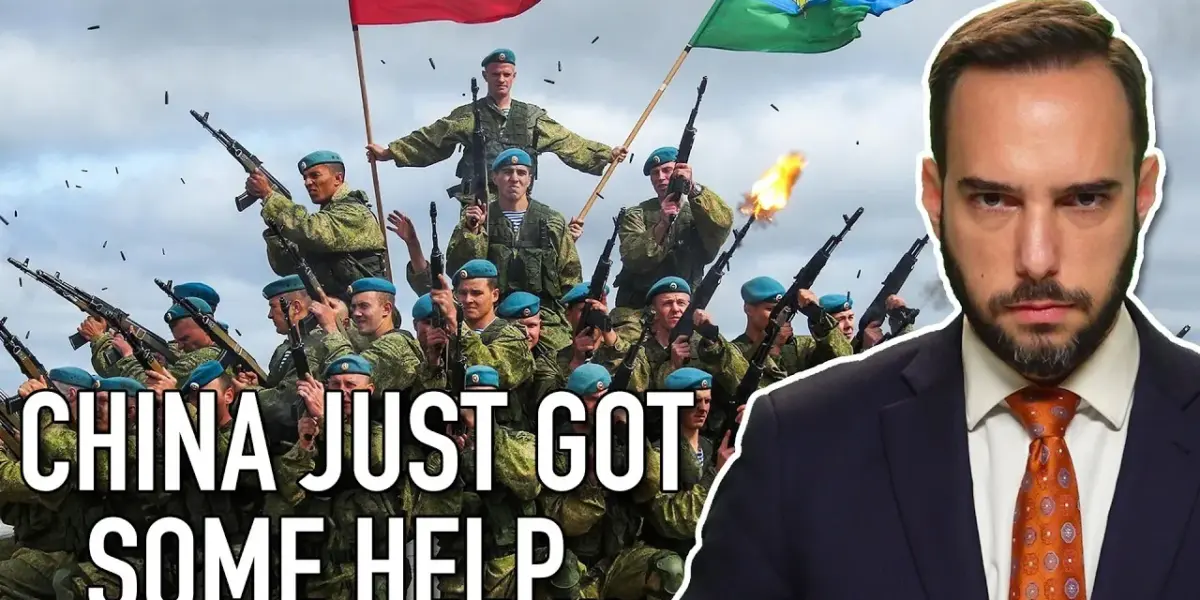
Russia Arms China for Taiwan Invasion: A Geopolitical Game Changer
In a development that could significantly reshape the geopolitical landscape of the Indo-Pacific, emerging evidence suggests that Russia is actively assisting China in preparing for a potential invasion of Taiwan. This collaboration, detailed in documents obtained by the activist group Black Moon and analyzed by the Royal United Services Institute (RUSI), points to a deepening strategic partnership between Moscow and Beijing, one that carries profound implications for regional security and the global balance of power.
The ‘No Limits’ Partnership in Action
The narrative of a robust Sino-Russian alliance, often described by both nations as a “no limits partnership,” appears to be moving beyond rhetoric. While China has been accused of aiding Russia’s war effort in Ukraine, the recent findings indicate a reciprocal arrangement. According to RUSI’s analysis of approximately 800 pages of documents, including contracts and equipment lists, Russia has agreed to provide China with crucial military hardware and training specifically designed to enhance China’s airborne capabilities.
Bridging the Airborne Gap
China possesses the world’s largest navy, a formidable standing army, and a vast arsenal of aircraft and missiles. However, a critical vulnerability has been identified: a lack of experienced paratroopers and a deficiency in modern airborne combat expertise. The People’s Liberation Army (PLA) last engaged in a significant conflict in 1979, when it invaded Vietnam and reportedly suffered a defeat, a historical footnote that likely fuels Beijing’s desire for more recent, relevant combat experience. Russia, despite its own costly involvement in Ukraine, possesses recent, albeit controversial, combat experience, including airborne operations.
The Deal: Equipment and Expertise
The documents reveal that Russia committed in 2023 to equipping a Chinese airborne battalion with a comprehensive set of weapons and specialized gear for infiltration. This includes 37 amphibious assault vehicles, 11 light amphibious anti-tank self-propelled guns, and 11 airborne armored personnel carriers. Crucially, Russia has also agreed to provide a full training cycle for Chinese personnel to operate this equipment. The deal further stipulates that all supplied equipment will be compatible with Chinese communication technology and ammunition, acknowledging the superior advancement of Chinese tech over some Russian systems.
The training component is particularly significant. Russian instructors are slated to train a Chinese paratrooper battalion at Russian facilities before continuing training within China. This program aims to prepare the battalion for landing, fire control, and maneuvering as part of an airborne unit. Additionally, Russia is set to establish a maintenance and repair center for its equipment in China, complete with technical documentation, enabling China to eventually service and upgrade the hardware independently.
Accelerating China’s Airborne Ambitions
The strategic value of this Russian assistance to China is immense. Experts suggest that this collaboration could accelerate China’s airborne program by as much as 10 to 15 years. While Taiwan is not explicitly mentioned in the leaked documents, the implications are stark. Taiwan presents a formidable defensive challenge, characterized by rugged cliffs, limited landing beaches on its western coast, and the treacherous Taiwan Strait separating it from the mainland. Overcoming these natural defenses would likely require more than just naval power and sheer numbers; effective airborne insertion would be a critical component of any amphibious assault strategy.
Questions of Reliability and Delivery
However, the reliability of this Russian commitment is subject to scrutiny. Russia’s heavy wartime losses and its ongoing commitment to the conflict in Ukraine raise questions about its capacity to fulfill these obligations. Some of the documents are reportedly drafts, and there is no direct evidence confirming that Beijing has made payments or received the equipment. The uncertainty surrounding the delivery status adds a layer of complexity, but the mere intent and the willingness of Russia to share such capabilities with China underscore the depth of their strategic alignment.
Why This Matters
This alleged Russian assistance to China in developing its airborne capabilities is more than just a military transaction; it’s a significant signal of evolving geopolitical dynamics. It suggests a coordinated effort by Russia and China to challenge the existing international order and potentially project power more assertively. For Taiwan, this development heightens the sense of urgency and underscores the need for robust defense strategies, including asymmetric warfare capabilities and strong international partnerships.
Implications, Trends, and Future Outlook
The implications extend far beyond the Taiwan Strait. This collaboration could embolden China in its territorial ambitions, not only concerning Taiwan but also in the South China Sea and potentially towards other island nations like Japan and the Philippines. It also signals a growing reliance on Russia for military technology and expertise by China, despite China’s own significant advancements. This could lead to a more integrated military-industrial complex between the two nations, further solidifying their bloc against Western influence.
The trend of authoritarian states forming closer military ties in defiance of democratic norms is a worrying one. This partnership could inspire similar collaborations among other nations seeking to counter Western dominance. The future outlook suggests an increasingly polarized world, with heightened tensions in key strategic regions like the Indo-Pacific. The international community, particularly the United States and its allies, will need to closely monitor these developments and adapt their defense and diplomatic strategies accordingly.
Historical Context
The current Sino-Russian alignment is not unprecedented. Historically, the two communist giants shared a period of close alliance during the Cold War, only to diverge dramatically in the 1960s. However, in recent years, driven by a shared opposition to perceived Western hegemony and a desire to reshape the global order, they have gravitated back towards each other. This latest development, if fully realized, represents a tangible manifestation of this renewed strategic convergence, moving beyond political statements to concrete military cooperation.
The potential for a Chinese invasion of Taiwan has been a persistent concern since the Chinese Civil War. While China views Taiwan as a renegade province, Taiwan has evolved into a vibrant democracy with a strong defense force. The prospect of a military conflict has been a major destabilizing factor in the region. Russia’s involvement in bolstering China’s invasion capabilities could significantly alter the calculus for both sides and for international actors like the United States, which is committed to Taiwan’s defense.
The information presented in this analysis is based on the content of a YouTube video transcript and reports from credible organizations like RUSI. While the full extent of the Russian assistance and its immediate impact remain subject to ongoing verification, the documented agreements signal a serious escalation in the strategic partnership between Moscow and Beijing, with potentially far-reaching consequences for global security.
Source: 🚨 Russia Now Helping China Prepare to Invade Taiwan (YouTube)

Related Articles

G7 Allies Clash Over Iran War Strategy, Urge Focus on Russia
G7 foreign ministers met in Paris, revealing deep divisions over the U.S. war with Iran. European allies urged the U.S. to pressure Russia, linking its actions to the conflict and fearing support for Ukraine will wane.


US Must Block China’s Tech Access for Security
US national security experts are raising alarms about China's access to advanced AI chips, arguing it threatens strategic advantages. This, coupled with charges against Chinese entities for fentanyl precursor sales and a ban on foreign routers, signals a growing effort to prioritize security over business ties.

Iran Blocks China Ships, Exposing Beijing’s Weak Grip
Iran's recent decision to block Chinese ships at the Strait of Hormuz is exposing the limits of Beijing's influence in the Middle East. This action is causing delays and cancellations for Chinese manufacturers, turning a perceived geopolitical win into an economic strain.