Rubio Puts US First at G7 Summit, Sparks Debate
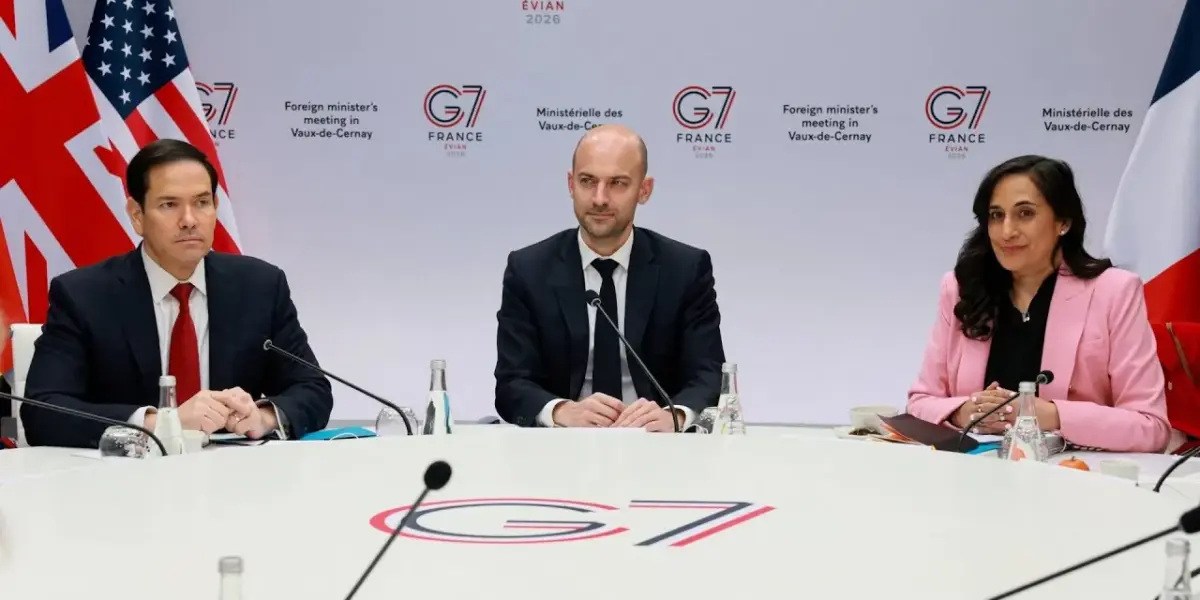
Secretary of State Marco Rubio attended the G7 summit in France, emphasizing his commitment to serving the American people above all else. The meeting addressed the war in Iran and Russia's role, revealing differing approaches among allies on regional security and the Strait of Hormuz.

Rubio Puts US First at G7 Summit, Sparks Debate
Secretary of State Marco Rubio attended a major international meeting, the G7 Foreign Ministers Summit, in France recently. Before heading to Europe, Rubio made it clear who he works for. He stated that his main goal is to serve the American people, not leaders or governments of other countries. This direct approach has sparked discussion about national interests in global diplomacy.
Focus on American Interests
Rubio’s comments, made as he departed Washington, highlighted a strong commitment to prioritizing the needs of the United States. “The people I’m interested in making happy are the people of the United States. That’s who I work for,” he said. He added that while he respects and works well with his counterparts from countries like France, Germany, and Japan, his ultimate loyalty lies with his constituents at home. This stance suggests a foreign policy approach that keeps American well-being at the forefront of all international dealings.
Global Challenges Discussed
The G7 summit brought together foreign ministers from seven of the world’s leading industrialized nations. Key topics on the agenda included the ongoing conflict involving Russia and the complex situation in the Middle East, particularly concerning Iran. The ministers aimed to understand the United States’ position in the region and to develop strategies for critical issues, such as ensuring safe passage through the Strait of Hormuz. This vital waterway is a major route for oil shipments, and its security is a global concern.
Divergent Views on Iran and Russia
While the ministers sought common ground, differences in approach were evident. The French foreign ministry called for reduced tensions in the Middle East. Germany, however, expressed conditions for its involvement in securing the Strait of Hormuz. Berlin indicated it would only assist after fighting in the region had stopped. Furthermore, European powers raised concerns about Russia’s alleged role. They accused Russia of aiding Iran in targeting U.S. forces. This highlights the varied perspectives and priorities among allies when facing international crises.
Historical Context of G7 Diplomacy
The G7, originally formed in the 1970s, serves as a forum for leaders of major economies to discuss global issues. Historically, these meetings have aimed to foster cooperation on economic policy, security, and international development. However, the underlying principle of national interest has always been present. Leaders attend these summits to advance their own country’s goals while seeking solutions that benefit the global community. Rubio’s recent statements echo a long-standing tradition of leaders advocating for their nations, albeit with a particularly direct emphasis.
Why This Matters
Rubio’s firm declaration of prioritizing the American people at an international summit is significant. It signals a potential trend in foreign policy, emphasizing national interests more explicitly. In a world facing numerous complex challenges, from regional conflicts to economic instability, how nations balance their own needs with global cooperation is crucial. This approach can lead to stronger national positions but might also create friction with allies who expect a more unified front. The effectiveness of such a strategy depends on maintaining strong relationships while pursuing distinct national objectives.
Implications and Future Outlook
The G7 summit highlighted the delicate balance required in international relations. Allies must work together to address shared threats, but they also represent diverse national interests. Rubio’s stance suggests that American diplomacy will continue to be grounded in what is perceived as best for the United States. This could influence how alliances function and how joint strategies are formed. Future G7 meetings will likely see continued debate on how to reconcile national priorities with the need for collective action on global issues like regional security and economic stability.
Source: Rubio Joins G7 Foreign Ministers Summit in France (YouTube)

Related Articles


Trump’s War Talk Stuns Financial Crowd
Donald Trump's recent speech in Miami focused on his foreign policy, particularly his critical views on NATO and his vision for international relations. He declared the U.S. would no longer defend NATO allies, questioned the value of existing alliances, and suggested renaming the Strait of Hormuz. The speech also touched on his personal views of success, his allies, and his perceived role as a global peacemaker.


US Christian Nationalism Fuels Global Conflict Fears
A potent strain of Christian nationalism in the US is raising alarms globally, promoting a 'warlike brand' of faith that views empathy as weakness. This ideology, amplified during times of economic hardship, risks justifying aggressive actions and undermining international humanitarian norms. Its influence on policy could reshape global dynamics.

Pope Leo XIV Shifts Vatican’s Global Focus
Pope Leo XIV, the first American pope, brings a unique multicultural background and extensive missionary experience to the Vatican. His election signals a potential shift in the Church's global focus, with an emphasis on peace and contemporary issues like artificial intelligence.