Robot Teachers? Melania Trump’s AI Vision Sparks Concern
Melania Trump's recent remarks about humanoid robot educators have sparked debate. While she envisions instant access to knowledge, critics worry about the impact on critical thinking and the potential replacement of human teachers.


Robot Teachers? Melania Trump’s AI Vision Sparks Concern
Former First Lady Melania Trump recently held an event focused on artificial intelligence (AI) and its role in the future. During her remarks, she suggested a vision where humanoid robots could serve as educators. This idea, while presented as forward-thinking, has raised questions and concerns about the future of education and the impact of AI on critical thinking skills.
A New Vision for Education
At the Melania Trump’s Fostering the Future Together Global Coalition Summit, a robot stood beside the former First Lady. She spoke about AI, stating that its future is “personified” and will take the “shape of humans.” Trump suggested that AI will soon move beyond our phones and into humanoid forms that can provide services. Because our world is built for people, these humanoids would be well-suited to operate within it.
She then offered a specific example: a humanoid educator named Plato. Trump imagined a future where students could instantly access classical studies, literature, science, art, philosophy, mathematics, and history. She presented this as a new frontier, implying that this vast amount of human knowledge is now readily available thanks to AI.
Discovering the Internet?
However, this framing of instant access to information has drawn criticism. Critics point out that the internet has provided access to these very same resources for decades. The internet became widely available in the 1990s, offering instant access to historical texts like Plato’s teachings and current scientific news. While not as fast or comprehensive as today’s digital world, the core concept of readily available information existed long before advanced AI.
The suggestion that AI is the sole driver of this accessibility overlooks the foundational role of the internet. It seems as though Trump’s remarks implied a recent discovery, as if this wealth of knowledge was hidden until now. This has led some to question her understanding of existing technology and its historical development.
Concerns Over Critical Thinking
Beyond the accessibility of information, Trump’s vision of humanoid educators also raises concerns about the development of critical thinking skills in children. She stated that children would develop “deep critical thinking and independent reasoning capabilities.” However, critics argue the opposite is happening.
The argument is that AI, when used as a crutch rather than a tool, can actually hinder critical thought. Instead of thinking for themselves and conducting research, people might rely on AI to provide answers and even generate ideas. This passive approach, some fear, could lead to a decline in cognitive abilities, making people lazier and less capable of independent reasoning. The scenario described sounds like a path toward a less thoughtful society, where thinking is outsourced to machines.
The Push for Robot Educators
Trump’s specific mention of a “humanoid educator” has been interpreted by some as a direct suggestion to replace human teachers with robots. This idea is seen as a potential future direction, especially if coupled with arguments that human teachers are indoctrinating students. Proponents of robotic educators might claim that machines are neutral and cannot spread biased ideologies.
However, this perspective ignores the potential for AI itself to exhibit biases. Chatbots, for instance, can learn from vast datasets that may contain problematic content, leading them to generate harmful or biased outputs. The idea that robots are inherently unbiased is a flawed assumption. The push for robot teachers, therefore, could lead to classrooms where students are exposed to new forms of misinformation, rather than benefiting from unbiased instruction.
Why This Matters
The discussion around AI in education is crucial. While AI offers incredible potential for personalized learning and access to information, we must consider its broader impact. The goal of education is not just to impart facts but to foster critical thinking, creativity, and problem-solving skills. Replacing human interaction with robotic instruction risks losing the nuanced guidance and emotional support that teachers provide. It also raises questions about how we define intelligence and learning in an increasingly automated world.
Historical Context and Future Outlook
The idea of using technology to enhance or even replace traditional teaching methods is not new. From early educational films to computer-aided learning programs, technology has always sought a place in the classroom. However, the current wave of AI, particularly with advanced chatbots and humanoid robots, presents a more profound potential for change.
The debate highlights a tension between efficiency and the human element in education. As AI becomes more sophisticated, societies will need to carefully consider how to integrate these tools. The future could see a blend of human teachers and AI assistants, each playing a role. However, the risk of over-reliance on AI, leading to a decline in critical thinking, remains a significant concern. Society must ensure that technology serves to enhance human capabilities, not replace them, especially in the formative years of childhood development.
Source: Maniac Melania Trump Suggests Replacing Teachers With Robots (YouTube)

Related Articles

First Lady Hosts World Leaders in Historic White House Photo Op
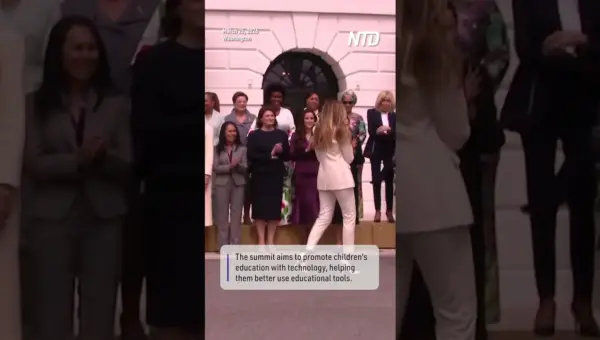
First Lady Melania Trump hosted international leaders at the White House for a group photo, concluding the Fostering the Future Together Global Coalition Summit. This event symbolizes international cooperation and shared purpose among nations.

First Lady Summit Drives Tech, Education for Global Youth
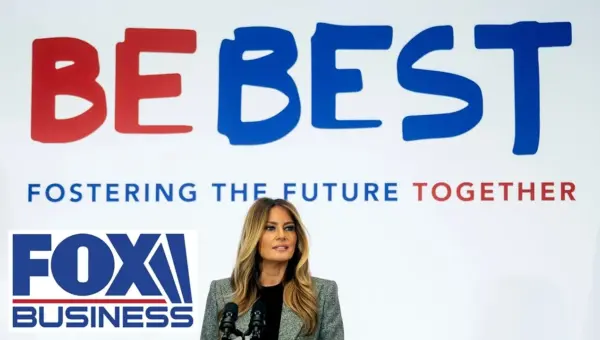
First Lady Melania Trump hosted a historic summit at the White House, gathering nearly 50 nations to promote technology and education for children globally. The 'Fostering the Future' initiative brought together tech giants and international leaders to build a coalition for youth empowerment, aiming for economic growth and technological superiority.


Amazon Faces Bribery Probe Over Melania Trump Documentary Deal
Democrats are investigating Amazon over potential bribery violations related to a Melania Trump documentary. They suspect 'pay-to-play' schemes involving payments to the Trump administration and government contracts.