Rivian R2: The Game Changer We’ve Been Waiting For?
Rivian's new R2 crossover aims to shake up the premium EV market, challenging the Tesla Model Y and European rivals. With a projected $45,000 starting price, distinctive styling, and strong performance claims, it promises adventure at a more accessible price point. However, its charging speed and range will face tough competition.

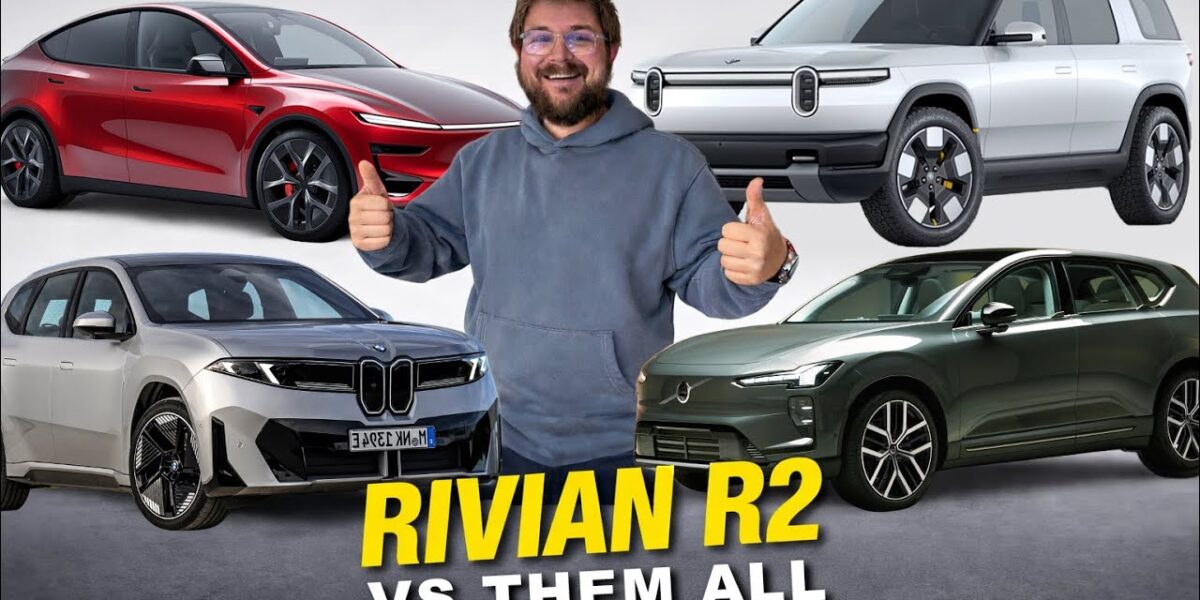
Rivian R2 Aims to Disrupt the Premium EV Crossover Market
The electric vehicle landscape is more competitive than ever, and all eyes are on Rivian as it prepares to launch its highly anticipated R2. Positioned to take on established giants like the Tesla Model Y, BMW iX3, Volvo EX60, and Mercedes-Benz GLC 400 electric, the R2 represents a crucial step for Rivian in making its innovative spirit and adventurous ethos accessible to a broader audience. With a starting MSRP rumored to be around $45,000, the R2 promises a compelling blend of style, capability, and value, aiming to carve out its niche in the burgeoning midsize premium electric crossover segment.
Price and Value Proposition
The starting price point of $45,000 for the Rivian R2 is a significant factor, likely representing the rear-wheel-drive, small-battery configuration. While specific drivetrain and battery options are still being finalized, speculation suggests a dual-motor all-wheel-drive version could land in the $55,000-$65,000 range at launch. This positions the R2 directly against key rivals:
- Tesla Model Y: Starts around $39,000 for the base rear-wheel-drive, but a more comparable all-wheel-drive model with a larger battery is closer to $48,000. The Model Y remains the most affordable option on paper.
- BMW iX3: The long-range all-wheel-drive version is expected to be around $60,000, featuring a substantial 112.2 kWh battery and impressive range.
- Volvo EX60: Likely to start around $55,000 for a single-motor rear-drive variant with an 80 kWh battery, with an all-wheel-drive model featuring a 90 kWh battery around $60,000. A top-tier 112 kWh pack will command a higher price.
- Mercedes-Benz GLC 400 Electric: Anticipated to start around $65,000, positioning it as a more premium and expensive offering.
Rivian’s challenge will be to justify its pricing against the established efficiency and brand recognition of Tesla, while offering a distinct experience compared to the more traditional luxury automakers like BMW, Volvo, and Mercedes-Benz. The R2’s value will heavily depend on its final specifications, standard features, and whether it can deliver on the adventurous brand image Rivian has cultivated.
Powertrain and Performance Speculation
While official details are still emerging, the R2 is expected to offer a range of configurations:
- Batteries: Two options are anticipated: a standard ~80 kWh pack and a larger ~95-100 kWh pack.
- Drivetrains: A single-motor rear-wheel-drive, a dual-motor all-wheel-drive, and potentially a tri-motor performance variant.
- 0-60 MPH: Rivian has claimed a sub-3-second 0-60 MPH time for the top-spec tri-motor version, which would make it the quickest in this comparison. Other configurations are expected to be competitive, with the dual-motor likely in the mid-4-second range. The Model Y Performance is rated at 3.7 seconds, the EX60 P12 at 3.9 seconds, the iX3 at 4.2 seconds, and the GLC 400 electric at 4.4 seconds.
The emphasis on performance, particularly the sub-3-second claim for the top trim, echoes Tesla’s early strategy of offering exhilarating acceleration as a key selling point. If Rivian can deliver this at a competitive price, it could be a significant draw for buyers seeking an exciting driving experience.
Range and Charging: A Key Battleground
Range and charging speed are critical for any EV, and the R2 faces stiff competition:
- Range: While official EPA estimates are pending, the R2 with the larger battery is projected to offer around 330 miles of range in rear-drive configuration, with dual-motor versions likely around 300 miles. The base battery might offer closer to 260-270 miles. Competitors like the BMW iX3 and Volvo EX60, with their larger 112 kWh batteries, are expected to exceed 400 miles of EPA range. The Tesla Model Y offers up to 357 miles (dual motor) or 321 miles (rear-drive).
- Charging Speed: The R2 is expected to utilize a 400-volt architecture, limiting peak charging speeds to around 200-220 kW. This is significantly slower than the 800-volt systems found in the BMW iX3 (400 kW peak) and Volvo EX60 (370 kW peak), which can achieve 10-80% charges in under 15-20 minutes. The Mercedes GLC 400 electric also supports 320 kW charging. The Tesla Model Y, while peaking at 250 kW, suffers from a less impressive charging curve, often taking around 30 minutes for a similar charge. Rivian’s efficiency will be key to mitigating slower peak charging, but road-trippers might find the faster-charging European rivals more convenient.
The R2’s charging performance, while adequate for most daily use, could be a drawback for those frequently undertaking long road trips, especially when compared to the newer 800-volt architectures of its European competitors.
Interior and Design: Rivian’s Signature Style
Rivian has consistently delivered distinctive and functional interiors, and the R2 is expected to follow suit. While specific interior details are scarce, the R2 will likely feature the brand’s signature minimalist aesthetic, durable materials, and a focus on practicality and adventure. The exterior design is a scaled-down version of the R1S, maintaining Rivian’s rugged yet refined look. It’s notably similar in size to the BMW iX3, both measuring just over 180 inches in length. The R2’s design is a strong differentiator, appealing to those who find the Tesla Model Y a bit too generic and the European options perhaps too conventional.
Target Buyer and Overall Verdict
The Rivian R2 is targeting a buyer who appreciates the brand’s adventurous spirit and unique design but needs a more accessible price point than the R1S or R1T. This includes existing EV owners looking for an alternative to Tesla, as well as new EV adopters drawn to Rivian’s image and direct-sales model. The R2 aims to blend the practicality of a compact SUV with the capability and style that Rivian is known for.
Verdict: The Rivian R2 enters a fiercely competitive segment with a lot of promise. Its projected starting price, distinctive styling, and strong performance claims make it an exciting prospect. However, its success will hinge on final specifications, particularly charging speeds and real-world range, which appear to be areas where competitors like the BMW iX3 and Volvo EX60 have a significant advantage. If Rivian can deliver a well-rounded package that balances its adventurous appeal with competitive performance and value, the R2 could indeed become a game-changer, offering a compelling alternative for consumers looking beyond the mainstream EV options.
Source: It All Comes Down To This For Rivian! R2 vs Model Y vs iX3 vs EX60 vs GLC (YouTube)

Related Articles

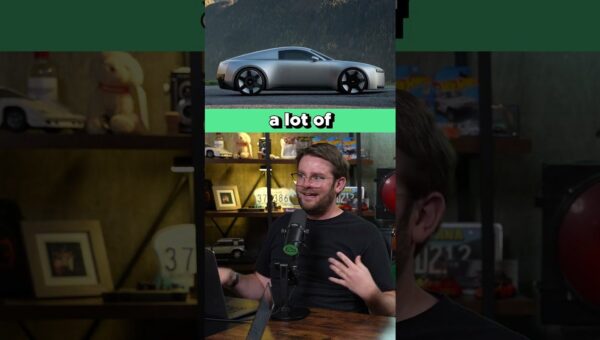
Audi TT Lives On: Electric Successor Confirmed
Audi has confirmed an all-electric successor to the iconic TT is coming, based on the platform intended for the electric Porsche Cayman. Set for a potential 2027 launch, this move secures the TT's lineage in an electrified future.
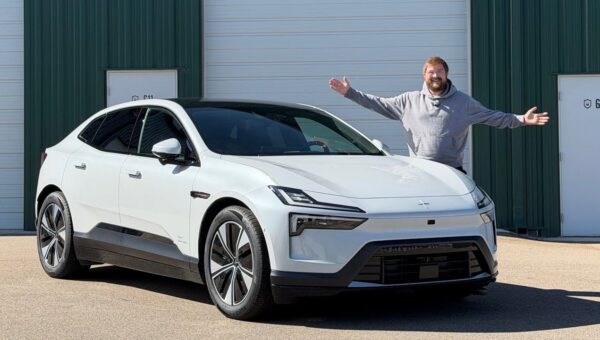
Polestar 4: A Cool EV With A Catch
The Polestar 4 offers a compelling blend of striking design, a luxurious interior, and advanced technology, positioning itself as a stylish alternative in the EV market. While its unique styling and performance are noteworthy, potential buyers should consider its compromises in rear visibility and charging speeds.
Subaru Uncharted EV: A Compact Electric Adventure
Subaru introduces the 2026 Uncharted, a new compact electric crossover sharing its platform with Toyota. Offering up to 308 miles of range and impressive off-road capability, it aims to attract traditional Subaru buyers to the EV market.