Rising Tensions: China Scrambles Jets in Tense Standoff with US F-16s Near Korean Peninsula
A recent incident saw Chinese fighter jets scramble to confront American F-16s conducting drills in international waters off South Korea, marking a significant escalation in regional military posturing. This face-off follows a series of provocative maneuvers by Beijing and Moscow, underscoring a volatile geopolitical landscape and increasing risks of miscalculation in the Indo-Pacific.

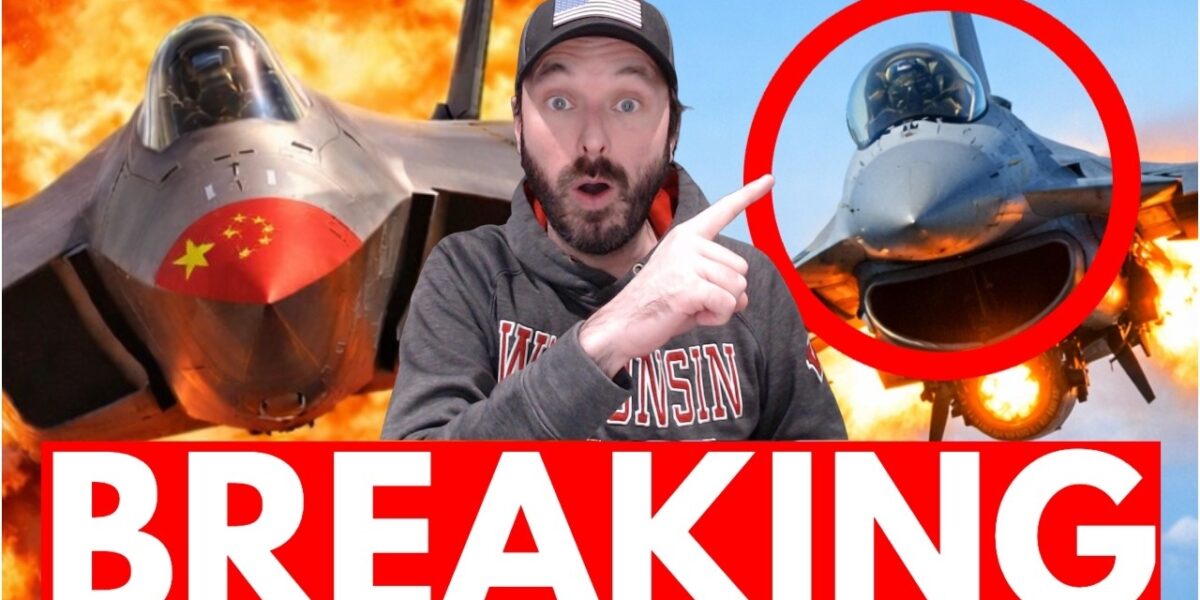
Rising Tensions: China Scrambles Jets in Tense Standoff with US F-16s Near Korean Peninsula
The geopolitical temperature in the Indo-Pacific region continues its upward trajectory, marked by a recent alarming incident where Chinese fighter jets were scrambled to confront American F-16s operating in international waters off the coast of South Korea. This tense aerial encounter, reported on February 20th, has sent ripples of concern through international defense circles, underscoring a perilous pattern of military posturing and heightened risk of miscalculation between global superpowers.
The incident represents a significant escalation in an already fraught environment, following closely on the heels of other provocative actions by both Chinese and Russian forces near allied territories. Analysts suggest that Beijing’s move to scramble its jets against the U.S. aircraft was a deliberate and highly provocative act, potentially aimed at testing the resolve of American forces and their allies in the region.
The Aerial Confrontation: A Detailed Look
According to reports from Yonhap News and Bloomberg, the confrontation unfolded when approximately 10 U.S. F-16 fighter jets, deployed from an air base in Pyongtaek, South Korea, were conducting routine drills. These exercises were taking place in international waters off South Korea’s western coastline, a standard practice for military forces globally to maintain readiness and interoperability with allies.
Crucially, the U.S. planes maintained their operations within international airspace and did not enter China’s territorial airspace or even its Air Defense Identification Zone (ADIZ). An ADIZ is an area where aircraft are expected to identify themselves as they approach, but it is distinct from sovereign territorial airspace, which extends 12 nautical miles from a nation’s coastline. Despite this, Beijing’s People’s Liberation Army (PLA) organized naval and air forces to “monitor and effectively respond” to the activities, as reported by the Chinese state-backed Global Times, citing unnamed sources. This response involved scrambling Chinese fighter jets to engage in a face-off with the American aircraft.
The lack of immediate official comment from U.S. Forces Korea, China’s foreign ministry, or South Korea’s defense ministry regarding the specifics of the incident highlights the sensitive nature of such encounters. The silence from official channels often indicates ongoing diplomatic efforts behind the scenes or a reluctance to publicly escalate tensions further, even as military actions continue to challenge existing norms.
Understanding China’s Air Defense Identification Zone (ADIZ)
The concept of an ADIZ is critical to understanding the nuances of this and similar incidents. Unlike territorial airspace, which is governed by international law as sovereign territory, an ADIZ is a self-declared region over international waters and sometimes even over other nations’ territories, where a country requests foreign aircraft to identify themselves. While most countries have ADIZs, China’s declaration of an ADIZ over the East China Sea in 2013, which overlapped with those of Japan and South Korea and included disputed territories, significantly heightened regional tensions. Beijing’s insistence on monitoring and responding to aircraft even outside its ADIZ, as seen in this latest incident, is viewed by many as an attempt to expand its de facto control and challenge the principle of freedom of navigation in international airspace.
The fact that the U.S. F-16s were operating in international waters and outside China’s ADIZ makes Beijing’s scramble of jets particularly noteworthy. It suggests a broader strategy of asserting presence and challenging any foreign military activity perceived as too close to its interests, regardless of international legal frameworks. This “gray zone” tactic, where actions fall short of outright aggression but still challenge established norms, is a hallmark of China’s recent military strategy in the Indo-Pacific.
A Pattern of Provocation: Precedent Incidents
The February 20th standoff is not an isolated event but rather the latest in a series of increasingly assertive and provocative actions by Chinese—and at times, Russian—military forces in the region. This pattern underscores a deliberate strategy to test boundaries, gather intelligence, and project power, contributing to a volatile security environment.
Radar Lock on Japanese Jets
Just months prior, in December, a Chinese fighter jet reportedly locked its fire control radar onto Japanese military jets over international waters. This incident, also reported by Bloomberg, sparked significant diplomatic friction between Tokyo and Beijing. A “radar lock” is a serious act, signifying that an aircraft’s targeting system has acquired an adversary, a precursor to firing a weapon. While China and Japan offered conflicting accounts—Beijing accused Japanese jets of disrupting its air training—the incident was widely condemned by Japan as a dangerous and unprofessional maneuver.
This event occurred against a backdrop of heightened tensions over Taiwan, with Japanese Prime Minister Fumio Kishida’s comments suggesting Tokyo could deploy its military with allies if China attacked Taiwan, further straining Sino-Japanese ties. The radar lock incident highlighted China’s willingness to employ aggressive tactics in disputed areas and against key U.S. allies.
Joint Russian-Chinese ADIZ Intrusion
Adding to the complexity, on December 9th, a formation of two Chinese and seven Russian military aircraft, including long-range bombers and fighter jets, entered South Korea’s ADIZ. This unprecedented joint intrusion over waters to the south and east of the Korean Peninsula prompted the Republic of Korea Air Force (ROKAF) to scramble its fighters in response. Such a coordinated display of force by two major powers, operating in close proximity to South Korean territory, was interpreted as a clear message of strategic alignment and a challenge to regional stability.
The incident marked the first of its kind since November 2024 (likely a typo in the original transcript, suggesting a recent event), highlighting a growing strategic partnership between Moscow and Beijing that directly impacts the security calculus of U.S. allies in the Indo-Pacific. These joint patrols are designed not only to test the response times and capabilities of regional air defenses but also to signal a formidable united front against what both nations perceive as U.S. hegemony.
Global Military Posturing: The Broader Context
The February 20th incident involving U.S. F-16s and Chinese jets also occurred on the same day that American fighter jets were scrambled to intercept Russian bombers near Alaska. This coincidental timing underscores a broader global pattern of military posturing, where major powers are increasingly engaging in close-proximity encounters near each other’s or their allies’ airspaces. Such incidents, while often described as routine interceptions, carry inherent risks of miscalculation, especially when conducted with aggressive intent or in disputed territories.
China’s Military Ambitions and Capabilities
China’s rapid military modernization is a key driver behind these escalating tensions. Beijing has invested heavily in developing advanced combat aircraft, naval vessels, and missile systems, aiming to challenge U.S. military supremacy in the Indo-Pacific. The specific types of Chinese jets scrambled against the F-16s were not confirmed, but the transcript speculates on two of China’s most advanced stealth fighters: the J-35 and the J-20.
The J-35 (FC-31 Gyrfalcon)
The Shenyang J-35, also known by its export designation FC-31, is a twin-engine, all-weather stealth multirole fighter. Often compared to the U.S. F-35 Lightning II, it is designed for air superiority and surface strike missions. Its development reflects China’s ambition to field a fifth-generation stealth fighter capable of operating from both land bases and aircraft carriers. While visually similar to the F-35, the actual performance parity remains a subject of debate among defense analysts. The J-35 represents a significant leap for Chinese aviation, incorporating stealth features and advanced avionics that could pose a challenge to older generation fighters like the F-16.
The J-20 (Mighty Dragon)
The Chengdu J-20, or “Mighty Dragon,” is China’s premier operational stealth fighter, often likened to the U.S. F-22 Raptor. It is a large, twin-engine, fifth-generation fighter designed for long-range strike and air superiority. Having entered service with the PLA Air Force in 2017, the J-20 signifies China’s successful development of indigenous stealth technology. Its capabilities include advanced sensors, integrated avionics, and a large internal weapons bay, making it a formidable platform. While the F-16 is a highly capable and maneuverable fourth-generation fighter, a direct engagement with a fifth-generation stealth aircraft like the J-20 or J-35 would present significant challenges due to their inherent stealth advantages and advanced sensor fusion.
The speaker in the transcript refers to these Chinese jets as “knockoffs” of American designs. While there is historical evidence of China benefiting from espionage and reverse engineering in its military development, its aerospace industry has also made significant indigenous advancements. The debate over whether these aircraft are merely copies or genuine innovations underscores the competitive nature of military technology and the ongoing race for air superiority.
Geopolitical Implications and Regional Security
The increasing frequency and intensity of these military encounters carry profound geopolitical implications for the Indo-Pacific region and beyond.
Testing Resolve and Asserting Dominance
China’s actions are widely interpreted as an attempt to test the resolve of the United States and its allies. By conducting provocative maneuvers, Beijing seeks to gauge the response thresholds of its adversaries, identify vulnerabilities, and gradually normalize its expanded sphere of influence. This strategy is part of a broader effort to assert China’s dominance in the South China Sea, East China Sea, and potentially over Taiwan, thereby challenging the long-standing U.S.-led security architecture in the region.
Strengthening Alliances vs. Escalation Risk
For the United States, these incidents underscore the critical importance of its alliances with South Korea, Japan, and other regional partners. Joint drills, intelligence sharing, and coordinated responses are essential to deterring aggression and maintaining a stable balance of power. The U.S. has consistently reiterated its commitment to defending its allies, and incidents like the F-16 standoff serve to reinforce the necessity of these security partnerships.
However, the constant push-and-pull also heightens the risk of an accidental confrontation. In a scenario where jets are flying in close proximity, a misinterpretation, a technical malfunction, or an aggressive pilot maneuver could quickly escalate into a full-blown conflict. The absence of robust crisis communication mechanisms between the U.S. and China further exacerbates this danger.
The “Rules-Based International Order”
At a fundamental level, China’s actions challenge the “rules-based international order” that the United States and its allies advocate for. By operating provocatively in international waters and airspace, and by unilaterally declaring and enforcing vast ADIZs, Beijing appears to be attempting to rewrite the norms of international conduct. This has significant implications for freedom of navigation and overflight, which are bedrock principles of international law.
The Path Forward: Deterrence and Diplomacy
The escalating tensions demand a dual approach of strong deterrence and open diplomatic channels. While the speaker in the transcript confidently asserts the superiority of U.S. and allied forces against China’s military, the costs of any conflict would be immense for all parties involved. Therefore, preventing such a conflict remains paramount.
- Enhanced Deterrence: Continued investment in advanced military capabilities, robust joint exercises with allies, and forward deployment of forces are crucial to signal a credible deterrent to potential aggression. This includes leveraging the technological edge of aircraft like the F-22 and F-35, which are considered superior to their Chinese counterparts.
- Diplomatic Engagement: Establishing clearer lines of communication, especially during military encounters, is vital to prevent miscalculation. Dialogue on de-escalation protocols and risk reduction mechanisms can help manage incidents and prevent them from spiraling out of control.
- Solidifying Alliances: Strengthening security cooperation with key partners like Japan, South Korea, Australia, and potentially others in Southeast Asia provides a collective front against unilateral aggression and reinforces regional stability.
The February 20th standoff near the Korean Peninsula serves as a stark reminder of the fragile peace in the Indo-Pacific. As China continues its military expansion and assertive posturing, the international community faces the challenge of upholding international law, deterring aggression, and navigating a complex geopolitical landscape without resorting to open conflict. The stakes are incredibly high, and the world watches closely as these aerial chess matches unfold, hoping that diplomacy and prudence will ultimately prevail over provocation and escalation.
Source: China SCRAMBLES Jets Against American F-16s – CODE RED ALERT (YouTube)

Related Articles


Trump: Iran Strikes Ahead of Schedule, Expects ‘Great Deal for World’
Three U.S. service members have been killed amid escalating conflict with Iran, President Trump confirmed. He stated that strikes are ahead of schedule, with senior Iranian leaders killed, and expressed optimism for a "great deal for the world" despite ongoing talks with Iranian officials.


Trump’s Putin Stance: US Strategy and Global Implications
Analysis suggests Donald Trump's approach to the Ukraine war involves pressuring Kyiv, but US involvement is crucial for resolution. China's influence and the 'MAGA' agenda's geopolitical implications are key factors.


US Strikes Iran: Mounk and Fukuyama Discuss Unpredictable Conflict
Leading political scientists Yascha Mounk and Francis Fukuyama analyze the recent US strikes on Iran, warning of unpredictable outcomes and internal instability. They question the objectives of the "war of choice" and its potential to destabilize the region, while also discussing the shifting global perceptions of Israel.