Retired General Recalls ‘Abandoned’ Ordeal Amid Middle East Conflict
Retired Major General Randy Manor recounts feeling "totally abandoned" by the U.S. government while stranded in the Middle East during recent conflict in Iran. The narrative emerged amidst discussions on the strategic ambiguities of potential U.S. ground troop deployments, with Manor calling such an idea "idiotic."


Retired General Recounts Harrowing Experience of Being ‘Abandoned’ in Middle East
In a candid account that casts a stark light on the challenges faced by Americans abroad during escalating international tensions, retired Major General Randy Manor has detailed his experience of feeling “totally abandoned” by the U.S. government while stranded in the Middle East amidst recent conflict in Iran. The harrowing narrative emerged during a discussion that also delved into the strategic uncertainties surrounding potential U.S. military actions in the region.
Strategic Ambiguity and the Specter of Ground Troops
The conversation, featuring Major General Manor and MSNBC contributor Philip Bump, initially focused on the Biden administration’s stance regarding potential ground troop deployment in Iran. Reports had surfaced suggesting President Biden was quietly considering such a move, a prospect he acknowledged as possible if a “good reason” emerged. Bump highlighted the ambiguity of Donald Trump’s “whatever it takes” rhetoric, questioning the clarity of objectives, such as seizing uranium or regime change, as determinants for troop deployment.
General Manor unequivocally dismissed the idea of sending ground troops into Iran as “absolutely idiotic.” He drew parallels to the extensive planning and coalition-building required for operations in 2001-2002, emphasizing that any such deployment would necessitate significant time and a robust international partnership. “It’s very naive for this administration to think that they could put boots on the ground,” Manor stated, adding that even a Special Forces mission would require substantial logistical buildup and time.
“The idea of putting ground troops into Iran is absolutely idiotic. It’s something that, if you recall back in 2001 and 2002, we took almost a year in order to be able to get all the sufficient forces in there with a very strong, multi-country coalition.”
A Personal Ordeal of Being Stranded
The discussion then shifted to General Manor’s personal ordeal. While serving in a capacity that gave him intimate knowledge of the Middle East theater, he found himself in Dubai when conflict erupted, leading to the evacuation of numerous Americans. Manor described contacting U.S. embassies and the State Department, only to be met with responses indicating they could not provide assistance or facilitate departures. “We cannot help you. We cannot provide any way out,” was the stark message received.
This lack of official support forced Americans, including Manor, to band together. “We will get out of here and we will figure this out,” he recalled the sentiment among the stranded. Manor recounted being on one of only twelve aircraft that managed to depart on a Wednesday morning, after four previous attempts were thwarted. During one aborted attempt, passengers were already on board when incoming missile alerts sounded, creating a scene of palpable panic with “100 cell phones inside the airplane going off,” and “women and children crying.” The eventual departure was exceptionally rapid, with an eight-minute turnaround from boarding to takeoff. Upon liftoff, two UAE F-16 fighter jets escorted their plane, a detail Manor highlighted with immense gratitude towards the United Arab Emirates.
“I can’t tell you the gratitude I feel to the government of UAE, the way it is taking care of tens of thousands of transient visitors, as well as, of course, American citizens. They are doing so with graciousness and my hat goes off to them. Very professional, very respectful. And instead our U.S. government absolutely, totally abandoned us,” Manor stated, underscoring the stark contrast in support received.
Criticism of the Administration’s Handling and Messaging
Philip Bump corroborated Manor’s account, noting that numerous reports from publications like The Wall Street Journal and Newsweek detailed similar experiences of Americans left to fend for themselves. Bump suggested that the administration is facing considerable criticism, though it is often absorbed amidst a wider array of controversies. He pointed to a perceived lack of preparedness, with many critical steps, such as ensuring government officials’ safe departure and having a clear plan of action, appearing to have been overlooked or inadequately addressed before the conflict began.
General Manor also criticized the administration’s messaging regarding the conflict, particularly the shifting rationales from “liberating Iran” to demanding “total surrender.” He believes this indicates a struggle to justify American casualties and the significant financial investment. Manor found the initial justifications for the conflict unclear, suggesting they appeared as if someone had “googled reasons to attack Iran.” He found the most coherent, though possibly premature, justification to be preventing Iran from developing nuclear weapons.
“It basically tells me the administration is struggling to be able to explain why we are losing American lives and why we are investing over a billion dollars of our taxpayer money every single day in this operation.”
Manor expressed strong skepticism about the U.S. government’s ability to dictate Iran’s leadership, calling the notion “completely naive and actually stupidity.” He characterized the situation as a “breakdown of our federal government,” attributing it to a lack of experience and a failure to prioritize national interests, which he found “incomprehensible” after dedicating 36 years to public service.
Questions About Nuclear Ambitions and Past Actions
The discussion touched upon the effectiveness of past actions against Iran’s nuclear program. When asked if the previous 12-day war had neutralized Iran’s nuclear ambitions, Manor expressed doubt, referencing the president’s prior claim of having “obliterated” the program. He questioned the longevity of such efforts, especially under a president he described as the “war president” despite his “peace president” image.
Philip Bump added a crucial piece of context: the existence of the Iran nuclear deal, signed under President Obama and reversed by Donald Trump. Bump argued that this reversal contributed to the current situation, allowing Iran to continue developing its nuclear capabilities. He concluded that the administration appears as uncertain about future actions as the public is, leaving many unanswered questions.
Looking Ahead
The events described by General Manor and the strategic uncertainties highlighted by both commentators underscore a critical need for clarity, preparedness, and accountability from the U.S. government in its foreign policy engagements. As tensions remain high in the Middle East, Americans and the international community will be watching closely to see if lessons are learned from these harrowing experiences and if a coherent, well-defined strategy will emerge to guide future actions and ensure the safety of citizens abroad.
Source: Retired General recalls harrowing story of being ‘totally abandoned’ in Middle East by U.S. (YouTube)

Related Articles


Pentagon’s Holy War Rhetoric Alarms Service Members
Reports of U.S. military commanders invoking religious prophecy and divine plans to justify the conflict in Iran have raised alarm bells. With top officials like Secretary of Defense Pete Hegseth encouraging troops to 'lean into their faith,' concerns are mounting over the separation of church and state within the armed forces and the potential for religiously motivated warfare.
Iran Appoints Hardliner’s Son as New Supreme Leader
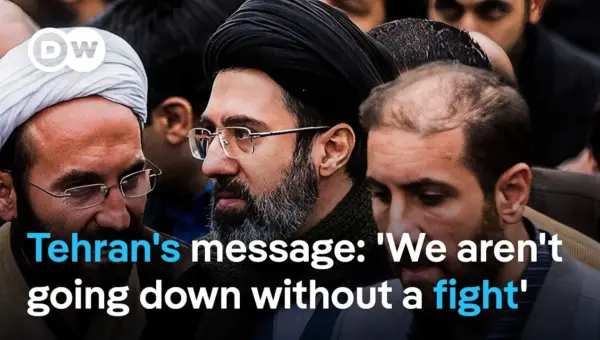
Iran has appointed Mojtaba Khamenei, son of the former Supreme Leader, as its new spiritual and political leader. The move is seen as a message of defiance to adversaries and signals continuity in hardline policies, though it raises concerns about hereditary rule and dims hopes for internal reform.


Trump’s ‘Messianic Complex’ Fuels Global Conflict, Analyst Says
Sarah Baxter, Director of the Marie Culvin Center for International Reporting, argues that Donald Trump's "messianic complex" is driving his foreign policy, potentially at the cost of domestic economic stability. The escalating conflict with Iran and rising oil prices have placed Vice President JD Vance in a difficult political position, fracturing the MAGA coalition and raising questions about future leadership within the Republican party.