Retired General Ben Hodges Questions Trump’s Iran Policy, NATO
Retired General Ben Hodges expressed strong criticism of Donald Trump's rhetoric on Iran, calling it "appalling." He also discussed the potential for invoking the 25th Amendment and the critical importance of soldiers refusing unlawful orders. Hodges believes the U.S. has suffered a strategic defeat concerning Iran and highlighted Ukraine's resilience and path to victory.

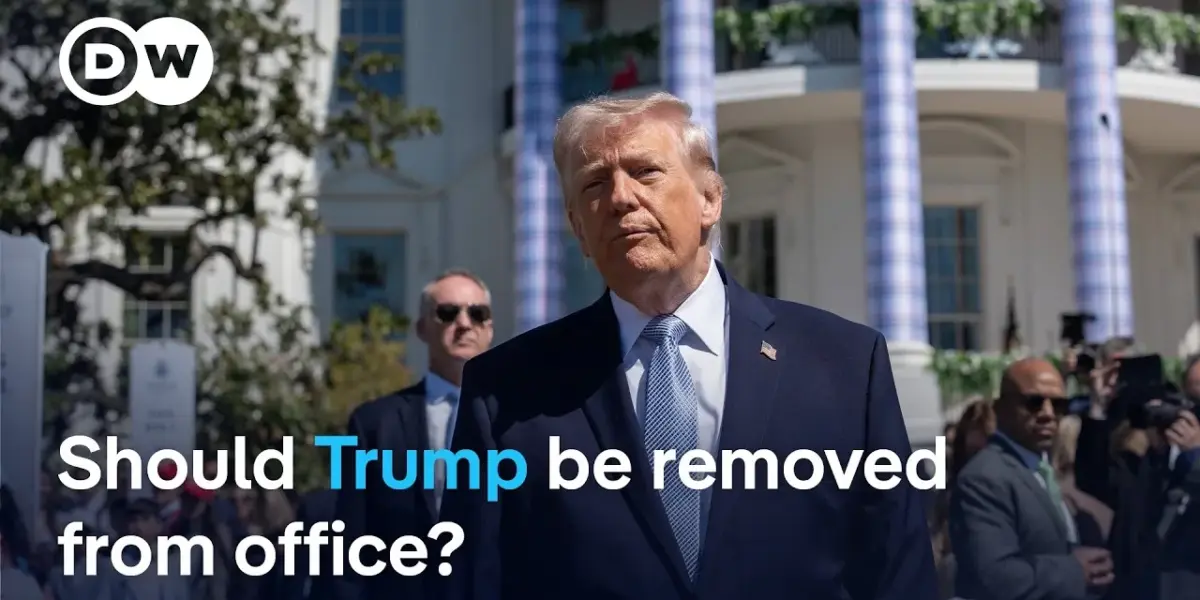
Hodges Criticizes Trump’s Rhetoric on Iran, Calls for Restraint
Retired U.S. Army General Ben Hodges has voiced strong criticism of former President Donald Trump’s rhetoric regarding Iran, specifically citing comments about potentially causing Iran to “die” or be “brought back to the stone ages.” Hodges described such language as “appalling” and a potential call for war crimes, while also noting it was sadly not surprising given Trump’s past statements. He suggested that the public’s desensitization to such remarks damages both Trump’s and America’s credibility on the world stage.
“When the president says something now, I think many people are like, ‘Okay, does he really mean that? Is he going to do it?'” Hodges stated. He also pointed to Trump’s tendency to declare premature victories, referencing the handling of the “Midnight Hammer” operation and a recent supposed deal with Iran, which he believes proved untrue and significantly harmed American credibility.
25th Amendment Discussion and Electoral Remedies
The conversation turned to the 25th Amendment, which allows for the removal of a president deemed unfit to discharge his duties. Hodges revealed it was the first time in his life he had felt compelled to read the amendment in detail, a sign of the serious concerns he holds. However, he expressed doubt that enough Republicans in Congress would possess the courage to invoke it, deeming the situation unlikely but “not good for America.”
While Hodges personally believes Trump is not fit for office, citing his threat to the Constitution, he emphasized that the best remedy lies within the democratic process. “Democracy is not ballet. It is rugby football all the time,” he remarked. “The best way to do this is to win at the election day.”
Concerns Over Nuclear Threats and Military Loyalty
Addressing fears of a potential nuclear strike, Hodges deemed it “extremely unlikely.” He recalled instances during Trump’s presidency where advisors, like Chief of Staff General Kelly, successfully talked him out of such actions. Hodges believes Trump now better understands the severe downsides of a preemptive nuclear strike, especially against a nation like Iran, where there is simply “no upside to the United States.”
A critical point raised was the obligation of soldiers to refuse unlawful orders. Hodges affirmed this duty unequivocally, explaining that the oath to the Constitution is paramount. He criticized the current administration for allegedly seeking loyalty to individuals rather than the Constitution and for pressuring military leaders. “The burden’s on me to know the difference between a lawful order and an unlawful order,” he stressed, referencing historical examples like the My Lai Massacre to underscore the importance of distinguishing between legal and illegal commands.
Skepticism on Iran Ceasefire and Diplomatic Failures
Hodges expressed skepticism about the viability of a ceasefire with Iran, noting that hostilities, including Israeli strikes on Hezbollah targets and other missile attacks in the Middle East, continued even within the first 24 hours of the supposed agreement. He found the initial plan, which excluded operations in Lebanon or against Iranian proxies, unrealistic, especially given Israel’s position.
He attributed Trump’s lack of progress with Iran to several factors. These include overly aggressive and hyperbolic language, a reliance on individuals like Jared Kushner and Steve Bannon for diplomacy instead of professional diplomats, and Trump’s ego. “Maybe they’re good at real estate deals, but they’re not skilled at diplomacy, especially when you’re dealing with the Iranians, who have been doing this for about, you know, 3,000 years,” Hodges explained.
Hodges suggested that Trump, who had previously denounced the Iran nuclear deal (JCPOA), might now accept it if it allowed him an “off-ramp” from a crisis he helped create, provided Obama’s name was not attached. He believes a genuine diplomatic solution would require strong alliances and international pressure, rather than alienating allies by “kicking them in the ass all the time.” He also criticized the administration for not making a clear case to Congress and the American people for its policies against Iran, despite Iran’s long history of supporting terrorism and posing a threat to U.S. soldiers.
Strategic Defeat in Iran and NATO’s Future
Assessing the outcome of the recent events with Iran, Hodges concluded it represented a “strategic defeat for the United States.” He drew parallels to Vietnam, where military success did not translate into achieving strategic goals. He pointed to Iran retaining enriched uranium, controlling the Strait of Hormuz, and its regime remaining in power as evidence that the desired strategic outcome was not achieved. He blamed “feckless civilian leadership” for betraying the armed forces.
Regarding NATO, Hodges acknowledged that even the Trump administration recognizes the economic importance of a stable Europe to the U.S. He stressed that European bases and ports provide crucial support for American operations, making NATO vital for U.S. interests. He expressed confidence that military leadership would advise against withdrawing from NATO, as it would be a “disaster” and a “gift for the Kremlin.” However, he noted that many European nations still lag in fulfilling their defense commitments under the Washington Treaty, which complicates the argument for NATO’s continued strength.
Ukraine’s Resilience and Path to Victory
The discussion shifted to Ukraine, highlighting a remarkable turn of events where Ukraine, once seemingly dismissed, is now helping Gulf countries defend against Iranian drones and potentially receiving defense industry support from Saudi Arabia and the UAE. Hodges stated that Russia is demonstrably losing the war, facing mounting casualties and territorial losses, with the “dreaded winter” now over.
Hodges believes the best way for European countries to ensure their own security is to support Ukraine’s victory. He envisions Ukraine’s future security resembling Israel’s, with a robust defense industry, rapid mobilization capabilities, and a society fully committed to defense. He also suggested that Ukraine’s intelligence agency, the GUR, might act like Israel’s Mossad in pursuing Russians responsible for war crimes.
The realistic end to the Ukraine war, according to Hodges, involves Ukraine destroying Russia’s oil and gas infrastructure. As Ukraine’s capabilities grow and European nations invest in long-range weapons, Russia will eventually be forced to negotiate when it can no longer fund the conflict. “This is how Russia is eventually brought to the table for when they can no longer pay for this,” he concluded.
Source: Ben Hodges: For the first time I read the 25th Amendment | DW News (YouTube)

Related Articles

Trump’s Inner Circle Calls for Removal Amidst Chaotic Statements
Prominent Trump allies like Candace Owens and Marjorie Taylor Greene are publicly questioning Donald Trump's mental fitness and calling for the 25th Amendment to be invoked. This follows Trump's own attacks on these figures, creating a significant rift within his base. Concerns are mounting over erratic statements and decision-making, particularly regarding foreign policy, leading to calls for his immediate medical evaluation.

Greene Demands GOP Burning; Trump Followers in Cult?
Marjorie Taylor Greene recently called for the Republican Party to be 'burned to the ground' and described Donald Trump's MAGA followers as being part of a 'cult.' These strong statements highlight deep divisions within the GOP and raise questions about the nature of political loyalty and party identity.

Iranians Face Dilemma: “Human Shields” Amidst Peace Talks
Iranian citizens are reportedly being ordered to serve as "human shields" around critical infrastructure as the U.S. prepares for high-stakes peace talks. Journalist Alina Shirazi highlighted the lack of clear safety guidance for ordinary Iranians, who feel caught between potential military strikes and government directives. The situation unfolds as top U.S. officials head to negotiations aimed at de-escalating tensions.