Republicans Own DHS Shutdown, Analysis Claims
A new analysis from The Boston Globe argues that Republicans are primarily responsible for the ongoing DHS funding shutdown, shifting blame away from the White House's claims against Democrats. The report details how political tactics and the rejection of a Senate deal by House Republicans have prolonged the crisis.


Republicans Own DHS Shutdown, Analysis Claims
In a political standoff that has disrupted government operations and caused public inconvenience, a new analysis suggests that Republicans, not Democrats, are primarily responsible for the ongoing Department of Homeland Security (DHS) funding shutdown. While the White House has pointed fingers at Democrats for holding the country “hostage,” a report by The Boston Globe argues that Republican actions and decisions have led to the prolonged closure.
Shifting Blame and Political Tactics
The White House, through Press Secretary Calin Levitt, has repeatedly stated that Democrats are obstructing a DHS funding deal. Levitt told reporters that Democrats are “picking and choosing which programs and agencies they want to fund just because they don’t like this administration’s policies.” She added that the president has stepped in to address the situation but urged Congress to permanently fix the problem.
However, James Pindell, the author of the Boston Globe analysis, presented a different perspective. He noted that while the White House attempts to place blame on Democrats, “that’s a harder argument to make.” Pindell explained that Republicans control not only the White House but also both branches of Congress, giving them significant influence over the legislative process.
A History of Shutdowns
This current DHS shutdown is described as the longest temporary shutdown in American history. It follows the longest full government shutdown experienced just last fall. These recurring disruptions have unfortunately become familiar to the American public, leaving many questioning the reasons behind them and who is acting most reasonably.
Policy Debate Evolves
Initially, the shutdown was characterized as a policy debate surrounding immigration. Republicans reportedly sought fewer restrictions on their ability to remove individuals from the country. Democrats, on the other hand, opposed federal agents’ treatment of people. Pindell suggested that a compromise on these issues should have been achievable to fund the government.
However, the nature of the debate shifted significantly. The president declared he would not sign any funding bill unless it also included an unrelated election law bill. This move complicated the situation, as the election law bill faced significant opposition in the Senate.
Senate Deal Stalls in the House
A critical development occurred when Senate Republicans, after weeks of public inconvenience, reportedly came together on a deal to fund DHS. This proposal, however, excluded funding for Immigration and Customs Enforcement (ICE) and Customs and Border Protection (CBP). The bill was then sent to the House of Representatives, where it was reportedly deemed “DOA” – dead on arrival – and did not advance.
A Three-Camp Dilemma
Pindell highlighted that this situation created a more complex political landscape. Instead of a simple choice between two reasonable sides, the public now faces three distinct camps: Democrats, who are seen as gleeful and holding out; House Republicans, who rejected the Senate’s deal; and the “wild card” of President Trump, whose actions can significantly influence the outcome.
Loss of Leverage and Unclear Resolution
The analysis suggests that Democrats face little cost for prolonging the shutdown, while Republicans appear somewhat unaware of the political consequences. Pindell questioned what could break the deadlock, noting that the shutdown could extend for months, potentially through the summer or fall.
A key point of public pain has been the long lines at airports due to TSA agent furloughs. The president’s executive order to pay back TSA agents from the beginning of the shutdown, while providing some relief, is argued to have diminished his negotiation leverage. By demonstrating a willingness to use executive actions to mitigate immediate pain, the president may have inadvertently removed incentives for Democrats to compromise.
Pindell concluded that if the public pain points, like airport lines, are managed through executive orders, it becomes unclear why even Republicans in the House and Senate would feel compelled to compromise. The prolonged shutdown, especially with potential spikes in travel during holidays and breaks, could raise the political threshold for resolution even higher.
Looking Ahead
As the DHS funding dispute continues, the focus remains on whether a bipartisan agreement can be reached. The analysis by The Boston Globe suggests that Republicans may bear the brunt of the political fallout, especially if the public’s frustration grows with continued disruptions. The coming weeks will be crucial in determining if legislative compromise can overcome political gridlock.
Source: How Republicans ended up owning the DHS shutdown (YouTube)

Related Articles
GOP Rep: Dems Use DHS Funding for ‘Trump Derangement Syndrome’
A Republican congressman accuses Senate Democrats of using Homeland Security funding debates for political gain and to energize their base against Donald Trump. He suggests using reconciliation to pass the bill with a simple majority, bypassing Republican opposition.

GOP’s Grip on Reality Loosens: A Descent into Lies?
Senator Tom Cotton's recent claims about TSA funding and Democratic motives have sparked debate, suggesting a disconnect from facts. The analysis questions whether Republican politicians are deliberately spreading falsehoods to their base, leading to a potential "psychosis" where lies are accepted over reality.
Trump Signs Order: What Does It Mean Now?
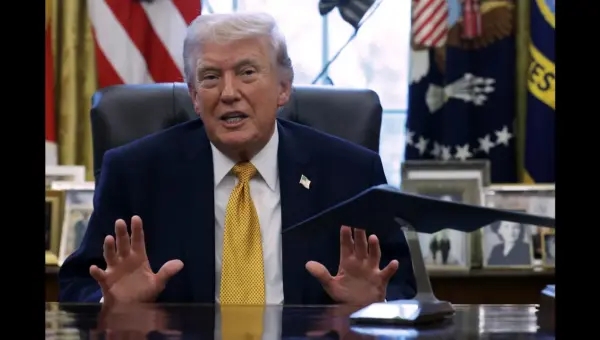
President Donald Trump signed an executive order on March 31st, a significant act that directs federal agencies. Executive orders are powerful tools, acting like directives from the President that carry the force of law. Their impact can be wide-ranging, affecting policy, the economy, and citizens' lives.