Reliability: The Cornerstone of Real Estate Success
Reliability, often overlooked, is emerging as a critical metric for sustained success in the real estate market. A commitment to fulfilling 100% of obligations, rather than 90%, is essential for navigating economic headwinds and building trust. This principle underpins operational efficiency, minimizes risk, and drives superior financial outcomes for agents, investors, and property owners alike.


The Unspoken Metric Driving Real Estate Value
In the dynamic world of real estate, success is often measured by tangible metrics: property values, rental income, appreciation rates, and market capitalization. However, a less quantifiable, yet profoundly impactful, factor underpins the stability and growth of any real estate venture: reliability. This principle, often overlooked in the pursuit of financial gains, is emerging as a critical differentiator for individuals and teams aiming for sustained success in the housing market.
Defining and Measuring Reliability
Reliability, in essence, is the unwavering commitment to doing what you say you will do. It’s about consistency, accountability, and the assurance that tasks, big or small, will be completed as promised. In a professional context, this translates to a ‘batting average’ of performance. While a 90% success rate might be commendable in other fields, within high-stakes environments like real estate transactions, or managing a property portfolio, anything less than a perfect score on commitments can have significant repercussions.
Consider the implications: if a real estate agent promises to follow up with a client by a certain time and fails to do so, that missed commitment can cost a sale. If a property manager assures a tenant that a repair will be completed by Friday and it isn’t, tenant satisfaction plummets, potentially leading to vacancies and lost revenue. For investors, unreliable partners or contractors can derail projects, inflate costs, and erode potential returns. In this environment, a 900 batting average, while impressive in baseball, is unacceptable. It suggests that one out of every ten commitments is either forgotten, delayed, or simply not executed. In real estate, where timing and trust are paramount, such a lapse can be the difference between a lucrative deal and a costly failure.
Economic Headwinds and the Need for Dependability
The current economic climate, characterized by fluctuating interest rates, persistent inflation, and evolving housing demand, places an even greater premium on operational efficiency and trust. Buyers and sellers navigating a market where mortgage rates can shift weekly, or where inventory levels remain tight in many desirable areas, need professionals they can depend on implicitly. Investors seeking to optimize their returns in a landscape where cap rates might be under pressure must rely on their teams to execute flawlessly.
For instance, a buyer relying on a mortgage broker who misses a crucial deadline might lose out on a property at a favorable interest rate. A seller working with an agent who doesn’t reliably coordinate showings or provide timely feedback could see their home linger on the market, depreciating its perceived value. In such scenarios, the broader economic factors amplify the impact of individual unreliability.
Regional Market Nuances and the Impact of Reliability
The importance of reliability is not uniform across all real estate markets. In highly competitive, fast-paced urban centers, where multiple offers are common and speed is of the essence, a single missed commitment can mean losing a property or a buyer. Here, agents, lenders, and inspectors who consistently deliver on their promises build reputations that attract a steady stream of business. The cost of unreliability is immediate and significant.
Conversely, in slower-moving, more rural markets, while the stakes might seem lower, the impact of unreliability can be more prolonged. A delayed transaction due to a lack of dependability can create significant financial strain for parties involved, especially if they are dependent on the sale for their next move or investment. For property investors, the implications are universal. Whether managing a single rental unit or a large portfolio, unreliable property managers, maintenance crews, or contractors can lead to:
- Increased vacancies due to poor tenant retention.
- Higher repair and maintenance costs due to shoddy work or delays.
- Legal issues arising from unfulfilled lease obligations or safety violations.
- Reduced cash flow and lower overall return on investment (ROI).
Understanding Key Real Estate Concepts
To fully grasp the impact of reliability, it’s helpful to understand a few fundamental real estate concepts:
- Cap Rate (Capitalization Rate): This is a measure of a property’s profitability. It’s calculated by dividing the net operating income (NOI) by the property’s market value. A higher cap rate generally indicates a more attractive investment. Unreliable operations can directly reduce NOI, thus lowering the cap rate.
- LTV (Loan-to-Value Ratio): This is the ratio of the loan amount to the appraised value of the property. Lenders use LTV to assess the risk of a loan. Delays caused by unreliability can sometimes impact appraisal validity or lender commitments, potentially affecting the LTV and the feasibility of a deal.
- Cash Flow: This is the net amount of money generated by an investment property after all expenses are paid. Positive cash flow is crucial for long-term investment success. Unreliability in management or maintenance directly saps cash flow through increased costs and lost rental income.
The Million-Dollar Team: Built on Trust
The principle of absolute reliability serves as the bedrock for building successful teams and ventures in real estate. When every member of an organization, from the front-line agent to the back-office administrator, operates with a commitment to fulfilling 100% of their obligations, the collective output is exponentially more effective. This level of dependability fosters trust, streamlines operations, minimizes risks, and ultimately drives superior financial outcomes. In an industry where fortunes can be made or lost on the execution of details, the simple rule of ‘doing what you say you’re going to do’ is not just a guideline; it’s the essential blueprint for enduring success.
Source: I Built a Million Dollar Team Using This ONE Simple Rule (YouTube)

Related Articles


Breaking Into Real Estate: Opportunity Knocks
High property prices and interest rates dominate current real estate discussions, leading many to believe market entry is impossible without wealth. However, historical perspective and strategic thinking suggest opportunity persists for those willing to learn and adapt, regardless of their starting financial position.


Florida Housing Market Sees Sellers Face Losses
Sellers in Florida are increasingly facing significant financial losses as the housing market experiences a notable downturn. Properties bought just a couple of years ago are now being sold for less than their purchase price, highlighting the cyclical nature of real estate and the importance of data-driven decision-making.

Housing Market Slowdown: Cities to Watch for Price Declines
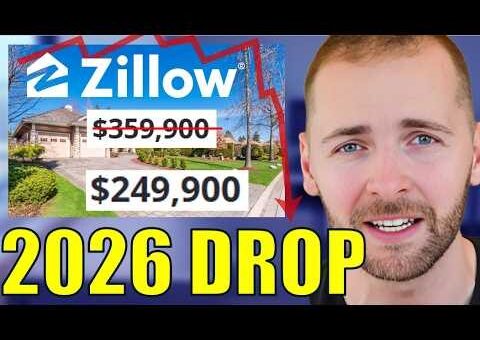
Several U.S. cities are projected to see home price declines in 2026, driven by rising inventory and slower demand. Orlando, Seattle, Dallas-Fort Worth, Tampa, and Denver are among the markets highlighted for potential price adjustments, offering opportunities for buyers but signaling a shift from recent market conditions.