Reframing Reality: Beyond Good, Evil, and Human Perspective
This analysis explores a philosophical perspective that challenges the traditional understanding of evil. It argues that our human-centric definitions of good and bad are subjective and limited, proposing that accepting reality as it is, and reframing wrongdoing as misguidance rather than inherent evil, can lead to greater understanding and peace.

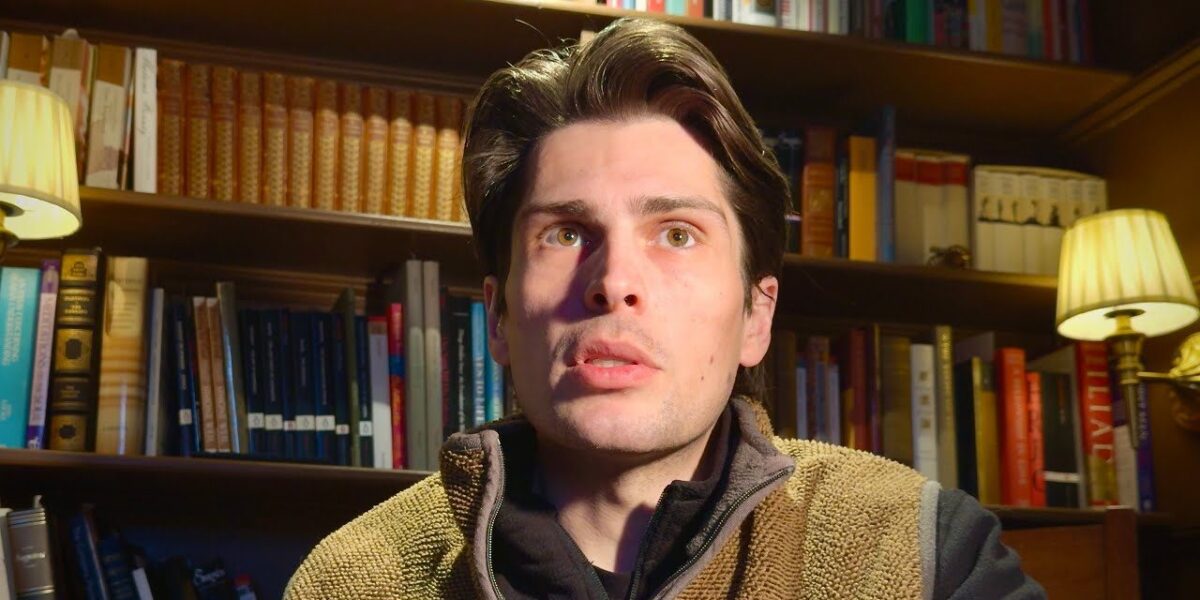
The Persistent Question of Evil
Humanity has long grappled with the existence of suffering and what we perceive as evil. From natural disasters that claim countless lives to the deliberate cruelty inflicted by individuals, the question of why such things occur, and how a benevolent force could permit them, remains a profound and unsettling inquiry. This exploration delves into a perspective that challenges the very foundation of this question, suggesting that our human-centric view might be the root of our confusion.
Challenging the Premise: Evil For Whom?
The core of this argument lies in re-framing the question itself. When we ask, “Why does evil exist?” or “Why do bad things happen to good people?” we are inherently speaking from a limited, personal, and human viewpoint. The transcript posits that if a universal consciousness or a divine entity were to respond, it might simply ask, “Evil for whom?” This simple retort highlights the subjective nature of our definitions of good and bad.
Consider a devastating earthquake. From a human perspective, it is an unmitigated disaster, a tragedy. Yet, from a cosmic or geological standpoint, it is merely an event, a natural process. The same applies to any event; its designation as “good” or “bad” is a human imposition. The transcript suggests that what we label as bad for ourselves might be neutral or even beneficial on a scale we cannot comprehend, perhaps for other species, ecosystems, or even distant parts of the universe.
“We have to realize that uh even if such a thing as evil exists or bad exists, it would be bad for whom? Maybe it would be bad for you but not bad for me. Or it’d be bad for me but not bad for um dolphins… Or or bad for our planet but good for billions of other galaxies.”
The Power of Acceptance: Aligning with Reality
If our definitions of good and bad are subjective and limited, what then is the path forward? The transcript proposes a radical acceptance of reality as it is. This isn’t about condoning harmful actions but about acknowledging the nature of existence. Reality, it argues, is the sum of all events that occur. To deny reality is to deny the very fabric of existence, a futile endeavor.
The concept of aligning one’s will with the “will of reality” or the “universe’s will” is presented as a more constructive approach. This means accepting events not because they are inherently good or bad, but because they have happened. The argument is that if an event has occurred, it is by definition a part of reality and, therefore, necessary in that moment. To label it “bad” is to reject it, but the event remains unchanged. The earthquake still happened; calling it bad doesn’t alter its occurrence or impact.
This perspective offers a form of independence. It suggests that we do not need to understand a divine plan or the motivations of a higher power. The focus shifts inward: do we accept reality, or do we resist it? The chances of successfully denying reality are, by definition, zero. Events, once they have occurred, are impervious to our judgments of good or bad.
Deconstructing “Evil”: Misguidance, Not Monsters
The transcript identifies a significant human tendency: the need to understand and categorize. When wrongdoing occurs, particularly by humans, we seek explanations. The label “evil” becomes a convenient, albeit misleading, answer. It allows us to categorize perpetrators as “evil people doing evil things,” creating a framework that, on the surface, makes sense.
However, this labeling is presented as a fundamental misapprehension. The argument is that “evil” is not an inherent quality of individuals or events but rather a misnomer for something far more understandable: misguidance, unawareness, ignorance, and mistakes. By attributing wrongdoing to “evil,” we create an abstract, monstrous entity that is terrifying precisely because it is incomprehensible and seemingly outside the realm of human experience.
This is why the concept of evil is often associated with monsters. Monsters are, by definition, alien, unknowable, and terrifying. When we perceive evil as a force separate from human fallibility, we create a worldview where we are small individuals battling an overwhelming, incomprehensible darkness. This can lead to a sense of despair and fear, a feeling of being consumed by a world of evil.
The Path to Understanding and Prevention
The proposed re-framing of “evil” as “misguidance” offers a powerful alternative. If we understand wrongdoing as stemming from a lack of awareness, ignorance, or flawed decision-making, the situation transforms. Instead of facing an unexplainable monster, we are confronted with human behavior that, while potentially destructive, is ultimately understandable.
This understanding has profound implications. It allows us to see ourselves in the actions of others, recognizing our own past mistakes and moments of unawareness. It demystifies the source of harmful behavior, making it less terrifying and more amenable to solution. When we understand how misguidance arises, we can begin to address its causes, implement preventative measures, and foster environments that promote awareness and better decision-making.
The difference between the concept of “evil” and “misguidance” is stark. Evil is presented as an unknowable, monstrous force, the origins and workings of which are a complete mystery. Misguidance, on the other hand, is rooted in observable human psychology and social dynamics. It is something we can study, understand, and, crucially, influence.
Why This Matters
This perspective shift is not merely an academic exercise; it has tangible implications for how we navigate personal challenges, societal issues, and our understanding of the world. By moving away from the notion of inherent evil and embracing the concept of misguidance, we can foster greater empathy, reduce fear, and cultivate more effective solutions to human problems. It encourages a more grounded, less judgmental approach to ourselves and others, recognizing that the “bad” things that happen are often the result of understandable, albeit unfortunate, human processes rather than an inscrutable, malevolent force.
Implications, Trends, and Future Outlook
The trend towards secularization and scientific understanding has, in some ways, already begun to chip away at traditional notions of absolute good and evil. This philosophical reframing aligns with a more empirical and psychological understanding of human behavior. In the future, we may see a continued move away from moralistic judgments and towards a more nuanced analysis of the factors that contribute to suffering and wrongdoing. This could influence fields ranging from criminal justice and rehabilitation to education and conflict resolution, emphasizing understanding and correction over condemnation and retribution.
Historical Context and Background
The dichotomy of good and evil has been a central theme in religious, philosophical, and cultural narratives for millennia. From dualistic religions that posit a cosmic struggle between opposing forces to philosophical debates on the nature of morality and free will, humanity has consistently sought to define and confront what it perceives as negative forces. The concept of original sin in Christianity, for example, suggests an inherent flaw or inclination towards wrongdoing within humanity. This perspective, while influential, often leads to the categorization of individuals and actions as inherently good or evil, a framework that the transcript seeks to dismantle.
Philosophers like Friedrich Nietzsche critiqued traditional morality, arguing that concepts of good and evil were often constructs of the weak to control the strong. Similarly, existentialist thought emphasizes individual freedom and responsibility, suggesting that individuals create their own meaning and values in a world devoid of inherent moral order. The ideas presented in the transcript echo these traditions by emphasizing human agency and the subjective construction of meaning, while offering a practical framework for navigating a complex world.
Source: Rain falls on good and bad people alike (YouTube)

Related Articles

Aligning with Reality: The Antidote to Disappointment
This analysis explores the human tendency to reject reality and its consequences, drawing on philosophical insights to argue for aligning personal will with objective truth as a path to overcoming disappointment and fostering a more meaningful life.

The Paradox of Virtue: Why Pursuing Morals Can Make Us Worse
The pursuit of virtues like honesty and kindness, while noble, can paradoxically lead to judgment and resentment. This analysis explores how adhering to moral codes for external validation or self-improvement can be self-defeating, offering a path towards genuine non-judgment through intrinsic motivation and self-interest.

Beyond the Person: The Enduring Power of Shared Values
This analysis explores the idea that true love is not for the person themselves, but for the enduring virtues and ideas they embody. It suggests that our deepest connections are with universal principles like kindness and honesty, which transcend mortality and offer a path to lasting remembrance.