Reform UK Outlines “Britain First” Foreign Policy Stance
Reform UK is articulating a distinct foreign policy centered on "Britain First" principles, prioritizing national interests and expressing skepticism towards foreign interventions. Party board member Gawain Towler discussed the approach, emphasizing self-reliance and a pragmatic view of international relations, even as the party gains electoral traction.

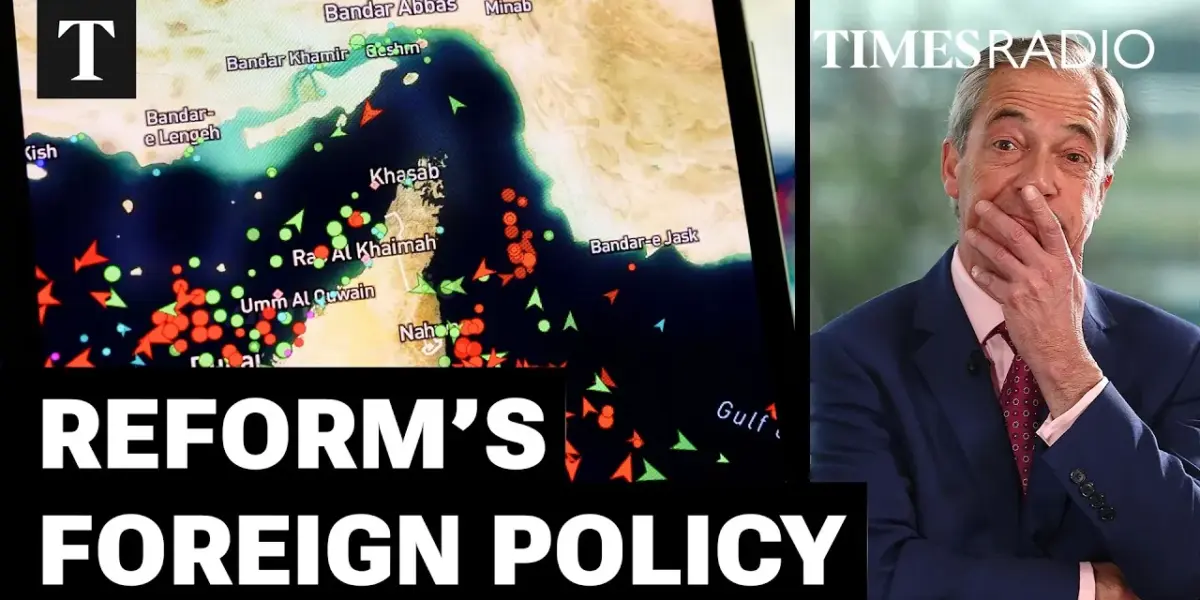
Reform UK Charts Independent Foreign Policy Course
Reform UK is positioning itself with a distinct foreign policy, emphasizing national interests above all else, even as the party gains traction in British polls. Gawain Towler, a member of Reform UK’s board, recently discussed the party’s approach to international relations, highlighting a focus on “Britain First” principles and a critical view of foreign interventions.
Relationship with Donald Trump
While acknowledging Nigel Farage’s long-standing relationship with former U.S. President Donald Trump, Towler stressed that Reform UK’s foreign policy is not dictated by Trump. “Everybody in the world’s foreign policy is influenced by Mr. Trump and what he does,” Towler stated. However, he quickly added that the party must “have our own defense policy, our own interests.” This indicates a desire to learn from global events and political shifts without blindly following any single leader or ideology.
The party believes that while aligning with U.S. interests is sometimes beneficial, it’s not always the case. “We don’t have permanent allies, we have permanent interests,” Towler explained, echoing a famous diplomatic principle. This suggests a pragmatic approach, prioritizing the United Kingdom’s needs in a complex geopolitical landscape.
“Britain First” Principles and Interventionism
Reform UK’s foreign policy can be broadly characterized as prioritizing national interests, similar to Trump’s “America First” approach. Towler confirmed this, stating, “Yes, of course, we would be putting the interests of our country and its people first.” He argued that this is the fundamental duty of any government.
This philosophy appears to translate into a skepticism towards foreign interventions. When asked about recent military actions, Towler expressed concern about the UK’s current defense capabilities. “I’m not entirely sure we could defend the Channel Islands,” he admitted, suggesting that the nation’s resources might be better focused domestically. He indicated a general opposition to foreign military involvement, unless it directly serves a clear British interest.
Economic Policy and Trade
On economic matters, Reform UK describes itself as a “less laissez-faire free trading party.” However, Towler noted that certain national interests might warrant a more protective stance. He pointed to the steel industry as an example, where the party claims its actions influenced the government to prevent the closure of vital blast furnaces.
The party is also open to using economic tools to achieve political goals. Towler mentioned the possibility of using trade measures against countries that refuse to accept the return of their citizens who have entered the UK illegally. This suggests a willingness to employ economic pressure as a foreign policy lever.
Views on Europe and NATO
Reform UK is critical of closer ties with Europe, viewing it as a potential drain on resources and a distraction from domestic priorities. “Europe is itself close to bankruptcy in many of its major states,” Towler observed, adding that the continent faces its own defense challenges.
The potential withdrawal of the United States from NATO is a significant concern for the party, though not for the reasons one might initially assume. Towler believes that such a move would be a wake-up call for European nations, particularly the UK, to significantly increase their own defense spending and capabilities. “We have to step up if a threat to that wasn’t my question,” he stated, emphasizing that European nations have relied too heavily on American security guarantees for too long.
He explained that America’s strategic focus is shifting towards the Pacific, making it imperative for European nations to take greater responsibility for their own security. The UK, in particular, has been “lazy” and has not invested adequately in its defense for decades, according to Towler. A U.S. withdrawal from NATO, while potentially destabilizing in the short term, could ultimately force the UK and other European countries to become more self-reliant.
The China Threat
While acknowledging Russia as a threat, Towler identified China as the primary global challenge. “Russia does not have the capacity or the economy to dominate the globe,” he said, contrasting it with China’s growing economic and military power. He argued that strategic thinking must focus on China as the principal long-term threat to global stability.
Iran and International Conflicts
Addressing the conflict with Iran, Towler expressed frustration with what he sees as a tendency for UK commentators to want America and Israel to fail. He stressed that once such conflicts begin, they must be pursued to a successful conclusion, especially given Iran’s past actions against the UK, including terrorist threats.
When asked about potential U.S. military actions against Iran, Towler suggested that such decisions might be part of a broader strategy involving China. He referenced potential Chinese missile sales to Iran and efforts to restrict China’s access to oil as factors that could influence U.S. policy. However, he concluded that it is “too early to say” whether specific actions were right or wrong, while understanding the strategic reasoning behind them.
Support for U.S. and Israeli Efforts
Reform UK has indicated a willingness to support American and Israeli efforts in the region. Deputy leader Richard Tice stated that the party would help “in any way they saw appropriate.” Towler interpreted this practical support as likely involving intelligence sharing and the use of British bases, similar to current arrangements.
He acknowledged a seeming contradiction with Nigel Farage’s statement that Britain “cannot get involved directly in another foreign war.” Towler clarified that the use of bases and intelligence sharing, while a form of involvement, is distinct from direct military combat. He views this as a moral and strategic imperative, particularly given the UK’s own experiences with Iranian aggression.
Prescribing the IRGC
Reform UK advocates for proscribing the Islamic Revolutionary Guard Corps (IRGC) and the Muslim Brotherhood. Towler argued that while this may not drastically alter the situation in Iran, it serves as a crucial statement of intent. It would allow UK security and intelligence services to focus more effectively on these organizations, preventing them from operating freely outside the UK and posing internal threats.
Looking Ahead
As Reform UK’s influence grows, its foreign policy stances will face increased scrutiny. The party’s commitment to a “Britain First” approach, its stance on international interventions, and its re-evaluation of alliances will be key areas to watch as the UK navigates an increasingly complex global landscape.
Source: How Reform Would Deal With Iran | Gawain Towler (YouTube)

Related Articles

Elite Scientists Vanish: A Disturbing Pattern Emerges
A series of perplexing disappearances involving highly skilled scientists working for the U.S. government and military is raising serious questions. Friends and colleagues are stunned and searching for answers as a troubling pattern of vanishing experts emerges.

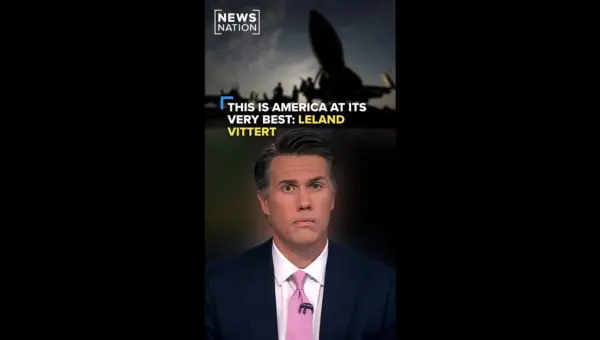
US Military Risks All for Downed Pilot
American air crews fly into dangerous enemy territory knowing the entire U.S. military will work tirelessly to bring them home if shot down. This commitment highlights extreme risks and historical parallels, showcasing the nation's dedication to its service members.


China Apps Threaten U.S. Data: FBI Sounds Alarm
The FBI has alerted Americans to potential data risks from popular apps linked to China. Required by Chinese law to share user data, these apps could expose sensitive personal information, raising national security concerns. U.S. officials are enacting bans and proposing legislation to counter these threats.