Reform Party Faces Challenge in Shedding ‘Trump Party’ Image
The UK's Reform Party faces pressure to distance itself from Donald Trump to broaden its appeal for government power. Meanwhile, international peace talks regarding the Iran conflict are hampered by deep divisions, with a negotiator describing the gaps as an "abyss." The geopolitical landscape is shifting, prompting discussions about alliances and leadership styles.

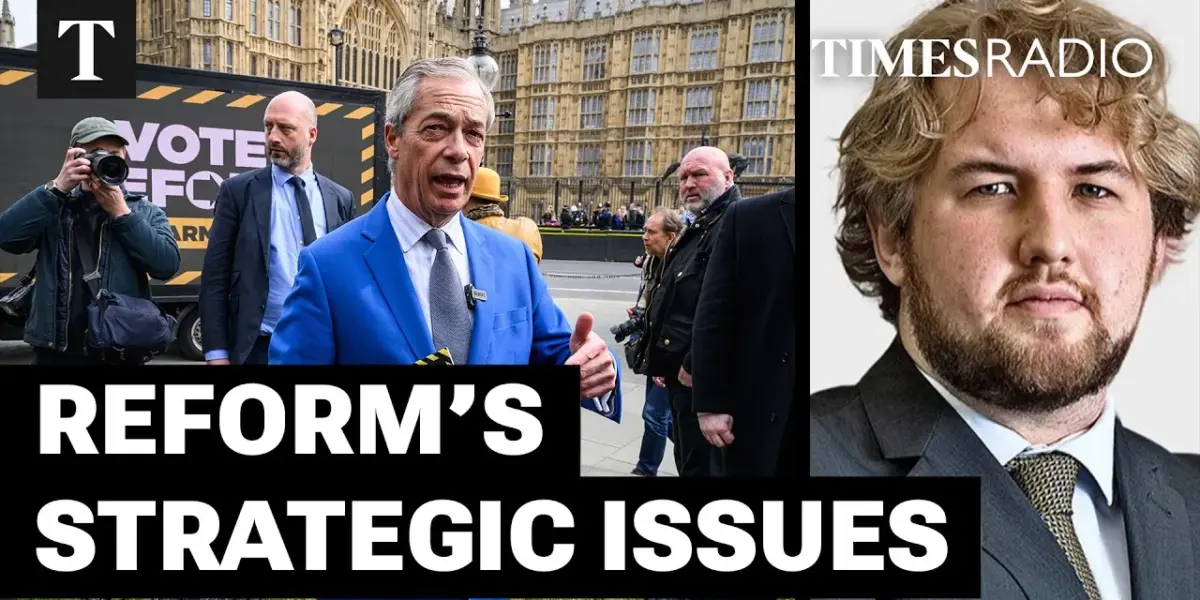
Reform Party Struggles to Define Identity Beyond Trump Association
The UK’s Reform Party is facing a critical strategic challenge: shedding its image as the “Trump Party” to broaden its appeal and seriously pursue government power. While some members privately acknowledge the need for distance, the party’s close ties to former U.S. President Donald Trump present a significant hurdle. This association, though popular with a segment of Reform voters, may alienate potential supporters needed to form a wider coalition.
Geopolitical Tensions Rise Amidst Iran Conflict and US Audits
Britain, along with other NATO members, faces potential audits from the United States regarding support for the ongoing conflict in Iran. Defense Minister Luke Pollard stated that the war is not Britain’s war, but emphasized the UK’s commitment to defending allies against Iranian attacks on British and coalition bases. NATO Secretary General Mark Rutter praised the UK’s efforts in securing the Strait of Hormuz, a point of contention in the conflict.
Keir Starmer’s Strategy: Embracing Distance from Trump
In the UK, Labour leader Keir Starmer appears to be benefiting politically from distancing himself from Donald Trump. Starmer has publicly expressed frustration with Trump’s actions, a move seen as advantageous for Labour’s political positioning. This approach allows Starmer to project a sense of independent leadership, particularly as global events create uncertainty.
Peace Talks Face ‘Abyss’ of Disagreement, Negotiator Warns
International peace talks aimed at resolving the conflict in Iran, scheduled to take place in Islamabad, face immense challenges. Nomi Baraku, an international peace negotiator, described the gaps between the involved parties as an “abyss.” She cautioned that the definition of success would be if delegations at the agreed-upon high level actually show up, noting that no agenda has been set and a lasting ceasefire remains distant.
Pakistan’s Role as Mediator Questioned
The choice of Pakistan as a mediator has also drawn scrutiny. While any broker is valuable in the current climate, a recent inflammatory statement by Pakistan’s defense minister regarding Israel has raised concerns. Despite this, Pakistan is working with a coalition of mediators, including Saudi Arabia, Turkey, and Egypt, with Oman playing a crucial role due to its shared border with Iran on the Strait of Hormuz.
US-Israel Relations Strained Over Peace Talks
U.S. President Donald Trump reportedly agreed to the peace talks without consulting Israeli Prime Minister Benjamin Netanyahu, anticipating an objection. This move highlights a potential rift, as Israel continues its military operations, including recent strikes in Lebanon that resulted in significant civilian casualties. The wider regional implications, extending beyond Iran to Lebanon, are deeply worrying.
Gulf States Seek Swift End to Conflict and New Security Architecture
Gulf states, including Saudi Arabia, Qatar, and Oman, have endured direct attacks on their infrastructure and civilian targets since the war began. These nations are reportedly pushing for a prompt end to the hostilities and the establishment of a new regional security framework. The current situation underscores a growing sentiment of unreliability in the United States’ role as a security guarantor in the region.
Internal Pressure Mounts for Reform to Criticize Trump
Within the Reform Party, there is increasing internal pressure for Nigel Farage to distance himself further from Donald Trump, especially ahead of upcoming elections and amid public concern over economic fallout from the ongoing conflicts. While Farage has made some critical comments about Trump’s remarks, these have not always been widely noticed. His supporters argue his pro-American stance, rooted in his belief in the transatlantic alliance, informs his approach, rather than blind loyalty to Trump.
Farage’s Political Philosophy and the Transatlantic Alliance
Patrick Maguire, chief political commentator for The Times, suggests that Farage views his relationship with Trump through the lens of preserving the vital transatlantic alliance, which he sees as crucial for Britain’s security and prosperity. This perspective, according to Maguire, is the foundation of Farage’s approach, even when criticizing Trump. However, those around Farage are reportedly aware of the risks associated with the Trump association.
The Broader Context: A World After Trump?
The discussions also touched upon the broader geopolitical question of a world post-Donald Trump. Experts suggest that planning for such a scenario is underway, with talks of alternative alliance-building. The current global climate, marked by conflict and shifting political landscapes, necessitates a strategic re-evaluation of international partnerships and security arrangements.
World Leader WhatsApp Groups: A Glimpse into Informal Diplomacy
In a lighter, yet insightful, turn, the conversation explored the concept of world leaders communicating via WhatsApp groups. Keir Starmer confirmed the existence of such groups, sparking speculation about the informal dynamics of international diplomacy. The idea of leaders sharing memes or engaging in casual exchanges offers a unique perspective on how global communication might function behind the scenes.
“The gaps between the two parties as an abyss.”
Nomi Baraku, International Peace Negotiator
“Being seen as the Trump party is clearly not ideal.”
Patrick Maguire, Chief Political Commentator, The Times
Source: Reform Becoming The ‘Trump Party’ Will Not Get Them Into Government | Patrick Maguire (YouTube)

Related Articles
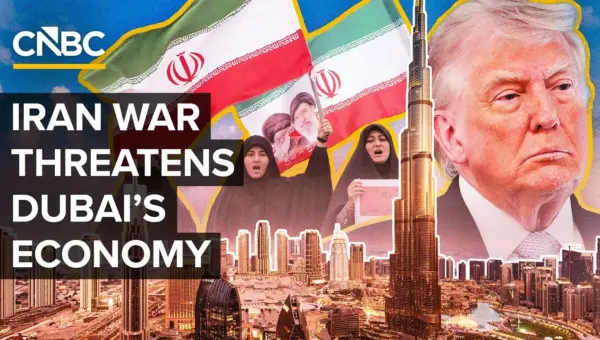
Iran War Sparks $120B Stock Wipeout in UAE
The UAE's stock markets have lost $120 billion amid the Iran conflict, shaking its reputation as a safe haven. Disruptions to air travel, trade, and the energy sector are creating significant economic challenges. Investors are watching closely as the nation reevaluates its security alliances.
GOP’s Trump Problem: Party Faces Reckoning
Some Republican lawmakers are reportedly growing tired of Donald Trump's influence, seeing him as a major problem. Despite a history of supporting Trump, many now face an electorate unimpressed with their lack of results. The party's focus on cultural issues over economic ones may be alienating voters.
Trump’s Wild Rants Expose a Presidency Adrift
Donald Trump's recent 'batshit crazy' outbursts, attacking former allies and reacting erratically to the Iran crisis, signal a leader adrift. Professor Scott Lucas argues this isn't diplomacy but desperate shouting, as geopolitical tensions escalate and traditional allies seek new paths.