Red States Cut Taxes, Blue States Target Wealthy
A new Tax Foundation report reveals a stark contrast in state tax policies, with 23 states lowering income tax rates since 2021. Meanwhile, Democrat-led states are increasingly proposing higher taxes on the wealthy, sparking concerns of an investor exodus.

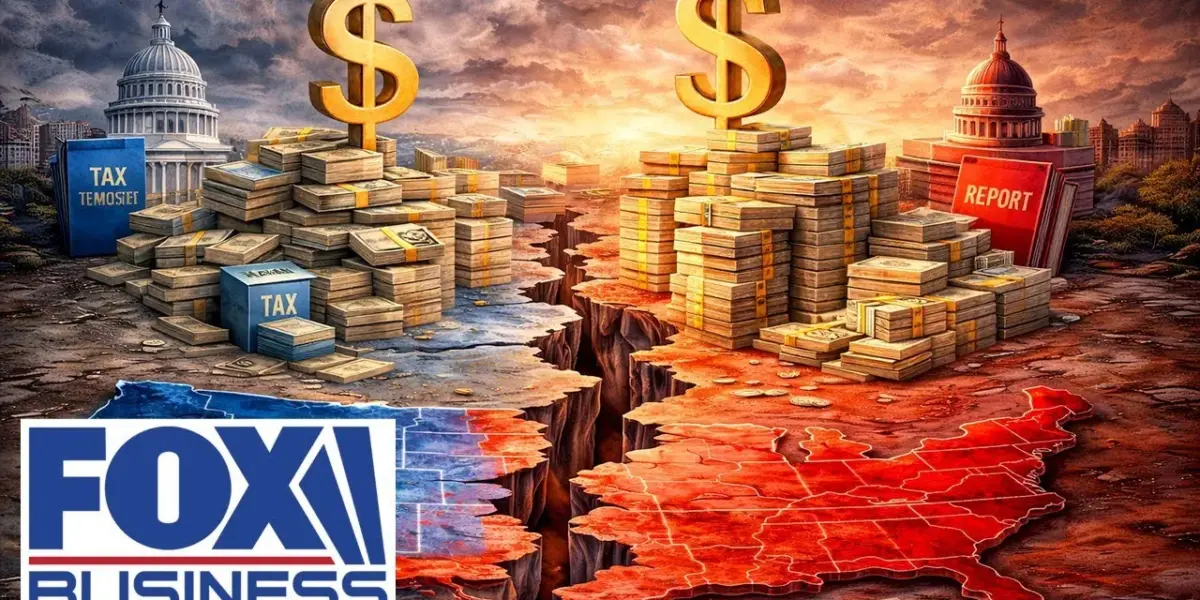
Red States Slash Income Taxes as Blue States Eye Wealthy
A widening fiscal chasm is emerging across the United States, with Republican-led states aggressively lowering income tax rates while Democratic-led states increasingly propose higher taxes on affluent residents and corporations. A recent report from the Tax Foundation highlights this growing divergence, revealing that 23 states have reduced their top income tax rates since 2021, with some, like Mississippi and Oklahoma, moving towards the complete elimination of personal income taxes.
The Shifting Tax Landscape
This trend indicates a significant bifurcation in state-level fiscal policy. As red states opt for broad tax reductions to stimulate economic activity and attract residents, blue states are grappling with budget deficits and exploring progressive taxation models. The proposed “millionaire’s tax” and “billionaire’s tax” in several Democrat-led states are specifically designed to increase revenue from high-net-worth individuals and large corporations.
Blue State Proposals and Investor Exodus Fears
New York City Mayor Zohran Mamdani has been a vocal proponent of increasing taxes on high-income households. Meanwhile, California’s proposed billionaire’s tax, a one-time 5% levy on individuals with a net worth exceeding $1 billion, has ignited concerns among business leaders. This has fueled fears that prominent business figures and successful entrepreneurs may relocate to more tax-friendly jurisdictions. Indeed, at least one high-profile business leader has already announced a move from California to Texas, explicitly citing the avoidance of potential tax hikes as a primary motivation.
The Appeal of No-Income-Tax States
States like Texas and Florida, which currently impose no state-level personal income tax, have long been magnets for individuals and businesses seeking lower tax burdens. The ongoing trend of blue states considering significant tax increases on the wealthy is likely to further bolster the appeal of these tax-haven states. The relocation of high-profile individuals can have ripple effects on local economies, including job creation, investment, and consumer spending.
Market Impact and Investor Considerations
The diverging tax policies between red and blue states present several considerations for investors and businesses:
- Geographic Relocation: High-net-worth individuals and corporations may reassess their state residency and operational bases to optimize tax liabilities. This could lead to capital flight from higher-tax states to lower-tax or no-income-tax states.
- Sectoral Impact: Industries that are heavily concentrated with high-income earners or large corporations, such as technology and finance, may be disproportionately affected by the tax policies in blue states.
- Economic Growth Divergence: States that successfully attract investment through lower taxes may experience accelerated economic growth, while states with higher tax burdens could face challenges in retaining and attracting businesses and talent.
- Policy Uncertainty: The ongoing debate and potential implementation of new tax policies in various states create an environment of uncertainty, which can influence investment decisions and market sentiment.
What Investors Should Know
Investors should monitor state-level tax legislation closely, as these policies can influence personal and corporate financial strategies. The trend of states competing for wealth and business through tax policy is likely to continue, creating opportunities and risks depending on the specific location and industry. Understanding the tax implications of residency and business operations across different states is crucial for long-term financial planning.
“Twenty-three states have lowered their top income tax rates since 2021, while more Democrat-led states are proposing increased levies on their wealthiest residents.”
Long-Term Implications
In the long term, this tax divide could lead to significant shifts in population and economic power across the U.S. States that maintain competitive tax environments may foster greater economic dynamism, while those implementing higher taxes could face the challenge of retaining their most productive citizens and businesses. The sustainability of state budgets will depend on balancing revenue needs with the imperative to foster a favorable business and living climate.
Source: TAX DIVIDE: New report EXPOSES widening red-blue tax gap across America (YouTube)

Related Articles


Red States Face Tax Dilemma as Voters Demand Services
Voters in Republican-led states are signaling a change in priorities, indicating they'd rather pay higher taxes for essential services like roads and schools than continue with tax cuts. This marks a significant shift from decades of anti-tax rhetoric and presents a new challenge for politicians.


Property Taxes Soar: Which States Feel the Pinch?
Property taxes are surging across the U.S., with Florida seeing a 47% jump since 2019. While rising home values play a role, tax policies are a major driver, leading 16 states to consider reforms. This trend adds significant financial pressure on homeowners already facing higher mortgage and insurance costs.


Homeland Security Funding Fight Stalls Government Operations
A funding stalemate over the Department of Homeland Security is causing uncertainty in Washington. House Speaker Mike Johnson and Republican leaders are navigating divisions over border security, impacting government operations and potentially influencing investor confidence. The ongoing dispute highlights challenges in fiscal policy and governance.