Red State Judges Defy Trump’s Agenda, Even His Appointees
Even judges appointed by Donald Trump in "red states" are pushing back against his administration's agenda, particularly on immigration. While these judicial challenges are crucial for democratic checks and balances, a lack of enforcement on judicial threats raises concerns about accountability.

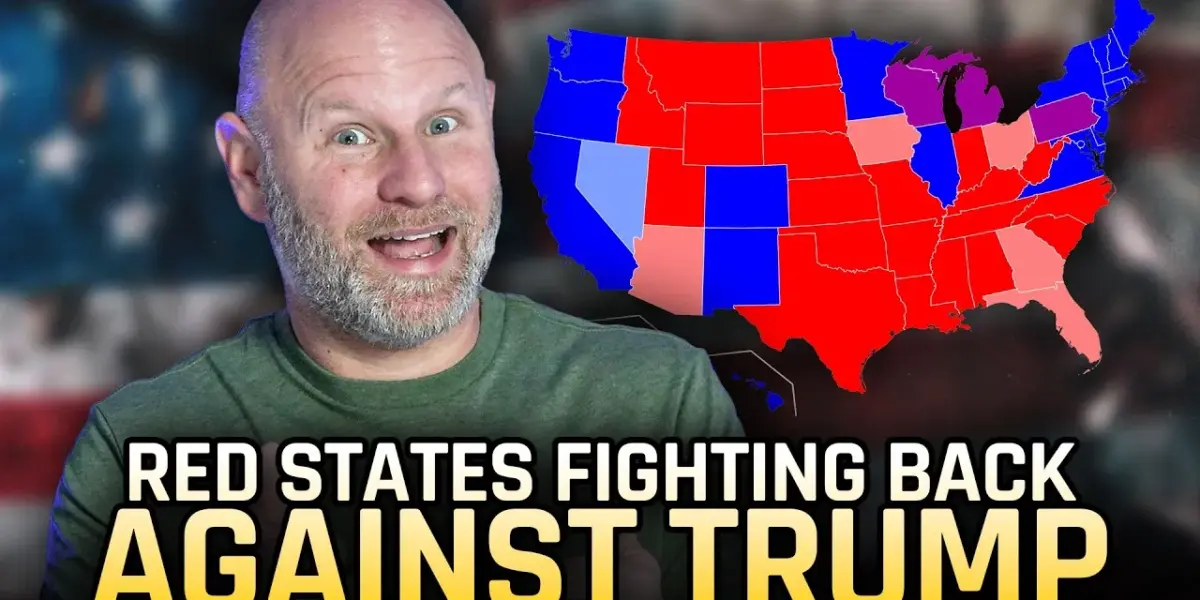
Red State Judges Defy Trump’s Agenda, Even His Appointees
Donald Trump’s political influence extends far beyond his direct policy initiatives. While his agenda often faces opposition from opposing political parties, a more complex and perhaps surprising challenge is emerging from within states that are otherwise considered staunchly Republican. Legislators in these “red states” have, at times, pushed back against Trump’s directives, even when it means defying the former president himself. This internal dissent was notably seen when Republican lawmakers in states like Indiana resisted Trump’s push for redistricting changes mid-election year. Such actions have historically drawn sharp criticism from Trump, who has publicly called for the ousting of these dissenting lawmakers, accusing them of “destroying our country” and aiding foreign adversaries.
The Unseen Legal Pushback
However, a significant aspect of this internal red state resistance has remained largely unaddressed by Trump: the legal challenges emanating from the very states that overwhelmingly supported him. The transcript highlights a crucial point: even judges appointed by Trump, individuals expected to be loyalists, are issuing rulings that impede his administration’s initiatives. This phenomenon is particularly pronounced in states like West Virginia, a state where Trump secured a commanding 70% of the vote in the 2024 election.
West Virginia: A Case Study in Judicial Restraint
The situation in West Virginia offers a stark illustration. According to reporting by Kyle Chady for Politico, four out of the five top federal judges in the state have recently issued a series of adverse rulings against the Trump administration’s policies, primarily concerning immigration and detention. These judges have not shied away from threatening “legal consequences,” including potential civil fines or contempt charges, if the administration and its state allies continue detaining individuals in ways deemed unconstitutional. This represents a significant judicial check on executive power, even in a deeply conservative state.
The Power of Threats vs. Action
While the judiciary’s willingness to challenge the administration is a positive sign for the health of democratic guardrails, the transcript points out a critical deficiency: a lack of follow-through on these judicial threats. The author expresses frustration that despite issuing warnings, some dating back to April and May of the previous year, these judges have not yet enforced the threatened consequences. The argument is clear: judicial pronouncements without enforcement become mere rhetoric, failing to hold accountable those who continue to defy court orders.
“A threat without follow through is just a series of words that mean nothing. So don’t just threaten, do it because they are continuing to defy those court orders. You have mechanisms in place to hold these people accountable to to financially hurt the individuals who are defying you… You’re choosing to not punish these people even though you have the power to do it. So stop threatening. Start getting to work.”
Judicial Independence Beyond Politics
The impartiality of the judiciary is further underscored by the fact that these challenges are not solely coming from judges appointed by liberal presidents. The transcript explicitly states that the judges issuing these critical rulings include those appointed by both Democratic and Republican administrations. This suggests a commitment to the rule of law that transcends political affiliation. US District Judge Joseph Gordon’s observation paints a grim picture of federal agents operating without warrants, seizing individuals for civil immigration violations, and imprisoning them without due process – a practice repeatedly deemed unlawful by judges in his district.
Another judge, US District Judge Irene Berger, has accused the administration of a “lack of respect for the law.” These sentiments, the author argues, represent a crucial function of the judiciary: to interpret and uphold the law, irrespective of political pressures. The implication is that while Trump may have appointed many judges with the expectation of loyalty, the independence of the judicial branch can, and sometimes does, prevail.
The Guardrails of Democracy
The situation, though fraught with challenges, offers a sliver of optimism. The continued functioning of the judiciary, even in a compromised state, suggests that the fundamental checks and balances of American democracy have not been entirely dismantled. The author acknowledges that these guardrails are “wobbly” and “rusty,” but ultimately better than their absence. This resilience of the judicial system, even when tested by executive overreach and political pressure, is a vital component of democratic stability.
Why This Matters
The implications of red state judges, including Trump appointees, challenging the administration’s agenda are profound. Firstly, it demonstrates that the judiciary, even in politically polarized environments, can act as an independent check on executive power. This upholds the principle of separation of powers, a cornerstone of the U.S. Constitution. Secondly, it highlights that loyalty to a political figure does not automatically equate to a disregard for legal and constitutional principles. Judges are bound by their oath to the law, not to any individual.
Implications, Trends, and Future Outlook
The trend observed in West Virginia could signal a broader pattern where judicial scrutiny, even from conservative judges, might become a more significant obstacle for future administrations seeking to implement aggressive policies, particularly in areas like immigration. This could force administrations to be more meticulous in their legal grounding and procedural adherence. The future outlook depends on whether judges move beyond issuing threats to actively enforcing their rulings through sanctions. If they do, it could lead to a more robust application of the rule of law and potentially shape how executive agencies operate in sensitive areas.
Historical Context
Historically, the judiciary has often served as the ultimate arbiter in disputes between the executive and legislative branches, and between the government and the citizenry. Landmark cases have consistently affirmed the judiciary’s role in reviewing the legality of government actions. The current situation, while playing out in a highly charged political climate, echoes historical instances where judicial independence has been tested and, at times, has prevailed against powerful political forces. The appointment of judges by presidents, while intended to shape the judiciary in line with their judicial philosophy, has always carried the inherent risk of appointing individuals who will ultimately prioritize their judicial duty over political allegiance.
Source: Red State Judges Are Dismantling Trump's Agenda (YouTube)

Related Articles


Trump’s ‘Shield of America’ Event: A Spectacle of Bravado and Misinformation
Donald Trump's "Shields of America" event was marked by claims of an Iranian surrender, aggressive missile rhetoric, and cultural insensitivity. The analysis explores the geopolitical and economic implications of his pronouncements, contrasting them with intelligence reports and historical context.


Protesters Rally Against Potential Trump-Fueled Iran War
New York City residents gathered to protest the potential for a U.S. war with Iran, criticizing former President Trump's alleged advocacy for military action. Independent outlet Status Coup covered the demonstration, highlighting calls for de-escalation and diplomatic solutions.

US Strikes Iran: Economy, Not Conflict, Dominates American Minds
Despite escalating tensions and US strikes in Iran, American voters appear more concerned with the domestic economy. Polling reveals a majority oppose the conflict, while experts warn that economic woes could overshadow foreign policy, impacting President Trump's political future.