Raw Sewage Engulfs Nation’s Capital: A Stench of Neglect and Political Dysfunction
Washington D.C. is reeling from a massive sewage spill, with 200 million gallons of raw waste inundating the Potomac River due to a burst, decades-old pipe. This environmental disaster, laden with health risks, highlights severe infrastructure neglect and is exacerbated by political infighting and a partial government shutdown that prioritizes enforcement over essential services. Observers view the crisis as a potent symbol of systemic decline, drawing parallels to historical empires that crumbled from within.

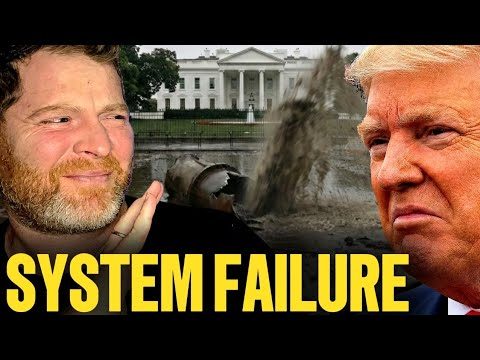
Raw Sewage Engulfs Nation’s Capital: A Stench of Neglect and Political Dysfunction
Washington D.C., the symbolic heart of American power and democracy, is currently grappling with an environmental and public health catastrophe of staggering proportions. The Potomac River, a vital waterway flowing past iconic memorials and federal institutions, has been inundated with an estimated 200 million gallons of raw, untreated human sewage. This massive discharge, described as one of the largest sewage spills in U.S. history, is not merely an unpleasant odor but a stark manifestation of decades of deferred maintenance, political infighting, and a broader systemic decay that many observers are now calling a “modern dark age.”
The incident has transformed the nation’s capital into a potent metaphor for a country struggling with its foundational infrastructure, a fractured political landscape, and a seemingly insurmountable inability to address basic, yet critical, national challenges. The pervasive stench of human waste now hangs heavy in the air near landmarks like the Lincoln Memorial and the Kennedy Center, a visceral reminder that the traditional notions of power and prestige are being overshadowed by a very real, very foul crisis.
The Unfolding Crisis: 200 Million Gallons and Counting
The scale of the sewage spill is alarming. An estimated 200 million gallons of raw waste have poured directly into the Potomac River, creating immediate and severe environmental and public health hazards. Eyewitness accounts describe an overwhelming and nauseating odor, a stark contrast to the grandeur typically associated with the capital. The proximity of the spill to popular tourist destinations and residential areas amplifies concerns about potential exposure.
Experts are particularly worried about the health implications. The untreated sewage carries high levels of harmful bacteria, including E. coli, a common fecal indicator, and dangerous pathogens like Staphylococcus aureus. “What we’re really concerned about is the potential for people to interact with the sewage and the bacteria that can be contained in the sewage,” noted one environmental expert, highlighting the heightened risk of a river spill compared to those occurring in larger bodies of water like oceans, where dilution is more rapid. The confined nature of a river means a higher concentration of pollutants and a greater likelihood of human exposure through recreational activities or even indirect contact.
A Legacy of Neglect: The Potomac Interceptor’s Demise
At the heart of this environmental disaster lies the failure of a critical piece of infrastructure: the Potomac Interceptor. This massive 72-inch concrete tube, built in the 1960s, was once state-of-the-art. It began its operation when John F. Kennedy was in office, the Beatles were touring, and before humanity had even landed on the moon. For six decades, this vital artery efficiently transported wastewater away from the capital, quietly performing its essential, if unglamorous, function.
However, like much of America’s aging infrastructure, the Potomac Interceptor suffered from chronic neglect. Instead of routine maintenance, upgrades, and investment in this “boring, unsexy work,” national priorities shifted. The transcript laments a focus on building aircraft carriers, engaging in wars abroad, bailing out banks, and engaging in cultural debates, while the nation’s foundational plumbing was left to rot. On January 19th, after years of ignored warnings and deferred action, the pipe finally gave way, succumbing to what was essentially “old age and neglect.”
Engineers investigating the collapse discovered not a bomb or sabotage, but a massive “rock dam” – an accumulation of rocks, dirt, and garbage that had built up over time, blocking the flow and causing immense pressure to rupture the colossal pipe. This seemingly mundane cause, a simple build-up of debris, serves as a poignant metaphor for the broader systemic issues at play: not a single catastrophic event, but rather decades of small, unaddressed problems, a culture of “kicking the can down the road,” and a persistent belief that “the next guy” will handle it.
Political Gridlock Amidst Filth
The immediate aftermath of the spill has been characterized by political finger-pointing and a shocking lack of coordinated action. The broken pipe, situated on federal land and running through Maryland, has become a hot potato in a political blame game. President Trump, whose administration oversees federal land, chose to use the crisis as an opportunity to attack Maryland Governor Wes Moore, a Democrat and combat veteran. Instead of mobilizing federal resources like FEMA or the Army Corps of Engineers, Trump took to social media, accusing Moore of disrespect and revoking a White House dinner invitation.
This response, trivializing a serious public health and environmental emergency into “high school drama,” highlights a deeper political dysfunction. The animosity reportedly stems from Moore’s earlier decision to sign a bill preventing Maryland police from acting as federal immigration enforcement, a move that angered the former president. As Trump blames Moore for the pipe’s failure on federal land, and Moore points to the federal government’s responsibility, the “rock dam is still there. The waste still goes into the water.” This paralysis underscores a critical lack of competence and coordination needed to execute even “a very simple project,” reducing essential human waste management to a political weapon.
The Shadow of a Partial Government Shutdown
Compounding the crisis is a partial government shutdown, which has further crippled the federal government’s ability to respond effectively. While not as sweeping as previous shutdowns, this iteration is described as “insidious,” characterized by “selective socialism.” Under this arrangement, certain agencies – primarily those focused on enforcement – remain fully funded, while critical service-oriented agencies are left without resources.
For example, Immigration and Customs Enforcement (ICE) remains fully funded, with its “deportation squads” receiving their paychecks and private prison contractors “popping champagne.” Meanwhile, essential personnel in service roles are forced to work without pay. TSA agents at airports, Coast Guard members rescuing drug traffickers, and FEMA inspectors – precisely the individuals who would typically assess and respond to a sewage spill – are working as “volunteers.”
This policy sends a chilling message: “If you carry a gun and are kicking down doors for the glory of the United States president, you’re going to get paid. But if you’re standing all day at a metal detector trying to keep planes safe, inspect cargo at the port to keep the supply chain moving, guess what? You’re just a volunteer.” The resulting chaos at airports and ports, with inspections stalled due to unpaid staff, threatens to disrupt supply chains, leading to higher prices for everyday goods. The smell of sewage is not only in the air but will soon manifest in more expensive groceries.
A Metaphor for Decline: Echoes of Rome
The D.C. sewage crisis is presented as a powerful, albeit “too obvious,” metaphor for the decline of the American empire. Drawing parallels to the fall of Rome, the analysis suggests that empires rarely collapse with a dramatic barbarian invasion or zombie apocalypse. Instead, they crumble slowly, through “deferred maintenance,” broken aqueducts, debased currency, and elites squabbling over status while essential infrastructure rusts. The current situation in Washington D.C. – a 60-year-old pipe bursting from neglect, a government shutdown that prioritizes guards over maintenance crews, and a president engaged in social media feuds while the capital literally reeks of human waste – fits this historical pattern precisely.
This is not a Mad Max scenario, but a “modern dark age” characterized by something far more mundane, yet equally insidious: “It’s just broken. It’s stupid. It’s slow. And it’s expensive.” It manifests in cancelled flights, funny-tasting water, and indefinitely closed bridges. The most frightening aspect, according to the analysis, is that those in charge seem incapable of fixing it, content to “blame the next guy” and “kick this down the road” until the problem is quite literally “up to your knees.”
Looking Ahead: Personal and National Choices
The crisis forces a profound question upon individuals: how to respond to such pervasive dysfunction. The options presented range from staying and attempting to effect change through voting – a path met with cynicism regarding accountability – to seeking opportunities elsewhere. The idea of an “expat life” in places like Southeast Asia or Eastern Europe, where basic infrastructure often functions reliably despite political corruption, is offered as a stark contrast to the American experience.
The assertion that this specific brand of dysfunction “doesn’t happen everywhere else” but is “specific to America” is a harsh indictment. The speaker, having lived in purportedly “third-world” countries where airports work and clean water is available, concludes that America, with its immense wealth, has become complacent, believing itself immune to the “gravity” of consequences. “Gravity is calling and consequence is coming to the United States. And the smell of consequence apparently is quite terrible,” the analysis concludes.
As the stench of raw sewage continues to waft through the nation’s capital, the crisis serves as a grim harbinger. It’s a visceral reminder that the strength of a nation lies not just in its military might or economic output, but in the unseen, unsexy infrastructure that supports daily life, and the political will to maintain it. Without a fundamental shift in priorities and a renewed commitment to basic governance, the current crisis in Washington D.C. may indeed be just a prelude to a future where neglect, incompetence, and political infighting continue to erode the foundations of American society.
Source: The Capital Is Literally Full Of Sewage (And No One Can Fix It) (YouTube)

Related Articles


Market Turmoil: Shutdown Looms, Tariffs Flare, Crypto Feels Pinch
Global markets are experiencing significant turmoil, with a looming US government shutdown and escalating tariff disputes contributing to a $3.6 trillion market wipeout. El Salvador's Bitcoin holdings face scrutiny, while Russia considers re-engaging with the US dollar. Regulatory uncertainty, particularly around the Clarity Act, continues to pressure the crypto market.

Congressman Swalwell Slams Trump’s Iran Strikes, Cites ‘No Plan’
Congressman Eric Swalwell has strongly condemned the recent U.S. military strikes in Iran, deeming them illegal and lacking a clear strategic plan. He joins Democrats in demanding a War Powers vote, asserting that the administration has failed to present evidence of provocation or a post-strike strategy. Swalwell criticizes the move as a distraction from domestic issues and a departure from campaign promises.


Iran Celebrates After Israeli Strikes Eliminate Top Leaders
Following Israeli airstrikes that reportedly killed Iran's Supreme Leader and top staff, celebrations have erupted among the Iranian diaspora. While a "monumental event," analysts caution against immediate expectations of a smooth democratic transition due to the IRGC's power and a divided opposition.