Rare ‘Thundersnow’ Blankets Northeast US in Winter Bomb
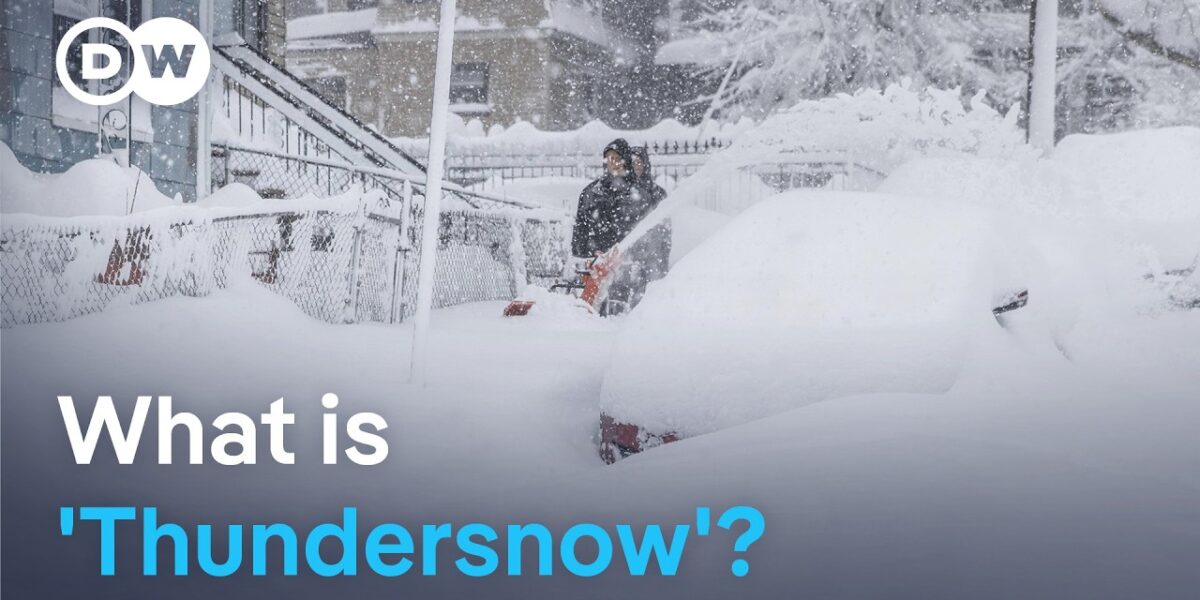
A rare 'thundersnow' event accompanied a powerful winter storm that buried the northeastern US under heavy snow and hurricane-force winds. The 'weather bomb' caused widespread disruptions and is considered a once-in-a-decade event for the region.

Northeast US Buried by Intense Winter Storm and Rare ‘Thundersnow’
A powerful winter storm, characterized by explosive intensification and the rare phenomenon of ‘thundersnow,’ has paralyzed large swathes of the northeastern United States. Over 40 million people found themselves under blizzard warnings as heavy snowfall, hurricane-force winds, and icy conditions descended upon the region starting Monday. Authorities in several affected states issued stay-at-home orders, urging residents to avoid travel as the storm brought the largest snowfall in nearly a decade to some areas, disrupting public transit and leading to widespread airport closures.
Understanding the ‘Weather Bomb’
Meteorologists described the storm’s rapid intensification as “bombogenesis,” a process where a storm’s central pressure drops dramatically, leading to explosive growth. “This is basically an explosive weather bomb because of how quickly it intensified,” explained meteorologist Matthew Kapuji. “That’s leading to hurricane force winds as this low pressure vacuum sucks in cold air and lots of moisture.” This potent combination of factors resulted in prolific snowfall, with accumulations ranging from 20 to over 50 cm in many locations. The storm’s fury also brought coastal flooding and plummeting temperatures, creating hazardous conditions along a 600 km stretch from Maine down to the Delmarva Peninsula.
The Science Behind ‘Thundersnow’
Adding an unusual and dramatic element to the already severe weather was the occurrence of “thundersnow” – a rare event where thunder and lightning accompany heavy snowfall. Kapuji elaborated on the science behind this intriguing phenomenon, describing it as “decently dangerous.” Unlike typical summer thunderstorms where air rises vertically, thundersnow forms through “slantwise convection.” This process involves diagonal tubes of rising air that ascend just high enough to generate lightning.
“You get these weird diagonal tubes of air that go upwards just high enough that you can actually spark lightning bolts.”
Winter snow clouds possess a unique tripolar electric field, with a diffuse positive charge on the underside. While normally too weak to produce lightning, tall man-made structures like wind turbines and skyscrapers can focus this charge, acting as conductors and initiating lightning strikes. The transcript noted dozens of lightning strikes hitting wind turbines south of New England, and even one in New York City. Kapuji further explained that stronger winds in winter storms can actually enhance lightning activity by blowing away the ionizing layer that typically surrounds charged areas, exposing them to strikes.
Regional Impact and Forecast
While the storm’s most intense phase was expected to last for approximately 12 hours, the cleanup process is anticipated to take days. “Things will be bad for the next 12 hours, but it’ll take days to dig out,” Kapuji stated. Specific impacts varied across the region. Boston was experiencing heavy snowfall rates of 5 to 6 cm per hour, with the worst expected to subside within the next 12 hours. New York City was nearing the end of the snowfall, while Washington D.C. had already seen the storm pass.
Kapuji characterized the event as a high-end storm, noting that such occurrences are infrequent. “Something like this only happens once every 5 to 10 years for that part of the world,” he remarked. The intensity of the storm and the rare thundersnow event provided a stark reminder of nature’s power, even as residents in warmer climates like Florida and Germany experienced milder conditions.
Looking Ahead
As the Northeast begins the arduous task of digging out from the significant snowfall, attention will turn to the long-term recovery and the potential for lingering impacts on infrastructure and daily life. The frequency and intensity of such extreme winter weather events will likely remain a key topic for meteorologists and climate scientists, especially given the rare meteorological conditions that contributed to this particular storm’s severity. Residents are advised to continue monitoring local weather advisories and exercise caution during cleanup efforts.
Source: Rare thundersnow buries a large swath of the northeastern US | DW News (YouTube)

Related Articles

Northeast Reels From Powerful Winter Storm, Millions Affected
A powerful winter storm has paralyzed the U.S. Northeast, leaving hundreds of thousands without power and causing widespread transportation chaos. Communities are now facing the challenging aftermath, with emergency services and utility crews working to restore essential services and clear affected areas.


Trump Threatens “Unseen” Force on Iran After Leader’s Death
Following the assassination of Supreme Leader Ayatollah Ali Khamenei, U.S. President Donald Trump has vowed to unleash unprecedented force on Iran. While outlining ambitious goals including regime change, experts express skepticism about the effectiveness of airstrikes and the potential for popular uprising against a resilient Iranian government.


Senator Coons Questions Trump’s Iran Strategy After Troop Deaths
Senator Chris Coons has sharply criticized President Trump's strategy in Iran following the deaths of three U.S. service members. Coons questioned the intelligence regarding Iran's nuclear proximity and the lack of clear strategy and congressional debate for the "war of choice."