Putin’s War: The Long Game Beyond Ukraine
Vladimir Putin's invasion of Ukraine was not a spontaneous act but a meticulously planned strategy rooted in a deep-seated opposition to the Western order. Analysts suggest Putin views the conflict as a broader war against Western influence, aiming to break its will through calculated escalation and exploitation of divisions. Russia's approach relies on asymmetric warfare, coercion, and psychological pressure, seeking to achieve political outcomes rather than solely territorial gains.

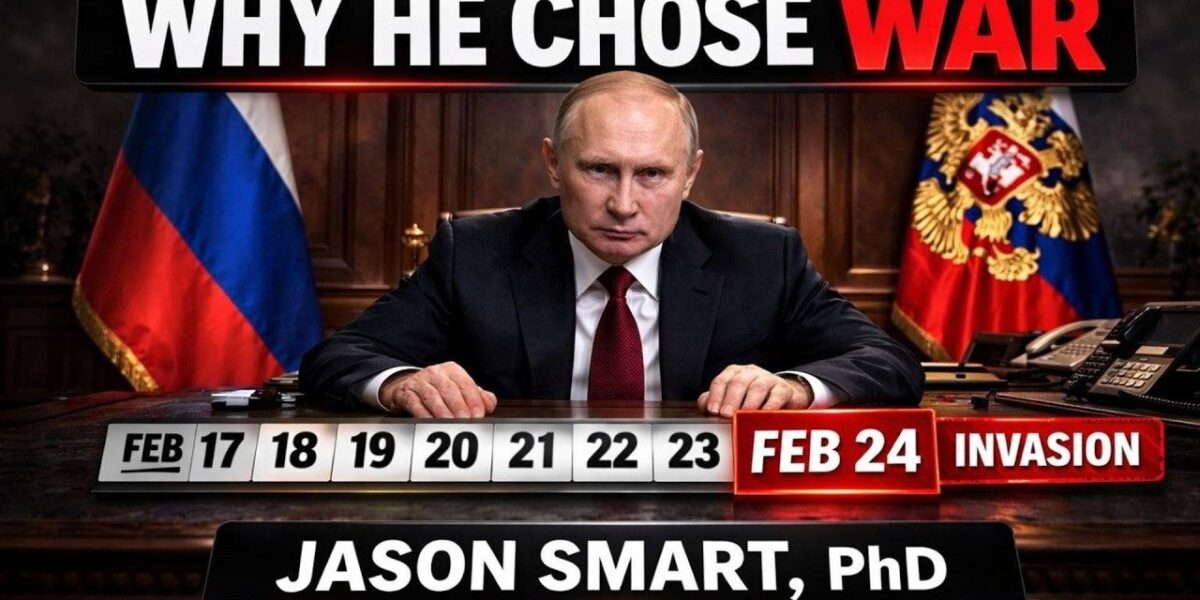
Putin’s Invasion of Ukraine: A Premeditated Global Strategy
On February 24th, 2022, at 5:30 a.m. Moscow time, Russian President Vladimir Putin announced a “special military operation” that plunged Ukraine into full-scale war. Within minutes, explosions were heard across Ukraine, and air raid sirens wailed in major cities. The immediate question on many minds was: why? While Putin had offered justifications for months, citing NATO expansion and the need to “defeat fascism” and secure borders, these explanations did not necessitate a full-scale invasion. Evidence suggested the decision to invade had been made long in advance.
Satellite imagery revealed extensive staging areas with nearly 200,000 Russian troops positioned near Ukraine’s borders. U.S. intelligence reported the movement of blood supplies and medical materials closer to the conflict zone, along with bridging activities near the Pripyat corridor in Belarus—all indicators of an impending offensive, not a diplomatic negotiation. Despite these clear signs, international leaders, including those from France and Germany, attempted last-minute diplomatic efforts to find an “off-ramp” for Putin. The White House, while warning of an imminent invasion, hesitated to provide Ukraine with advanced weaponry, fearing escalation—a fear Moscow seemingly counted on.
The War Against the Western Order
Dr. Jason Smart, a Kyiv-based national security advisor and Kyiv Post special correspondent, argues that the invasion was not a spontaneous decision but the execution of a long-premeditated strategy. “By February 2022, that was simply the execution date, not the decision date,” Smart explains. The fundamental driver, he posits, is Putin’s belief that he is engaged in a global conflict, with Ukraine serving merely as a single battlefield. This war, in Putin’s view, is against the entire Western order, its alliances, and what he perceives as its proxies.
“If that is the war, meaning for him means breaking Western will. And today, the Vladimir Putin is quite certain that he is winning this war.”
Putin’s worldview, according to Smart, is rooted in his experience of the Cold War, which he views as a conflict the Soviet Union lost. His opposition to the current global order was articulated as early as the 2007 Munich Security Conference, where he criticized the “unipolar world” dominated by Washington and NATO. This order, he believes, promotes the expansion of democracy and the constraint of authoritarianism. More fundamentally, Putin opposes a world where leaders are held accountable, as accountability poses an existential threat to his “business model,” which Smart suggests has roots in his early career in St. Petersburg working with organized crime.
A Pattern of Coercion and Calculated Escalation
Smart draws a historical parallel to the tactics learned by Putin during his time in organized crime: the threat of violence often secures compliance. This approach, he argues, has been consistently applied on the international stage.
- Georgia, 2008: Russia invaded Georgia while the world was distracted by the Beijing Olympics. Despite a ceasefire, Putin faced no significant consequences, learning that ground forces could create de facto realities that the world might accept to avoid escalation.
- Crimea and Donbas, 2014: Russia’s seizure of these territories resulted in sanctions, but the territorial gains remained with Russia. The lesson: punishment is tolerable, but gains can be permanent.
- Syria, 2015: Russia’s intervention demonstrated multi-theater leverage. As thousands of Syrians died and millions fled, Western “red lines” evaporated, reinforcing Putin’s understanding that the fear of escalation often outweighs the enforcement of international norms.
By 2021, Putin had refined this method: threaten force, and the West would often yield. This aligns with Sun Tzu’s philosophy that the greatest victory requires no battle. Putin further signaled his intentions by publishing an essay denying Ukraine’s nationhood and framing its sovereignty as a Western construct, a proxy project.
The Kremlin’s Strategic Mindset: Trauma and Asymmetric Warfare
The Kremlin’s mindset is also shaped by historical trauma, particularly the immense Soviet losses during World War II. This experience led to a realization that another direct, decisive world war could annihilate Russia. Consequently, Moscow developed a strategy to avoid such conflicts, opting instead for “quieter wars in the shadows” to extract concessions. The goal is to get the West to fight the wrong war, a dynamic Smart likens to the Cold War, where the U.S. spent trillions of dollars to counter the Soviet Union.
This asymmetric approach focuses on leveraging timing, risk, and psychological pressure, targeting political fear within democratic societies. Dictatorships, insulated from public opinion and press scrutiny, are better positioned to withstand such pressures. This is why Moscow avoids direct confrontation with NATO, aiming to achieve objectives without physical battle, echoing Mao Zedong’s principle of avoiding decisive engagement with a superior force.
The Gerasimov Doctrine and Exploiting Divisions
The modern Russian approach to war and influence, often referred to as the Gerasimov Doctrine, is attributed to Russian Chief of General Staff Valery Gerasimov. A key tenet of this doctrine is to identify and exploit fissures within Western societies. It seeks to break cohesion by targeting existing tensions—economic inequality, racial and religious friction, and ideological divisions—to prevent a united and sustained response.
“The enemy is strong and we are weak, and we must avoid decisive engagement with a superior force.” – Mao Zedong
This strategy, Smart notes, relies on the West expecting conventional warfare, reminiscent of World War II, rather than the nuanced, influence-driven tactics Russia employs. The use of “active measures, disinformation, front groups, provocations, and division-stoking” are tools designed to undermine Western resolve.
Ukraine’s Resilience and Russia’s Shifting Definition of Victory
Putin’s initial plan for a swift “three-day special military operation” to decapitate the Ukrainian state and achieve rapid political collapse failed. However, Russia’s strategy simply shifted. Putin does not believe he is losing; his definition of victory has evolved to forcing a political outcome rather than achieving rapid territorial conquest. Slow battlefield gains, even if minimal—estimated at 15-70 meters per day, roughly the size of Ohio occupied by Russia (about 19% of Ukraine)—are not seen as decisive failures.
Russia has absorbed immense casualties, estimated at 1.2 million over the past four years, without altering its course. This resilience is reminiscent of Ho Chi Minh’s famous quote: “You can kill 10 of my men for every one that I kill of yours, but even at those odds, you will lose and I will win.”
The Endgame: Coercing Ukraine Through Western Pressure
With rapid conquest unattainable, Moscow increasingly relies on coercion. The ultimate aim is to pressure the West into compelling Ukraine to cede territory. This is framed as “de-escalation” through surrender, a tactic of reflexive control designed to shape the opponent’s choices. Russia believes the West can be manipulated into cooperating with its plans, thereby gaining more territory and reinforcing the lesson that the West folds under threat.
If successful, this strategy would have implications far beyond Ukraine, setting a precedent for future conflicts. The ongoing conflict highlights the critical need for the West to understand and counter Russia’s long-term strategic approach, which prioritizes influence and political outcomes over direct military confrontation.
Source: The Week Putin Chose War (YouTube)

Related Articles
Geopolitical Turmoil Bolsters Bitcoin Amidst ETF Inflows
Geopolitical tensions and strong Bitcoin ETF inflows are creating a resilient market. Analysts point to exhausted sellers and the potential for capital rotation into crypto, while regulatory clarity on the Clarity Act could unlock significant institutional investment.

Trump Threatens “Unseen” Force on Iran After Leader’s Death
Following the assassination of Supreme Leader Ayatollah Ali Khamenei, U.S. President Donald Trump has vowed to unleash unprecedented force on Iran. While outlining ambitious goals including regime change, experts express skepticism about the effectiveness of airstrikes and the potential for popular uprising against a resilient Iranian government.
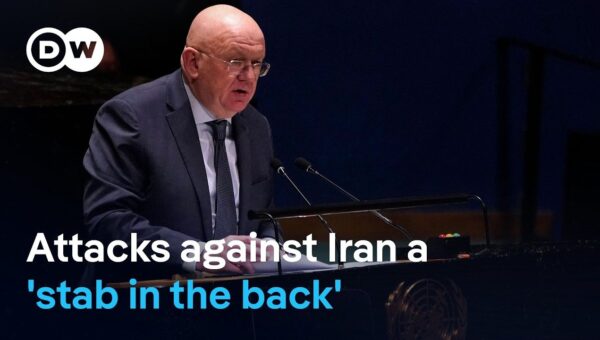
Putin Condemns US Strikes on Iran as ‘Cynical Violation’
Russian President Vladimir Putin has condemned US air strikes on Iran, calling them a "cynical violation" of international law and morality. While Moscow offers strong words of support, experts suggest Russia's practical aid to Iran may be limited by capacity and logistical constraints. The incident also raises questions about Russia's global standing and its impact on the war in Ukraine.