Putin’s Unyielding Stance: Western Resolve Tested Amidst Maximalist Demands and Stalled Negotiations
Russia's unwavering maximalist demands and strategic delay tactics continue to impede peace negotiations in Ukraine, as the Kremlin shows no sign of altering its core objectives. Only intensified international pressure through decisive sanctions, robust military aid to Ukraine, and clear, long-term security guarantees can shift Putin's calculus and compel a genuine path to peace.

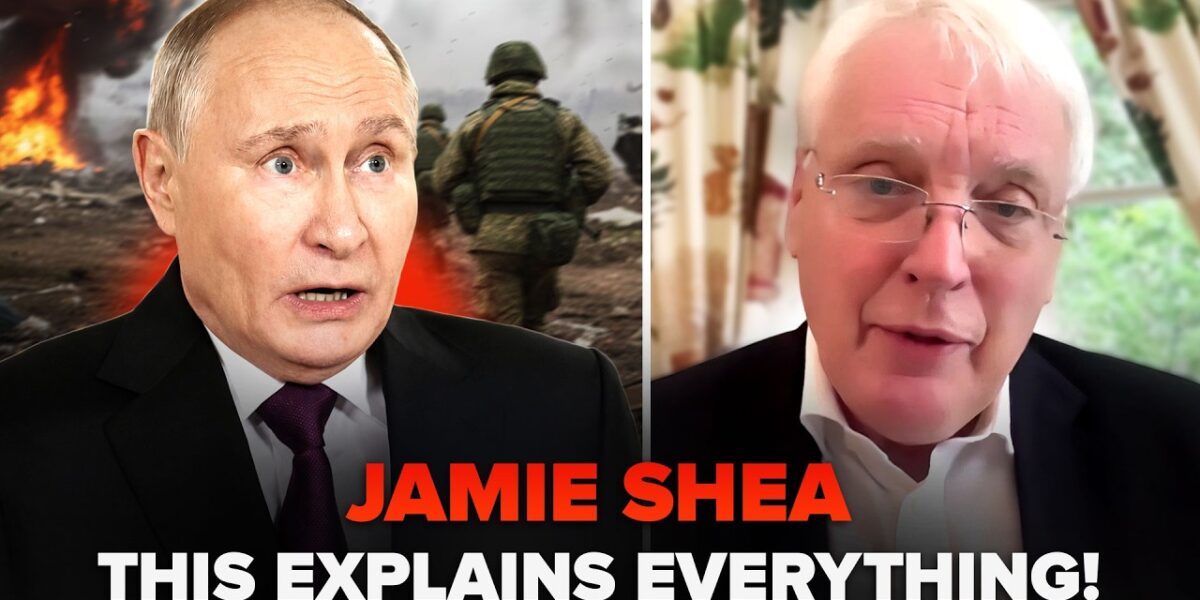
Putin’s Unyielding Stance: Western Resolve Tested Amidst Maximalist Demands and Stalled Negotiations
As the conflict in Ukraine grinds on, the prospect of meaningful peace negotiations remains elusive, largely stymied by Russia’s unwavering maximalist demands and a strategic intent to play for time. Despite immense casualties and economic strain, the Kremlin, under President Vladimir Putin, has shown no discernible shift in its core objectives, perpetuating a cycle of conflict that demands a robust and unified response from the international community. Discussions at recent high-profile gatherings, such as the Munich Security Conference, have underscored the urgent need for intensified pressure on Moscow, coupled with unwavering support for Kyiv, to alter Russia’s strategic calculus.
The prevailing sentiment among many international observers is that Russia is deliberately prolonging the conflict, banking on war fatigue in the West and potential shifts in political landscapes, particularly in the United States. This strategy is predicated on the belief that time is on Moscow’s side, allowing it to consolidate gains, replenish resources, and ultimately wear down Ukraine and its allies. The maximalist demands articulated by Russian officials, including President Putin and Foreign Minister Sergei Lavrov, have remained steadfast, requiring virtually all concessions to originate from Kyiv. These demands often include conditions such as Ukraine’s demilitarization, neutrality, and territorial cessions, all of which are fundamentally unacceptable to Ukraine and its sovereign aspirations.
One particularly contentious Russian demand involves the holding of elections in Ukraine while the war is still ongoing—a proposition that stands in direct contravention of the Ukrainian constitution and the practical realities of a nation under siege. This insistence, amplified by certain international voices, including former US President Donald Trump, who has suggested President Zelenskyy should feel pressure to make concessions, further complicates the path to genuine dialogue. Such external pressures risk undermining Ukraine’s sovereignty and emboldening Russia’s intransigence. European nations, therefore, face a critical imperative to step up their involvement in facilitating negotiations, providing steadfast support to Kyiv, and ensuring a united front against Russia’s coercive tactics.
The Unwavering Hand of Moscow: Maximalist Demands and Strategic Delay
Russia’s negotiation strategy throughout the conflict has been characterized by an unyielding posture, consistently presenting demands that are tantamount to Ukraine’s capitulation rather than a mutually agreed-upon peace. These demands typically revolve around the concept of ‘demilitarization’ and ‘denazification’ – terms widely regarded as pretexts for regime change and the dismantling of Ukraine’s defensive capabilities. Furthermore, Russia insists on Ukraine’s neutrality, a status that would preclude its aspirations for integration into Western security structures like NATO and the European Union, effectively leaving it vulnerable to future Russian aggression. Perhaps most contentious are Russia’s territorial claims, demanding recognition of its illegal annexation of Crimea and other occupied regions, a non-starter for Ukraine which views its territorial integrity as non-negotiable.
The perception that Russia is ‘playing for time’ is rooted in Moscow’s historical approach to conflicts and negotiations. By prolonging the war, Russia aims to exploit potential divisions within the Western alliance, hoping that fatigue, economic pressures, or shifting political priorities will erode support for Ukraine. The upcoming US presidential election, for instance, is often cited as a critical juncture that Moscow hopes could alter the dynamics of international support. A change in US administration, particularly one less committed to robust aid for Ukraine, could significantly weaken Kyiv’s position at any future negotiating table. This strategy also allows Russia to consolidate its hold on occupied territories, fortify its defensive lines, and potentially reconstitute its military forces for future offensives.
The statements from figures like former President Trump, implying that the onus is on President Zelenskyy to make concessions, inadvertently play into Russia’s hands. Such rhetoric can create cracks in Western unity and send mixed signals to Kyiv, potentially weakening its resolve. It is within this complex geopolitical chessboard that the need for a unified and robust European voice becomes paramount. European involvement in peace negotiations is not merely about providing support to Kyiv; it is about projecting a consistent and determined stance against Russian aggression, ensuring that any future settlement respects Ukraine’s sovereignty, territorial integrity, and self-determination.
Intensifying the Squeeze: The Critical Role of Sanctions and the Shadow Fleet
A key element in altering Russia’s strategic calculus lies in significantly escalating economic pressure, particularly through more stringent enforcement of sanctions. While existing sanctions have undoubtedly impacted the Russian economy, they have not yet reached a level that forces the Kremlin to genuinely reconsider its war strategy. A primary area for enhanced action involves Russia’s clandestine ‘shadow fleet’ of oil tankers, a sophisticated network that allows Moscow to circumvent price caps and export restrictions, thereby continuing to fund its war machine.
This shadow fleet, estimated to comprise around 1,000 vessels, operates globally, often under flags of convenience and with opaque ownership structures, making it difficult to track and regulate. Recent reports from Denmark, for instance, indicated that approximately 400 Russian tankers transited the Danish straits—a crucial choke point between the Baltic Sea and the North Sea—within a single month. This staggering volume underscores the scale of Russia’s continued oil exports, which remain a vital source of revenue for the Kremlin.
Encouragingly, there have been recent signs of increased international resolve to tackle this issue. The United Kingdom, France, and the United States, along with Baltic states, have reportedly become more active in boarding and inspecting these ships, signaling a tougher line on enforcement. Furthermore, discussions in Munich highlighted potential changes to European legislation designed to allow for more aggressive action against these illicit shipping operations. However, until these efforts translate into decisive, coordinated international action that significantly tightens Russia’s ability to finance its war through oil sales and other economic activities, the Kremlin will likely continue to absorb its losses without feeling the necessary financial pressure to halt the conflict. The goal is to make the cost of continuing the war demonstrably higher than the perceived benefits, thereby compelling Russia to genuinely engage in negotiations.
The economic leverage afforded by sanctions is not merely about punishing Russia; it is about creating a tangible incentive for peace. By choking off the financial lifelines that sustain the conflict, the international community can accelerate the point at which Putin’s calculus on acceptable casualties and economic strain shifts. This requires not only broadening the scope of sanctions but, crucially, enhancing their enforcement mechanisms and closing loopholes that allow Russia to evade their full impact. The shadow fleet represents one of the most significant such loopholes, and its effective neutralization is paramount to the success of the broader sanctions regime.
Fortifying Ukraine’s Defenses: The Path to Negotiation Leverage
Alongside economic pressure, the other critical pillar of strategy to compel Russia to negotiate seriously involves significantly stepping up military aid to Ukraine. The provision of advanced weaponry is not merely about enabling Ukraine to defend itself; it is about allowing Kyiv to impose a sufficiently high price on Russia to alter Putin’s perception of the conflict’s sustainability. Key areas of focus include enhanced air defense systems, long-range artillery, and co-production of drones.
Robust air defense capabilities are essential for protecting Ukrainian cities, infrastructure, and military assets from relentless Russian missile and drone attacks. Systems like Patriot and SAMP/T are vital in this regard, offering critical protection against aerial threats. Long-range artillery, such as HIMARS and ATACMS, provides Ukraine with the capacity to strike Russian logistics, command centers, and troop concentrations far behind the front lines, disrupting their operations and degrading their combat effectiveness. Furthermore, the co-production of drones, ranging from reconnaissance to attack variants, offers a cost-effective and scalable solution to counter Russia’s numerical superiority and enhance Ukraine’s battlefield intelligence and strike capabilities.
The strategic objective of this enhanced military support is twofold: first, to prevent Ukraine from losing further territory and to enable it to regain occupied lands; and second, to continue imposing a very high price in casualties on Russia. The transcript highlights a chilling perspective: ‘Putin feels at the moment that he can live with 1 million casualties and continue.’ The implication is that only a significantly higher toll—perhaps 1.5 million or 2 million casualties—would force a recalculation within the Kremlin. This grim assessment underscores the necessity of providing Ukraine with the tools to inflict such a cost, thereby convincing Russia that it has gone as far as it can go in Ukraine at a remotely acceptable price.
By making the military cost of aggression unbearable, the international community can create ‘positive inducements’ for Russia to negotiate in its own interest. This approach recognizes that Moscow will only come to the table with serious intent when it perceives that continued conflict offers diminishing returns and escalating losses. The sustained and robust provision of modern weaponry is therefore not merely an act of solidarity; it is a strategic imperative designed to create the conditions for a genuine and lasting peace.
The Contentious Election Debate: Democracy in Wartime
One of the most delicate and potentially destabilizing issues to emerge from recent discussions is the push for Ukraine to hold elections while the war is still raging. Reports, including from the Financial Times, have indicated that elements within the United States, particularly those aligned with former President Trump, have advocated for Ukrainian elections as early as May 15th. This proposal is rooted in a desire to demonstrate democratic legitimacy or, in some interpretations, to create conditions for a swift resolution to the conflict ahead of US congressional elections.
The Ukrainian position, articulated firmly by President Zelenskyy, is unequivocally clear: elections are only feasible after a sustained ceasefire, ideally lasting at least two months, and under conditions that ensure their fairness and legitimacy. Kyiv’s rejection of immediate wartime elections is not merely a political stance but a practical and constitutional necessity. The Ukrainian constitution explicitly prohibits elections during a state of martial law, which remains in effect across the country. Furthermore, the logistical and security challenges of conducting a free and fair election in a war zone are insurmountable.
Russia, predictably, has sought to exploit this debate, with officials recently issuing a statement suggesting they could ensure a ‘no shelling’ and ‘one-day ceasefire’ during elections. This offer, however, is met with deep skepticism by Ukraine and its allies, given Russia’s consistent track record of broken promises and disregard for ceasefires. The example of a promised energy ceasefire that lasted only four days serves as a stark reminder of Moscow’s unreliability.
The practical impediments to wartime elections are manifold. First, proper voter registration is impossible. Millions of Ukrainians—estimated at six to seven million—have been forced to flee abroad, and many more are internally displaced. Ensuring their participation, and the registration of those living in occupied territories, is an administrative nightmare. Second, a genuine election requires a robust and free campaign period, spanning several weeks, allowing candidates to hold rallies, engage with voters, and disseminate their platforms without fear. The idea of holding a rally with hundreds of people under the constant threat of Russian bombardment is ‘completely impossible and unthinkable,’ as one analyst put it. Third, the very notion of a ‘free and fair’ election is compromised when large swathes of territory are under occupation, media is controlled or suppressed, and the population lives under duress.
President Zelenskyy’s ‘robust intervention’ at the Munich Security Conference, where he pushed back against the notion of wartime elections, resonated strongly with European partners. The Russian argument that, in the absence of elections, President Zelenskyy somehow lacks legitimacy is ‘bogus,’ as the UK example during World War II demonstrates. The UK maintained a national government from 1940 to 1945 without elections until Hitler was defeated and the war concluded. This historical precedent underscores that democratic principles prioritize national survival and the integrity of the electoral process over a rushed, compromised vote. The firm response from Ukraine and Europe in Munich on this issue highlighted the importance of upholding democratic standards even amidst conflict.
Forging Long-Term Security Guarantees for Ukraine
A crucial outcome discussed at the Munich Security Conference was the possibility of long-term security guarantees for Ukraine. While the United States has reportedly indicated a willingness to commit to 15-year security guarantees, President Zelenskyy has stated that Kyiv is seeking commitments ranging from 35 to 50 years. This disparity reflects the profound need for enduring security against a persistent Russian threat and the complexities of securing such long-term commitments within Western political systems.
The concept of security guarantees for Ukraine draws parallels with existing arrangements within NATO and the European Union. NATO’s Article 5, for instance, provides a collective defense guarantee to its members, a commitment that has endured for nearly 80 years. Similarly, Article 42.7 of the Lisbon Treaty outlines a mutual defense clause for EU member states, a provision that Ursula von der Leyen, the European Commission President, has called for the EU to develop further in the context of its own security guarantee to member states. These examples underscore that permanent security arrangements for democratic partners are not unprecedented.
The feasibility of a 35-50 year commitment from the US, however, faces significant hurdles, particularly concerning endorsement by the US Congress and the potential for shifting priorities across different administrations. While an initial 15-year arrangement from the US would be crucial for immediate deterrence vis-à-vis Moscow and for securing American participation in the initial phase, the long-term vision for Ukraine’s security is increasingly viewed as a primarily European affair.
This perspective is driven by Ukraine’s aspirational path to European Union membership. As Ukraine integrates more deeply into the European family, its security naturally becomes intertwined with that of the continent. Therefore, the ‘longer run’ envisions a transition to a security formula rooted in European structures, potentially leveraging EU Article 42.7, with European troops and resources playing a central role, albeit hopefully with continued American backing akin to the NATO model. This would entail a permanent security guarantee for Ukraine, mirroring what the EU and NATO offer to their respective member states, ensuring its long-term stability and resilience against future aggression. Such a permanent arrangement would not only deter Russia but also provide a stable framework for Ukraine’s reconstruction and integration into the broader Euro-Atlantic security architecture.
Conclusion: The Path Forward Requires Decisive Action
The current impasse in the Russia-Ukraine conflict is a direct consequence of Moscow’s unyielding maximalist demands and its strategy of playing for time. The international community, particularly European nations and the United States, faces a critical juncture. Only through a combination of decisive, sustained action can Putin’s strategic calculus be altered, compelling Russia to abandon its war of aggression and engage in genuine negotiations.
This path forward necessitates a multi-pronged approach: significantly tightening sanctions, especially on Russia’s shadow fleet, to choke off its war funding; dramatically increasing the provision of advanced military aid to Ukraine, enabling it to inflict an unbearable cost on the aggressor; unequivocally rejecting any calls for premature wartime elections that would undermine Ukraine’s sovereignty and democratic integrity; and forging robust, long-term security guarantees for Ukraine that ensure its future stability within the Euro-Atlantic framework. Without such concerted and unwavering resolve, Putin will continue to play for time, prolonging a devastating conflict with far-reaching implications for global peace and security.
Source: ⚡️Putin’s major miscalculation in the negotiations. Crucial details of the Kremlin’s demands (YouTube)

Related Articles
Trump’s Putin Stance: US Strategy and Global Implications
Analysis suggests Donald Trump's approach to the Ukraine war involves pressuring Kyiv, but US involvement is crucial for resolution. China's influence and the 'MAGA' agenda's geopolitical implications are key factors.

Melania Trump’s Quiet Diplomacy on Ukraine War
Former First Lady Melania Trump has emerged as an influential, though unofficial, voice on the Ukraine war, reportedly shaping her husband's perceptions and engaging directly on humanitarian issues like the deportation of Ukrainian children. Her advocacy, possibly influenced by her European background, has drawn international attention and sparked unique reactions, including widespread social media support from Ukrainians.
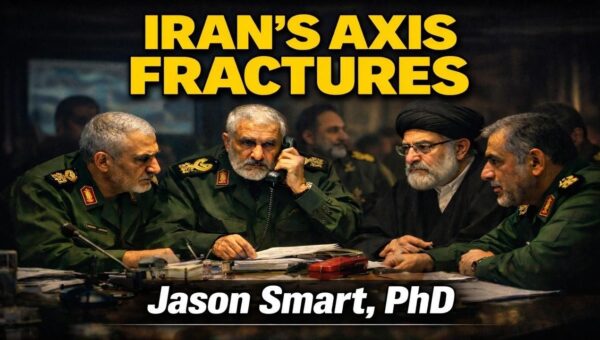
Iran’s Regime Under Siege: Attacks Cripple Leadership, Impact Russia
Iran's regime is reportedly facing critical blows from targeted attacks, crippling its leadership and severing a vital military supply line to Russia. This dual pressure is significantly impacting Russia's war efforts in Ukraine, while internal dissent grows within Iran.