Putin’s Spring Offensive: Russia Targets Ukraine’s Infrastructure
Russia is escalating its attacks on Ukraine's critical infrastructure, including energy, water, and rail systems, as part of a perceived desperate strategy to destabilize the country. Analysts believe these moves signal a shift from an expected swift victory to a prolonged campaign of attrition. The Kremlin's actions also come amidst internal political maneuvering within Ukraine and ongoing, albeit stalled, peace negotiations.


Russia Escalates Attacks on Ukraine’s Infrastructure
As spring 2026 approaches, Russia, under Vladimir Putin, is intensifying its strategy to cripple Ukraine’s political, economic, and military capabilities. Recent intelligence and analysis suggest a shift in Russian tactics, moving beyond nominal territorial gains to a more destructive approach targeting critical infrastructure, signaling a potential sign of desperation from the Kremlin.
A Shift in Russian Strategy: From Swift Victory to Infrastructure Warfare
Initially, Russia hesitated to strike Ukraine’s power sources, a decision analysts believe stemmed from an expectation of a quick victory in the full-scale invasion. However, as the conflict drags on, the prolonged nature of the war has forced a strategic pivot. The systematic destruction of energy infrastructure, now a primary focus, indicates that Russia has exhausted other options and is resorting to measures aimed at destabilizing Ukraine from within.
“At this point, I think it’s very important to note that this is sort of I think a sign of desperation his part,” one analyst observed. “They really have no other idea of what to do.” The slow, deliberate pace of Russian military advances, described as the slowest in a century, has led to global observation of Russia’s perceived humiliation on the battlefield. This has compelled Moscow to seek alternative methods to alter the status quo in its favor.
Anticipating ‘Terrorism’ and Assassinations
The renewed focus on infrastructure suggests an expectation of increased “terrorism” and assassinations within Ukraine. This aggressive posture is seen as a means to force a change in the conflict’s trajectory and impose conditions more favorable to Russian interests.
Negotiations Stalemate and Political Maneuvering
In the near term, Vladimir Putin is expected to halt ongoing negotiations, which are widely regarded as unproductive and a “total waste of time” for over a year. The prevailing sentiment is that meaningful peace can only be achieved if Putin’s regime feels directly challenged and its stability threatened.
“If we want to be serious about ending this war, the only way that can be done is if Putin feels that his regime is being challenged and that his own regime’s ability to continue operating might come to a rapid and sudden conclusion.”
However, there are concerns that Western countries may exert pressure on Ukraine to refrain from actions that could be perceived as overly aggressive, such as striking the Kremlin itself. Historically, during the early years of the war under the Biden administration, such pressure was evident. While the consequences of a direct strike on the Kremlin are unpredictable, it could potentially galvanize the Russian population or, conversely, expose Putin’s perceived weakness, posing a threat to his regime.
Internal Ukrainian Politics: Zelenskiy and Zaluzhnyi
The political landscape within Ukraine is also a subject of discussion, particularly concerning statements made by former Commander-in-Chief of the Ukrainian Armed Forces, General Valerii Zaluzhnyi. Zaluzhnyi’s remarks, as reported by the Associated Press, suggested that President Volodymyr Zelenskyy did not provide sufficient resources for a successful counteroffensive and that martial law should have been imposed earlier for better military preparedness. He also alleged facing intimidation from Ukraine’s security service.
Analysts suggest that Zaluzhnyi’s public statements may be a form of political posturing as Zelenskyy reportedly plans a run for the presidency. Zaluzhnyi, having transitioned to Ambassador to the UK, is seen as carefully managing his historical record and potentially shifting blame for any perceived mistakes. This behavior is considered normal for former leaders seeking to shape their legacy.
The Possibility of Elections in Wartime Ukraine
The feasibility of holding presidential elections in Ukraine, especially with parts of its territory occupied since 2015 and a significant portion of its population living abroad, is also being examined. While physically and legally possible with legislative adjustments, the complexities are considerable. Russia’s push for elections is viewed as strategically misguided, as leaders like Zaluzhnyi are not expected to deviate significantly from Zelenskyy’s foreign policy, making any perceived electoral advantage for Russia unlikely.
Divisions within Ukraine’s Negotiation Team
Reports from The Economist suggest divisions within Ukraine’s negotiation team, with differing views on concluding a peace agreement. One faction, reportedly influenced by Kyrylo Budanov, favors a swift agreement under U.S. leadership, fearing a closing window of opportunity. Another, associated with former head of the presidential office Andriy Yermak, appears less inclined towards immediate concessions.
While these differing viewpoints have existed for some time, the recent reporting highlights potential obstacles. A peace deal at this juncture is viewed with caution for several reasons. Firstly, Russia is perceived as not genuinely seeking peace. Secondly, a peace agreement could lead to a significant reduction in Ukraine’s military size due to economic constraints, a halt in Western arms supplies, and potential emigration of its population. This scenario could create a vulnerable Ukraine, ripe for a renewed Russian invasion.
“If any sort of a deal is reached any sort of a deal be absolutely certain it’s because Russia is hoping that that will work in their long-term favor to take the rest of Ukraine.”
Shifting Russian Targets: From Energy to Water and Rail
The International Institute for the Study of War reports that Russia is refocusing its strikes towards the end of winter from energy to water supply and rail infrastructure. This indicates a deliberate effort to disrupt essential services, forcing Ukrainians to endure a summer without water and transport, similar to the challenges faced with heating and light during the winter.
While Ukraine’s air defense capabilities offer a degree of hope, Russia’s strategy is seen as a direct assault on the Ukrainian population. The commitment of gross violations and war crimes underscores Putin’s apparent determination to conquer the state, remaining undeterred by past events and showing no inclination towards peace, instead pursuing a path of continued aggression and “terrorism.”
Source: ⚡️Putin’s Plans for Spring 2026 Revealed! Kremlin has issued orders to army and economy (YouTube)

Related Articles


MAGA’s ‘America First’ Doctrine: A New Foreign Policy Playbook?
Karoline Leavitt redefines 'America First' to include military action against terrorists, challenging traditional isolationist views. This analysis explores the doctrine's consistency with aid to Ukraine and humanitarian efforts, examining its historical roots and future implications.


Presidential Slumber Amidst Global Conflict: A Nation’s Concern
A President's apparent struggle to stay awake during a conference, while regional conflicts escalate, raises serious questions about leadership and national security. This analysis explores the geopolitical context, contrasts administrations, and discusses the implications of perceived presidential disengagement.

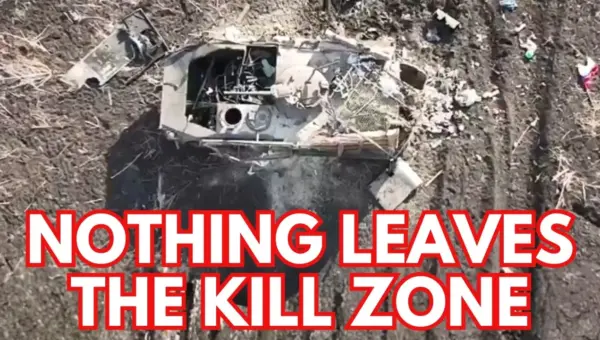
Russia’s Failed Armored Assaults Reveal Shifting War Dynamics
Russia's return to large-scale armored assaults has been met with devastating Ukrainian drone and artillery fire, resulting in heavy losses. This shift signals a potential change in Russian strategy driven by unsustainable personnel attrition, while Ukraine solidifies its defensive gains and expands its role in regional security.