Putin’s Grip Weakens: Journalist Sees Russia’s Endgame
British journalist John Sweeney asserts that Vladimir Putin cannot afford to end the Ukraine war, as doing so would expose its futility and threaten his rule. He calls for stronger Western sanctions and increased aid to Ukraine, predicting a gradual erosion of Putin's power driven by economic pressures and internal dissent.

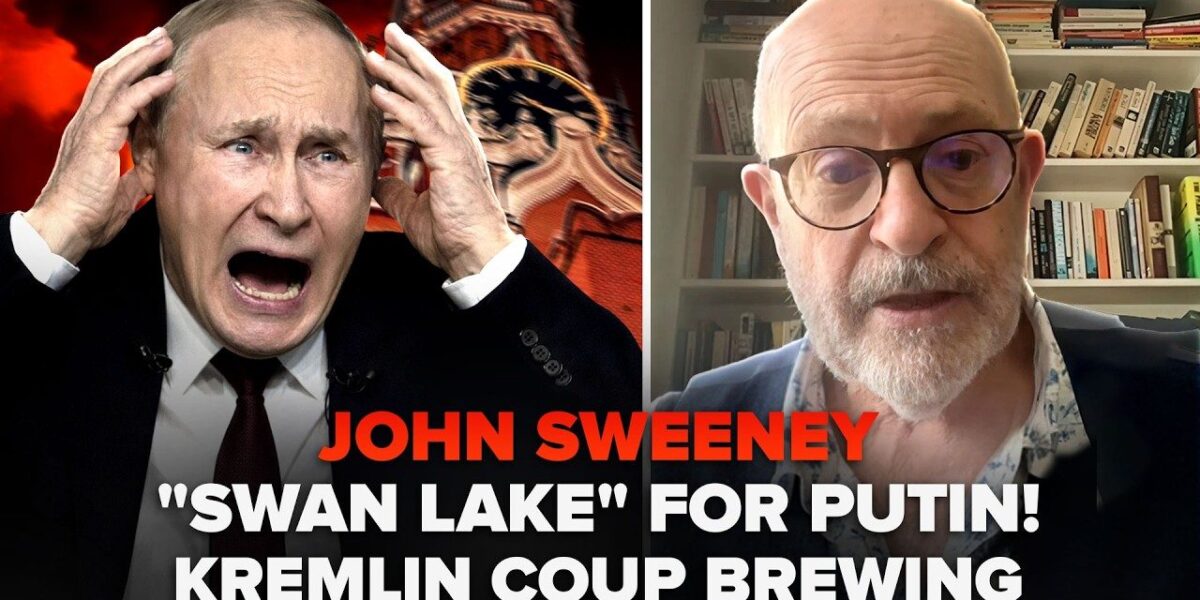
British Journalist Predicts Putin’s Downfall Amidst War Woes
London – Renowned British journalist and author John Sweeney believes Vladimir Putin’s hold on power is increasingly precarious, driven by the unsustainable costs of the war in Ukraine and internal pressures. In a recent interview, Sweeney, who has covered Russia for over two decades, argued that Putin cannot afford to end the conflict, as doing so would expose the war’s futility to the Russian populace, potentially leading to his ouster or worse.
The Unwinnable War: Putin’s Dilemma
Sweeney articulated a stark assessment of Putin’s motivations, suggesting the Russian leader’s primary objective is self-preservation and maintaining power indefinitely. “Putin doesn’t want peace. This is a game for him. It’s not serious,” Sweeney stated, criticizing Western leaders for what he perceives as a misunderstanding of Putin’s mindset. He posited that the war will only cease when the West adopts a more resolute stance, including a significant escalation in military and financial aid to Ukraine, coupled with a more rigorous enforcement of sanctions against Russia.
“Putin knows that if he if if the war stops then he’s in trouble and by which I mean he will someone will kill him.”
The journalist elaborated that Putin’s fear of accountability and potential retribution is a key factor prolonging the conflict. The “zombie sleep” of the Russian population, as Sweeney described it, is maintained by the ongoing war effort. A cessation of hostilities, he fears, would lead to a national reckoning over the immense human and financial costs, directly threatening Putin’s regime.
Sanctions: A Blunt Instrument Yet to Be Fully Wielded
Sweeney was particularly critical of the West’s current approach to sanctions, labeling them as “half-hearted.” He called for a more aggressive strategy, including severe penalties for sanction violations and a clear message to nations like India and China that trading with Russia comes at the expense of Western partnerships. “We need to start slamming down doors. We need to start seeing a lot of people going to prison for breaking sanctions,” he urged.
The Specter of ‘Black Swan’ Events
When questioned about potential “black swan” events, such as a coup or the Wagner Group’s aborted mutiny, Sweeney acknowledged their possibility but leaned towards a more gradual erosion of Putin’s power. He drew parallels to the Prigozhin incident, suggesting that Putin’s regime relies on intimidation and leverage, potentially involving the families of dissenters, to maintain control.
Sweeney speculated that powerful Russian oligarchs, such as those associated with Deripaska or Abramovich, or even figures within Gazprom, might eventually calculate that removing Putin is in their best interest, given the economic fallout and Russia’s declining global standing. He also pointed to the potential impact of U.S. midterm elections, suggesting that a shift in American political power could further weaken Putin’s international maneuvering capabilities.
Ukraine’s Resilience and Russia’s Strategic Miscalculations
Despite the ongoing devastation, Sweeney expressed a degree of optimism regarding Ukraine’s enduring spirit and democratic resolve. He highlighted that, contrary to Putin’s assumptions, Ukraine has proven to be a formidable adversary, fiercely defending its sovereignty. Sweeney criticized Putin’s initial strategic miscalculations, particularly his underestimation of Ukrainian nationalism and the strength of its armed forces.
“Putin’s start point for the war, the big war, was based on a fiction, was based on nonsense, a fairy story.”
He recounted the flawed logic behind the invasion, noting that Russia attacked with a fraction of the forces needed to overcome Ukraine’s substantial military and security personnel. This fundamental misjudgment, Sweeney argued, was likely perpetuated by an echo chamber within the Kremlin, where advisors were unwilling or unable to deliver unwelcome truths to Putin.
The Role of China and Economic Pressures
The complex relationship between Russia and China was also a focal point. Sweeney suggested that while China may position itself as a partner, its long-term interests might not align with a strengthened, or even stable, Russia. He posited that China is closely observing Russia’s weakening state, and while not predicting an invasion of Siberia, he believes Xi Jinping could exploit Russia’s diminished capacity for his own geopolitical gains, particularly concerning Taiwan.
Economically, Sweeney anticipates increasing pressure on Russia. He noted that while the Russian economy has shown some resilience, he is looking for signs of significant cracks, such as multiple bank runs, which could trigger social unrest and widespread instability. The West’s continued supply of advanced weaponry to Ukraine, coupled with European nations improving their own military aid and technology, is expected to further tilt the scales.
Future Scenarios: A Slow Burn, Not a Sudden Collapse
Looking ahead, Sweeney does not foresee a dramatic, swift end to the war. Instead, he predicts a protracted conflict where Ukraine gradually gains the upper hand on the front lines, bolstered by consistent and improving Western military support. He anticipates a degradation of Russian military technology relative to Ukrainian advancements, particularly in areas like drone warfare.
Sweeney also touched upon the internal dynamics within Russia, including the aging leadership and the potential for younger, ambitious officers to challenge the status quo. He acknowledged the brutal suppression of dissent within Russia, citing the fates of prominent critics like Anna Politkovskaya and Boris Nemtsov, which he believes discourages open revolution. However, he did not rule out the possibility of a palace coup orchestrated by oligarchs or disaffected military figures.
Ultimately, Sweeney’s outlook is one of cautious pessimism for Putin’s regime. He believes the combination of military setbacks, economic strain, and internal dissent will inevitably lead to a crisis point. The moment of truth, he suggested, will arrive when Putin is finally confronted with the unvarnished reality of his failures, potentially signaled by widespread economic collapse and social disorder in Russia.
Source: You haven’t heard this about Putin’s regime yet! British journalist delivered tough message to Putin (YouTube)

Related Articles

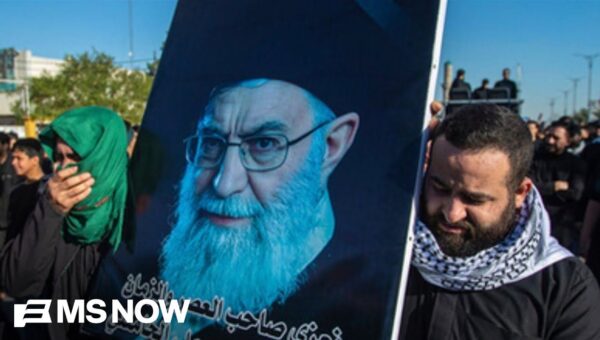
US Regime Change Efforts: A History of Tactical Wins, Strategic Losses
A comprehensive review of U.S. interventions reveals a consistent pattern: while the United States is adept at tactically removing foreign governments, achieving strategic success—the establishment of stable, legitimate political orders—has proven exceedingly difficult. Historical analysis points to unintended consequences and long-term instability as common outcomes.

Thousands Mourn Khamenei, Chant ‘Death to America’ in Iran
Thousands gathered in Yazd, Iran, to mourn Supreme Leader Ayatollah Ali Khamenei following reported U.S. and Israeli strikes. The mourning ceremony was marked by chants of "Death to America," highlighting deep-seated anti-American sentiment amid geopolitical tensions.

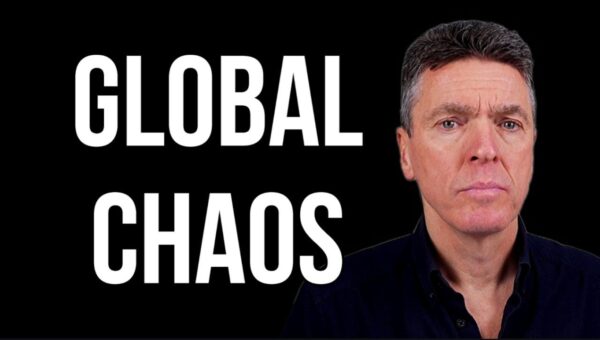
Middle East Crisis Triggers Global Chaos: Flights, Oil Prices Hit
A major global crisis has erupted following coordinated strikes on Iran, triggering a massive retaliatory response that has impacted multiple countries across the Middle East. The large-scale attacks have caused widespread aviation chaos and pose significant risks to global energy markets and financial stability.