Putin’s Existential War: A Desperate Bid for Survival Amidst Russia’s Unparalleled Ruin
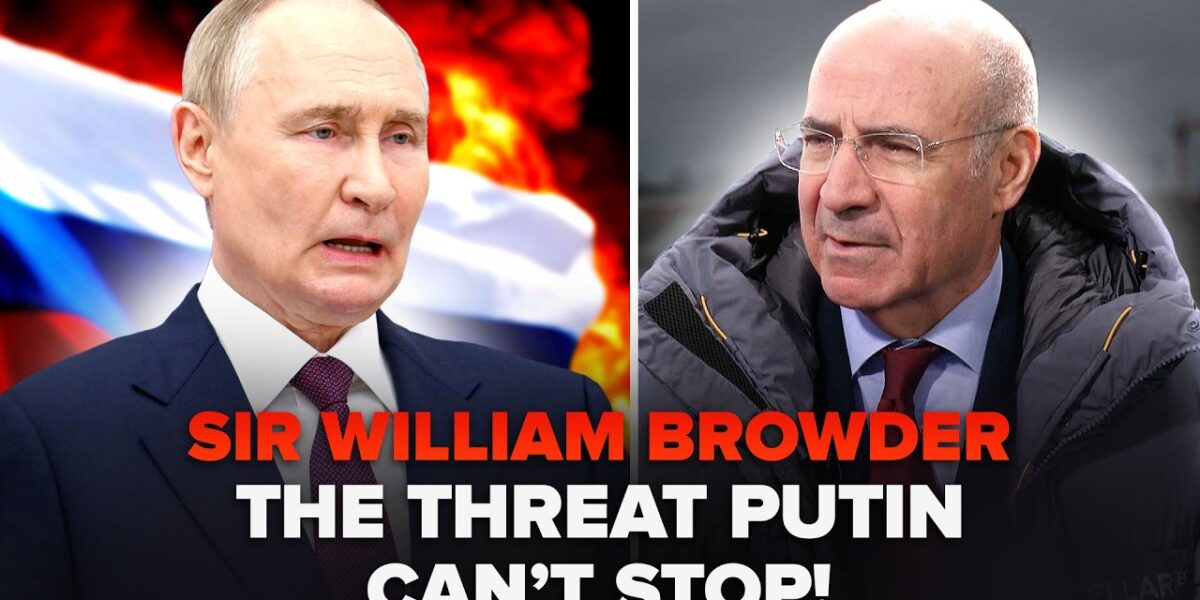
The war in Ukraine has become an existential struggle for Vladimir Putin, who needs the conflict to maintain power and ensure his own survival, according to Sir William Browder. Despite unprecedented human and economic losses for Russia and a strategic blunder that expanded NATO, Putin views peace talks as a mere stalling tactic to avoid sanctions and continue fighting. A radical proposal to sanction the refineries buying Russian oil could be the 'Achilles' heel' to cripple his war economy and force an end to the conflict.

Putin’s Existential War: A Desperate Bid for Survival Amidst Russia’s Unparalleled Ruin
The conflict in Ukraine, now nearing its fourth year, has evolved beyond geopolitical ambition into a grim struggle for Vladimir Putin’s personal survival. According to prominent Russia critic Sir William Browder, the Russian president’s grip on power, and indeed his very life, is inextricably linked to the continuation of the war. This chilling assessment, delivered during an interview at the Munich Security Conference, paints a stark picture of a leader trapped by his own aggression, willing to sacrifice his nation’s future to secure his own.
Browder, a vocal advocate for Ukrainian victory and a leading expert on Russian corruption and sanctions, articulated a perspective shared by many observers of the Kremlin: Putin needs the war to remain in power, and he needs to remain in power to stay alive. This desperate calculus, Browder suggests, explains the otherwise inexplicable continuation of a conflict that has brought unprecedented destruction and strategic blunders upon Russia.
The conversation, held amidst discussions at the Munich Security Conference, highlighted the immense human and economic toll on Russia, the paradoxical expansion of NATO, and the futility of current peace negotiations as mere stalling tactics by the Kremlin. It also delved into the potential for internal chaos if the war were to end, and a radical proposal to cripple Russia’s war economy by targeting the buyers of its oil.
The War’s Existential Stakes for Putin
For Vladimir Putin, the war in Ukraine is no longer merely a territorial dispute or a geopolitical chess match; it is a matter of personal survival. Browder asserts that Putin views any cessation of hostilities as a direct threat to his authority and, by extension, his life. This perspective underscores the deep-seated paranoia often observed in authoritarian regimes, where a leader’s downfall is frequently violent and undignified.
The notion of a ‘dignified exit’ for a ruthless dictator, Browder contends, is a fallacy. History is replete with examples of authoritarian leaders who, having consolidated power through repression and violence, face only two ultimate outcomes: assassination or imprisonment. Putin, acutely aware of this historical precedent, is thus ‘desperately holding on to power and desperately using whatever tools, including war, to hold on to power.’
This personal imperative drives a relentless, seemingly irrational commitment to the conflict, regardless of the cost to Russia. It explains why, even in the face of catastrophic losses and strategic setbacks, Putin cannot simply ‘seek an endgame.’ The war, from his vantage point, must carry on because it serves as the ultimate justification for his iron-fisted rule, distracting the populace with a foreign enemy and suppressing dissent under the guise of national unity and wartime necessity.
A Strategic Catastrophe: Russia’s Self-Inflicted Wounds
Unprecedented Human and Economic Toll
The war has inflicted an ‘unparalleled’ level of destruction upon Russia. The human cost is staggering, with Browder citing estimates of 1.2 to 1.3 million Russian soldiers lost, in addition to another million men who have fled the country. To put this into perspective, the Soviet Union’s decade-long invasion of Afghanistan resulted in approximately 16,000 military deaths. Russia is now reportedly losing thousands of soldiers per week – with Senator Marco Rubio’s assessment suggesting 7,000 to 8,000 casualties weekly – a rate that would be ‘unacceptable to the entire country’ in any democratic nation. Yet, in Russia, public dissent remains largely suppressed, a testament to the regime’s control over information and its willingness to absorb immense pain.
Economically, Russia has also suffered immensely. The loss of all its Western markets for natural gas represents a colossal blow to its energy-dependent economy. Sanctions have severely curtailed its access to global financial systems and advanced technology. The impact on ordinary citizens is palpable, with the number of Schengen visas issued to Russians reportedly dropping by a staggering 95%, severely restricting their ability to travel and engage with the outside world. While Russia has attempted to pivot its energy exports to Asian markets, the necessity to offer steep discounts has significantly eroded its revenue streams. The long-term consequences of this economic isolation and the diversion of vast resources to the military industrial complex risk turning Russia into a ‘North Korea type of scenario,’ where the populace starves while the state prioritizes its war machine.
NATO’s Unintended Expansion
Perhaps the most profound strategic miscalculation by Putin has been the paradoxical strengthening and expansion of NATO, the very alliance he claimed the war was meant to contain. Putin’s rhetoric consistently framed the invasion as a necessary measure to halt the ‘advancement and encroachment of NATO’ around Russia. However, the exact opposite has occurred. Finland and Sweden, historically neutral nations, have been compelled by Russia’s aggression to join NATO, adding an ‘enormous border’ with Russia and significantly expanding the alliance’s presence on Russia’s western flank.
This development represents a monumental strategic failure for Russia. Instead of weakening NATO or pushing it back, Putin’s actions have revitalized the alliance, unified its members, and expanded its direct border with Russia by over 1,300 kilometers (Finland alone). This outcome underscores the profound disconnect between Putin’s stated objectives and the actual consequences of his policies, revealing a leadership increasingly divorced from strategic reality.
The Illusion of Peace: Putin’s Calculated Deception
Unwavering Intentions: Eradicating Ukraine
Despite the occasional overtures toward peace talks, Browder emphasizes that Vladimir Putin’s intentions regarding Ukraine have never wavered. While Putin is a ‘historic liar’ in most aspects, he has been ‘remarkably honest’ about his ultimate goal for Ukraine: its eradication as a sovereign, independent state and culture. ‘He wants to eradicate Ukraine and he’s not deviated from that,’ Browder states, dampening any optimism surrounding potential peace negotiations.
This uncompromising stance means that any peace plan, no matter how comprehensive, would likely be rejected by Putin unless it granted him total victory. His objective is not a negotiated settlement but ‘total and absolute victory,’ for which he is ‘ready to sacrifice a thousand soldiers a day.’ This deep-seated conviction, rooted in a revisionist view of history that denies Ukraine’s distinct identity, renders genuine compromise impossible from the Kremlin’s perspective.
“Peace Talks” as a Stalling Tactic
Given Putin’s unwavering maximalist goals, Browder views any current ‘peace talks’ or diplomatic initiatives as nothing more than a tactical ruse. These overtures, he argues, serve two primary purposes: to create ‘the appearance of a peace negotiation so that he can carry on fighting his war’ and to ‘avoid sanctions.’ By feigning interest in diplomacy, Putin can attempt to pressure international actors, particularly those like former President Trump, to ease sanctions, claiming they would ‘upset these delicate negotiations.’
This cynical manipulation of peace efforts was evident when, following a request from former President Trump to cease bombing Ukrainian energy infrastructure, Putin halted strikes for a mere three days before resuming them. Such actions demonstrate a profound ‘disrespect’ for any genuine desire for peace and expose the insincerity of his engagement in diplomatic efforts. For Putin, these negotiations are not about finding a resolution but about buying time, sowing discord among allies, and creating a façade behind which the war can continue unabated.
The Looming Internal Threat: A Million Soldiers Unleashed
A critical, often overlooked, dimension of Putin’s predicament is the internal threat posed by his own fighting force should the war end. Browder highlights a chilling scenario: if Putin were to stop the war, ‘then you have these million soldiers that are currently there, the rapists, the torturers, the psychopaths that are all going to come back to Russia and wreak havoc on Russia. He can’t have that.’
This cohort of hardened, brutalized, and often criminalized individuals, having been desensitized by the horrors of war and emboldened by state-sanctioned violence, would pose an immense challenge to internal stability. The reintegration of such a large, potentially traumatized and violent population into a society already grappling with economic hardship and political repression could unleash widespread social unrest and crime. This fear of internal chaos, Browder suggests, further locks Putin into the perpetual war, as the alternative presents an equally dire threat to his regime.
Russia’s Economic Lifeline: The Achilles’ Heel
The Impact of Current Sanctions
While existing sanctions have undoubtedly hurt the Russian economy, they have not yet delivered a decisive blow capable of compelling Putin to end the war. The interviewer noted recent sanctions against Russian entities like Lukoil, but Browder emphasized that these are insufficient to ‘change the game.’ Russia, despite losing Western markets, has proven adept at finding alternative buyers and creative ways to circumvent some restrictions, albeit often at a reduced profit margin.
The core issue remains Russia’s ability to continue selling its vast oil reserves, which generate ‘hundreds of billions of dollars’ that directly fund the war machine. As long as this revenue stream persists, Putin can continue to ‘allocate all of his economic resources towards the military,’ even if it means his own people starve, as in a ‘North Korea type of scenario.’
A Radical Proposal: Targeting Oil Refineries
To truly cripple Russia’s war economy, Browder proposes a more radical and direct approach: targeting the buyers of Russian oil. He suggests that the West, specifically the Europeans and the UK, should impose sanctions or ultimatums on the eight key oil refineries that collectively purchase the vast majority of Russia’s oil exports. These include two refineries in China, four in India, and two in Turkey.
The strategy is simple yet potentially devastating: issue an ultimatum to these refineries, stating that they must cease buying Russian oil or face severe consequences, including being cut off from doing business with Western entities. Browder believes that faced with such a choice, these refineries would choose to comply, as their access to the global financial system and Western markets is far more valuable than discounted Russian oil. If these major buyers were to stop, Putin would be forced to sell his oil to ‘pirate buyers’ at an drastically reduced price, perhaps as low as $10 a barrel. Browder estimates that within six months of such sanctions, Russia would be ‘unable economically to carry on with the war’ due to a lack of funds.
This approach, Browder argues, is Putin’s ‘Achilles’ heel.’ He understands that such a move would be ‘hugely detrimental’ and is ‘more afraid of that than anything else,’ because it would directly cut off the financial oxygen supply to his war effort.
The Autocrat’s Echo Chamber: Putin’s Inner Circle and Perception
The nature of Putin’s regime precludes any genuine internal dissent or frank discussion of policy. Browder dismisses reports of advisors like Dmitry Kozak opposing the war, stating that ‘Putin doesn’t allow any kind of disputes about his policy.’ In a system where ‘everybody is just saluting him and saying yes sir how can I help you sir,’ there are no ‘frank discussions, debates, fractious stuff that happens in democracies.’ This creates an echo chamber where alternative viewpoints are suppressed, and the leader’s narrative is reinforced.
Despite this insulated environment, Browder believes Putin is ‘aware of everything.’ As an ‘intelligent intelligence officer,’ he is certainly privy to the staggering military and economic losses Russia is enduring. However, his awareness does not translate into a willingness to change course. Instead, Putin ‘puts on a brave face,’ believing that the West will ‘lose our stomach for this sooner than he is going to lose his stomach for this.’ His conviction is that authoritarian regimes can endure ‘unlimited amount of pain’ compared to democracies, which he perceives as weak and easily deterred by even ‘1/100th of pain.’
Diminished Global Standing: A Humiliation Abroad
Far from projecting strength, Putin’s war in Ukraine has demonstrably weakened Russia’s global standing and influence. Browder points to a series of significant geopolitical losses for Russia: the loss of influence in Syria, the capture of Venezuelan dictator Nicolas Maduro by US special forces (though this specific claim about Maduro’s capture by US forces is not widely corroborated in public reports, the broader point about Russia’s diminished influence in Venezuela holds), and crucially, the loss of Armenia’s control over Nagorno-Karabakh, which was traditionally under Russia’s security umbrella. Furthermore, Russian efforts to destabilize Moldova and Romania have been ‘a failure.’
In essence, ‘the world that he wanted to create, this world of might makes right, has turned out to be really a bad world for Vladimir Putin.’ His aggressive posturing and overextension in Ukraine have exposed the true limitations of Russia’s power, revealing him to be ‘as weak as he really is’ on the international stage. This series of setbacks represents a significant ‘humiliation at all at every step of the way for Putin.’
Psychological Warfare and the Path Forward
Amidst the military and economic struggles, psychological warfare plays a crucial role. Ukrainian President Volodymyr Zelenskyy’s tactic of publicly challenging Putin, calling him an ‘old man’ and implying weakness, is a potent form of ‘ultimate disrespect’ that Putin ‘can’t stand.’ Such psychological blows are important tools in a broader conflict, aiming to erode the image of invincibility that authoritarian leaders cultivate.
Ultimately, the path forward for Ukraine and the West requires sustained, resolute action. While Ukraine continues its ‘fabulous job of holding the Russians back,’ the onus is on the West to provide the decisive leverage. The proposed oil sanctions strategy, if implemented, represents a powerful, non-military means to directly address Putin’s economic lifeline and potentially bring the war to an end on terms favorable to Ukraine.
Conclusion: The Indefinite War and Its Global Repercussions
The insights from Sir William Browder paint a grim but clear picture: Vladimir Putin is locked into a war of personal survival, driving Russia towards unparalleled destruction and strategic blunders. The nation is hemorrhaging lives and wealth, its geopolitical influence is waning, and the threat of internal chaos looms large if the conflict were to cease. Peace negotiations, under current conditions, appear to be a cynical charade designed to perpetuate the conflict and deflect Western pressure.
The challenge for the international community is to recognize this reality and move beyond conventional diplomatic approaches. By understanding that Putin cannot and will not end the war voluntarily, and by directly targeting the economic arteries funding his aggression, the West holds a potent, yet unutilized, key to altering the course of this devastating conflict. The future of Ukraine, and indeed the stability of the global order, hinges on a clear-eyed assessment of Putin’s motivations and a decisive strategy to counter them.
Source: ⚡️Putin’s biggest FEAR exposed! Brutal VIOLENCE at home. Moscow risks CHAOS inside Russia (YouTube)

Related Articles
Geopolitical Turmoil Bolsters Bitcoin Amidst ETF Inflows
Geopolitical tensions and strong Bitcoin ETF inflows are creating a resilient market. Analysts point to exhausted sellers and the potential for capital rotation into crypto, while regulatory clarity on the Clarity Act could unlock significant institutional investment.

Trump Threatens “Unseen” Force on Iran After Leader’s Death
Following the assassination of Supreme Leader Ayatollah Ali Khamenei, U.S. President Donald Trump has vowed to unleash unprecedented force on Iran. While outlining ambitious goals including regime change, experts express skepticism about the effectiveness of airstrikes and the potential for popular uprising against a resilient Iranian government.

Trump’s War Rhetoric: Casualties Are a Burden He’ll Bear
Donald Trump's acknowledgment of potential casualties in a conflict, described as illegal and unconstitutional, has drawn criticism for perceived detachment. The analysis explores the implications of such rhetoric and the leader's responsibility for initiating warfare.