Putin Purges Defense Circle Amid War Woes
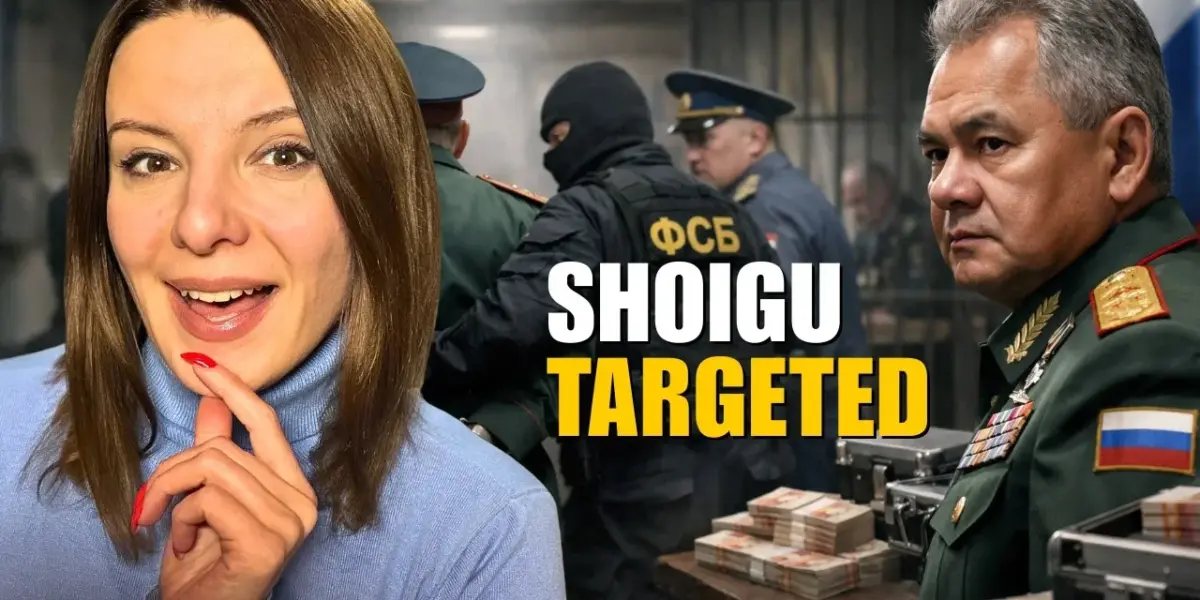
President Putin is reportedly purging allies of Defense Minister Sergei Shoigu, arresting deputies on corruption charges. This move may aim to deflect blame for military failures or weaken Shoigu's influence amid growing internal dissent.

Putin Purges Defense Circle Amid War Woes
Recent arrests and lengthy prison sentences for former deputies of Russia’s long-serving Defense Minister Sergei Shoigu suggest a significant internal power struggle within the Kremlin. Four key figures close to Shoigu have been imprisoned over the past two years, with one recently receiving a 19-year sentence for corruption and fraud. These actions appear to be a calculated move by President Vladimir Putin to either deflect blame for military failures or to weaken Shoigu’s influence.
Targeting Shoigu’s Inner Circle
The crackdown on Shoigu’s former deputies, all accused of corruption and abuse of power, has intensified. While these charges are common within the Russian government, the severity of the sentences and the confiscation of assets point to a deeper political motive. These deputies were not minor officials; they were individuals closely aligned with Shoigu, who himself served as Defense Minister for decades and held a prominent position alongside Putin. The shrinking circle around Shoigu, especially after he was removed from the Defense Minister post, indicates Putin’s increasing distrust or desire to sideline him.
Reasons Behind the Purge
Analysts suggest several reasons for this internal purge. One primary theory is that Putin needs to assign blame for the ongoing military setbacks and growing public dissatisfaction. By targeting Shoigu’s associates, Putin can distance himself from failures and present himself as separate from the problems plaguing the Russian Federation. This strategy is typical of intelligence-driven regimes, where scapegoats are identified to maintain the leader’s image.
Another perspective suggests that Putin may be preparing for a potential internal challenge. Shoigu, having served in various high-profile roles, including emergencies minister, has cultivated significant connections within the military and special forces. Some believe he could be seen as a viable alternative to Putin by certain factions, especially if discontent within the military grows. The arrests could be a preemptive measure to neutralize any potential rivals or to test the loyalty of military leadership.
Strategic Implications on the Ground
The internal purges within Russia’s defense establishment have significant implications for the ongoing conflict. The focus on corruption and mismanagement highlights systemic weaknesses that have plagued the Russian military, contributing to its underperformance in Ukraine. The myth of the Russian army’s strength has been significantly debunked, partly due to these revealed inefficiencies and alleged theft of resources meant for troops. This internal turmoil distracts from operational effectiveness and could impact troop morale and equipment readiness.
Furthermore, the instability at the top of the defense ministry could lead to a lack of clear strategic direction. As Russia faces continued military challenges and economic strain, including exploding military facilities and reduced oil export capabilities, the Kremlin’s ability to manage the war effort is increasingly questioned. The internal focus on political maneuvering and blame-shifting diverts attention from the actual conduct of the war and the needs of soldiers on the front lines.
Historical Parallels
This situation echoes historical patterns seen in authoritarian regimes, particularly during times of prolonged conflict or internal stress. Leaders often conduct purges to consolidate power, eliminate perceived threats, and maintain public order by offering scapegoats. The Soviet Union, for instance, experienced numerous purges under Stalin, where political opponents and even loyal cadres were eliminated to ensure absolute control. While the current situation in Russia may not be as extreme, the underlying mechanism of eliminating potential rivals and assigning blame for failures is a recognizable tactic.
Geopolitical Impact
The internal strife within Russia’s leadership sends ripples through the international community. It signals a potential weakening of Putin’s grip on power and raises questions about the stability of the Russian regime. For Ukraine and its allies, this internal focus within Russia could be seen as an opportunity, potentially diverting resources and attention away from the battlefield. However, it also underscores the unpredictable nature of the conflict and the internal dynamics driving Russia’s actions.
The narrative of corruption and mismanagement within the Russian military also serves to reinforce international perceptions of Russia’s military capabilities and governance. It bolsters the narrative that Russia’s war effort is hampered by internal decay, making it a less formidable adversary than its size might suggest. The focus on these internal issues also highlights the complex reality for the Russian population, who may be experiencing economic hardship and a deteriorating quality of life due to the ongoing conflict, even if their support for the war remains.
Source: PUTIN’S INNER CIRCLE PURGE: SHOIGU NEXT Vlog 1375: War in Ukraine (YouTube)

Related Articles

Ukraine Strikes Deep: Russia’s War Machine Falters
Ukraine's strategic strikes deep within Russia are crippling its war machine, leading to a 93% drop in Russian territorial gains over two months. Economic strain, infrastructure decay, and technological innovation by Ukraine are placing immense pressure on the Putin regime.


Granny Ripper’s Reign of Terror and a Journalist’s Dark Secret
This article delves into three chilling true crime cases: the "Granny Ripper" who murdered and dismembered her landlady in Russia, a family's terrifying encounter with serial killer Aileen Wuornos, and the shocking revelation of a journalist who was himself a serial killer, investigating his own crimes.

Russia Pokes NATO Defenses Amid Ukraine Strikes
Russia has increased its probing of NATO air defenses with multiple fighter jet scrambles over the Baltic Sea. Simultaneously, Ukraine continues to strike Russian energy infrastructure. These actions occur amidst political discussions about NATO's future and U.S. commitment to the alliance.