Putin Condemns US Strikes on Iran as ‘Cynical Violation’
Russian President Vladimir Putin has condemned US air strikes on Iran, calling them a "cynical violation" of international law and morality. While Moscow offers strong words of support, experts suggest Russia's practical aid to Iran may be limited by capacity and logistical constraints. The incident also raises questions about Russia's global standing and its impact on the war in Ukraine.

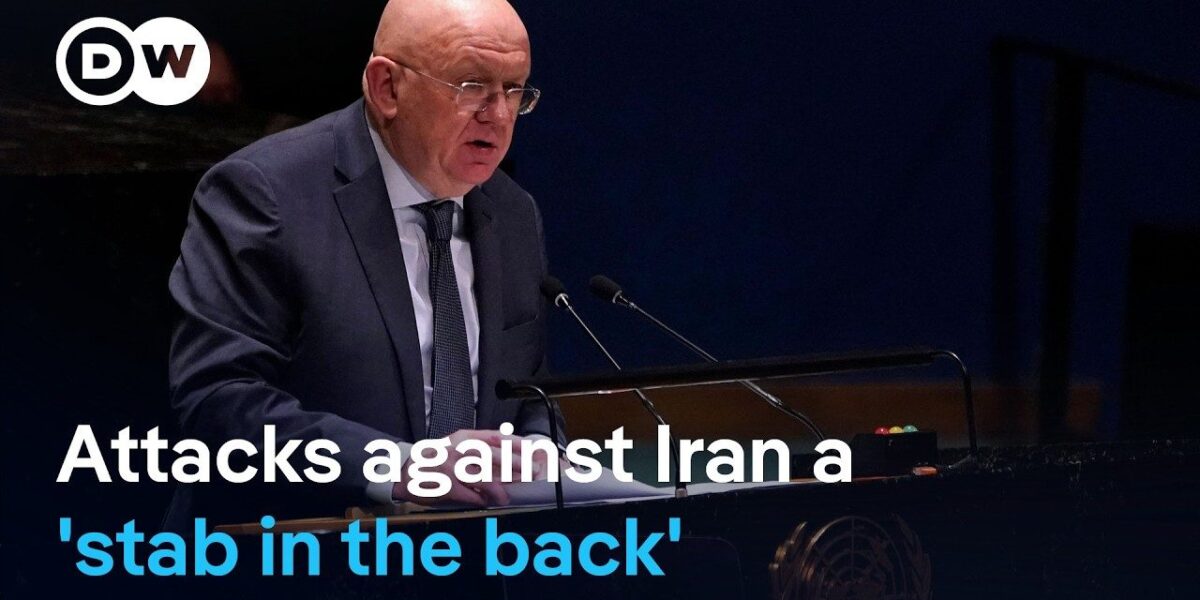
Putin Denounces US Attacks on Iran, Offers Condolences
Russian President Vladimir Putin has vehemently condemned the recent US air strikes on Iran, labeling the action a “cynical violation of all norms of human morality and international law.” The strong statement came as Russia’s UN Ambassador, Vasily Nebenzia, described the strikes as a “stab in the back” during an emergency session of the UN Security Council on Saturday. President Putin extended his condolences to the Iranian regime for the killing of their Supreme Leader, Ayatollah Khamenei, in a written statement released following the incident.
In his statement, Putin honored the deceased leader, saying, “In our country, Ayatollah Khamenei will be remembered as an outstanding statesman who made a huge personal contribution to the development of friendly Russian-Iranian relations and bringing them to the level of comprehensive strategic partnership.” This sentiment highlights the complex and deepening ties between Moscow and Tehran, particularly in the face of perceived external aggression.
Assessing Russia’s Response: Words vs. Actions
While Russia’s official condemnation has been swift and severe, questions remain about the extent of Moscow’s practical support for its long-time ally, Iran. Nicole Grajewski, a fellow at the Nuclear Policy Program at the Carnegie Endowment for International Peace and an expert on Russian-Iranian relations, suggests that Russia’s current response appears to be confined to strong rhetoric.
“At the moment, it looks like this is just being confined to words. Though the broader question is what really can Russia do at this point? Russia is not going to commit ground troops for the Iranians. Air defense systems take months to kind of train on and also to be delivered. And there’s also the question of whether or not Russia has the capacity to provide Iran with any of these crucial capabilities that Iran needs at this moment.”
Grajewski points out the logistical and capacity challenges Russia would face in providing substantial military aid, such as air defense systems, which require significant training and delivery time. Furthermore, it is uncertain whether Russia possesses the surplus capabilities to offer Iran the critical support it might require in the current geopolitical climate.
The Nature of the Russia-Iran Strategic Partnership
The “comprehensive strategic partnership” between Russia and Iran, frequently referenced by President Putin, is a key element in understanding Moscow’s stance. Grajewski elaborated on the character of this relationship, noting that it was a culmination of years of cooperation, particularly evident in Syria. However, she clarified that it does not mirror a NATO-style mutual defense agreement.
Instead, the partnership focuses on shared capabilities that bolster regime security and survival for both nations. Putin’s emphasis on this partnership serves to demonstrate that Russia is not diplomatically isolated, having robust partners on the global stage. While the agreement facilitates certain forms of Russian assistance, potentially including intelligence cooperation and support in space launch and intelligence, surveillance, and reconnaissance (ISR) capabilities, the extent of actual provision remains unclear.
Crucially, Grajewski stated, “whenever Putin refers to this is to show that that Russia is not isolated with its partners. Though it certainly was not the assumption within Iran that Russia would deploy its forces on behalf of the Iranians.” This indicates a strategic alignment based on mutual interest rather than a binding military alliance.
Shifting Global Alliances and Russia’s World Stage Standing
The current pressure on Iran’s leadership comes amidst a backdrop of significant geopolitical shifts, including the downfall of Syria’s regime and the US intervention in Venezuela. These events, all involving countries with close ties to Russia, raise questions about Russia’s standing on the world stage.
Grajewski acknowledged these developments but cautioned against premature assessments. She drew a parallel with Russia’s experience in Syria, suggesting that Moscow has demonstrated an ability to adapt and work with new leaderships. “It’s entirely possible that Russia may come in and work with whatever comes out of this war and leads the Iranian government,” she noted.
However, she also highlighted that these setbacks for Russia in Syria, Venezuela, and now potentially Iran, indicate limitations in its capacity to support allied nations. “These setbacks for Russia, I think there’s an indication that, you know, Russia is limited in its ability to support these countries. But it’s not really indicative of Russian power. Russia never really made those kind of really stringent defense commitments to these countries.” She emphasized that assessing Russia’s overall capabilities solely based on these public relations aspects would be misleading, as it does not reflect its core defensive strengths or future strategic involvements.
Impact on Russia’s War in Ukraine?
A significant question arising from the escalating tensions in the Middle East is the potential impact on Russia’s ongoing war in Ukraine. Specifically, concerns have been raised about whether the conflict could disrupt the flow of weapons from Iran to Russia, which have been crucial for Moscow’s military operations.
According to Grajewski, the immediate impact on Russia’s drone capabilities is likely to be minimal. “Russia really started domesticating their production of the UAVs that Iran provided a few years ago really and have been actually upgrading a lot of those systems with new components,” she explained. This suggests that Russia is no longer heavily reliant on Iran for the components or direct support needed to build these systems, particularly the Shahed drones.
While Russia and Iran have cooperated on sanction evasion networks, the localization of drone technology in Russia appears to have progressed significantly. The relationship, however, remains symbiotic. “So there’s also that kind of symbiotic side of this relationship,” Grajewski added, suggesting that Russia’s battlefield experience in Ukraine might even lead to improvements in Iranian drone technology. This dynamic underscores a mutually beneficial exchange of information and technological adaptation.
Looking Ahead
As the international community closely watches the developments in Iran and the broader geopolitical ramifications, Russia’s diplomatic and strategic responses will be under scrutiny. The extent to which Moscow can or will translate its strong rhetoric into tangible support for Iran, while managing its own strategic interests and ongoing conflict in Ukraine, remains a critical question. The evolving relationship between Russia and Iran, set against a backdrop of shifting global alliances, will be a key factor to monitor in the coming months.
Source: Putin: 'cynical violation of all norms of human morality and international law' | DW News (YouTube)
