Private Credit Woes Echo 2008, Bitcoin’s Untested Waters
The private credit market is facing its worst crash since 2008, with signs of stress mirroring the lead-up to the 2008 financial crisis. This has raised concerns about broader economic stability and its potential impact on Bitcoin, which has never experienced a true credit crisis.

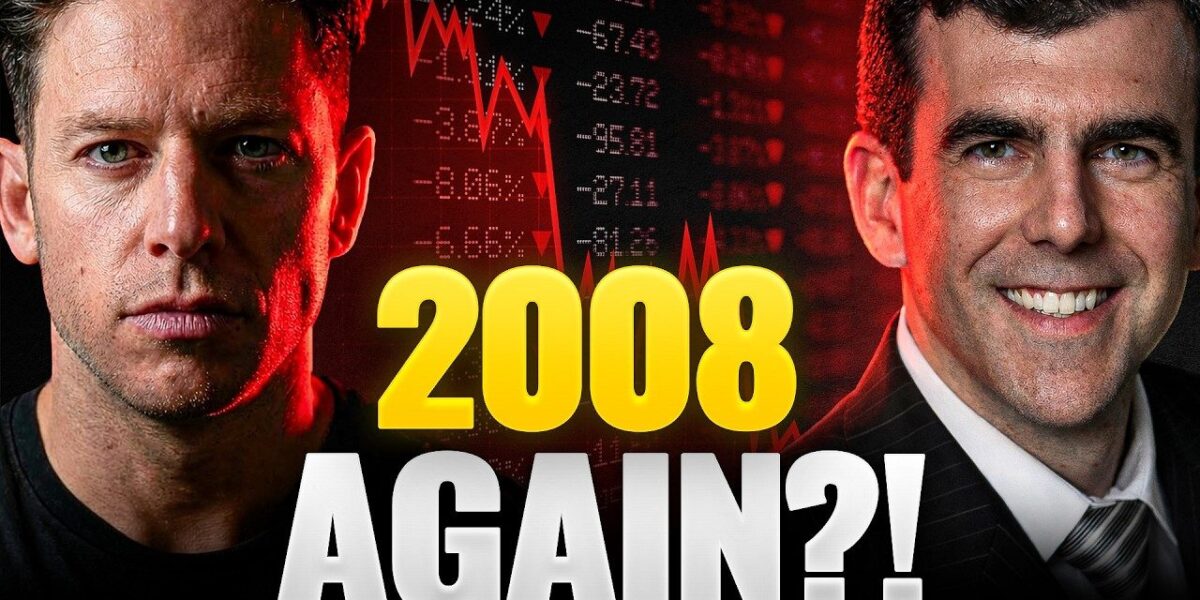
Private Credit Market Faces 2008-Level Crisis, Echoes of Financial Instability Emerge
The private credit market, a vast and increasingly crucial component of the financial system, is currently experiencing its most significant downturn since the 2008 financial crisis. This sector, which emerged in the wake of the 2008 crisis as banks scaled back lending, has grown substantially by providing higher-risk loans that traditional institutions often avoid. Recent events, particularly involving firms like Blue Owl, have highlighted the fragility within this market, raising concerns about broader economic stability and its potential impact on assets like Bitcoin, which has never navigated a true credit crisis.
Blue Owl’s Struggles Signal Deeper Issues
Blue Owl, a prominent player in private credit, recently faced a surge in redemption requests that far exceeded its quarterly limits. This situation, especially within its software loan fund where industry-standard exposure is around 20% but Blue Owl’s was a high 46%, has brought underlying issues to the forefront. Investors are increasingly seeking to withdraw their capital, fearing that the value of these loans, some estimated to be worth only 80 cents on the dollar, could plummet further. The dilemma for Blue Owl and similar firms is that liquidating these assets to meet redemptions could trigger a downward spiral, exacerbating panic and leading to a full-blown credit cycle bust.
The response from Blue Owl, including borrowing against its funds to create liquidity and restricting further withdrawals from certain funds, underscores the severity of the situation. Compounding the issue is the fact that public pension funds and large insurance companies are reportedly buying this debt, driven by the search for yield. However, the market’s valuation suggests a lack of confidence, with investors prioritizing liquidity and the potential to safeguard their capital against a scenario where funds could become illiquid and significantly devalued.
Lessons from 2008 and the Current Economic Landscape
The parallels drawn to the 2008 financial crisis are stark. The 2008 crisis was largely fueled by mortgage-backed securities containing subprime loans. Today, while the specific assets differ, the mechanism of packaging and securitizing loans, coupled with a sudden realization of their potential worthlessness, mirrors past events. This situation is not confined to specific sectors like AI, but rather permeates various business needs, including inventory financing and short-term operational loans.
The current economic climate is characterized by several worrying indicators. Auto loan and credit card delinquency rates are reportedly higher than in 2008. The personal savings rate has hit a three-year low, indicating consumers are depleting their reserves to meet expenses. Furthermore, economic growth, as evidenced by a Q4 GDP print of 1.4% (below expectations of around 3%), is being propped up by essential sectors like healthcare and staples, not by robust consumer demand. The top 10% of earners, through their stock market participation, are disproportionately supporting the economy, a situation that becomes precarious if their wealth is impacted.
Consumer spending is showing signs of strain. Despite potential tax refunds, consumers are facing stagnant wage growth relative to inflation, rising debt burdens, and job insecurity. This has led to a pullback in discretionary spending, such as reduced purchases of non-essential items, and an inability to afford even basic goods at higher prices. The inventory built up during a period of anticipated demand, fueled partly by responses to tariffs, is now struggling to move, creating a risk of significant write-downs.
Corporate Behavior and Market Disconnect
A significant disconnect exists between the stock market’s performance and underlying economic fundamentals. While labor market indicators suggest weakness, the stock market has shown resilience, partly driven by passive investing and aggressive retail participation. However, a critical factor supporting the market has been corporate share buybacks, which have injected substantial liquidity. Data indicates that for every one corporate insider buying shares, five are selling, a signal that those with inside knowledge may be anticipating a downturn.
The sustainability of current market levels is questionable, especially if corporate share buybacks decrease. With institutional investors holding minimal cash reserves, the market’s ability to absorb significant sell-offs is limited. The NASDAQ, for instance, has shown little upward movement in recent months, suggesting a potential topping pattern. This environment raises questions about the future trajectory of the market, particularly if the wealthy demographic, which currently props up the economy, experiences a significant reduction in their net worth.
Bitcoin’s Uncharted Territory
For Bitcoin and the broader cryptocurrency market, the current economic scenario presents an unprecedented challenge. Bitcoin has never experienced a true credit crisis. While proponents might attribute any price pullbacks to standard four-year market cycles, the current macroeconomic backdrop suggests a potentially more significant systemic risk. The interplay between a stressed private credit market, potential stock market downturns, and consumer financial fragility creates an uncertain environment for all asset classes, including digital assets.
Looking Ahead: Red Flags and Potential Outcomes
The most significant red flag remains consumer delinquency, particularly in credit cards and auto loans, as consumers are the bedrock of the economy. While commercial real estate is also a concern, it is being artificially propped up, masking the immediate impact. The current situation suggests a potential for a credit crunch, where lending tightens, businesses struggle, and domino effects spread through the financial system. The question remains whether the current economic structure, heavily reliant on credit and speculative investment, can withstand these mounting pressures without a severe correction.
Source: This Happened Right Before 2008 (It's Happening Again!) (YouTube)

Related Articles

Geopolitical Turmoil Triggers Bitcoin Sell-Off
Geopolitical tensions and technical indicators point to a subdued short-term outlook for Bitcoin, with veteran trader Jason Pazino discussing potential downside risks and the impact of a long-term economic cycle.


Memecoin Season Stalled Amidst Broader Market Downturn
Despite a significant downturn in Bitcoin and altcoins, certain memecoins are showing resilience. This article explores the reasons behind this divergence, highlighting the importance of understanding market rotation and on-chain data over mainstream news.


Shadow Banking Crisis Looms Amid Deregulation
A looming crisis in the shadow banking system, particularly private credit, is highlighted as a major unaddressed economic risk. Deregulation and a lack of transparency in this rapidly growing sector echo the conditions that led to the 2008 financial crisis. Evidence of distress is mounting, yet regulatory oversight is reportedly being dismantled.