President’s Market Claims Ignite Global Distrust
President Trump's claims of a nearing deal in a foreign conflict are being challenged by both Iran and Israel, raising concerns about market manipulation. Reports of massive trades before his announcements and skepticism from allies suggest a pattern of behavior that could undermine trust and global market stability.

President’s Market Claims Ignite Global Distrust
Recent events have raised serious questions about President Trump’s public statements regarding international negotiations and their impact on global markets. A report from the Jerusalem Post, citing a source familiar with the situation, indicates that the planned deployment of U.S. forces to the Middle East is moving forward as scheduled. This includes approximately 2,500 Marines, 2,000 sailors, three amphibious ships, and 3,000 paratroopers. While their exact mission is unclear, the buildup suggests preparations for potential military actions.
This development directly challenges President Trump’s recent claims that a deal was imminent and the conflict was nearing its end. The President’s statements, made just before the market opened, suggested a swift resolution. However, reports indicate that significant trades occurred just minutes before his announcement. Over $1.5 billion in S&P 500 futures were bought, and $192 million in oil was sold. These trades were unusually large, four to six times bigger than typical transactions at that time. The timing suggests a potential for significant profit for those involved, leading to speculation about who benefited from this market activity.
Iran’s Stance Contradicts Presidential Claims
Adding to the confusion, a senior Iranian official reportedly told Drop Site News that no direct negotiations were taking place. According to this official, Iran had communicated its conditions to the U.S. indirectly. These conditions reportedly include a simultaneous ceasefire in Iran, Lebanon, and Iraq. Furthermore, Iran stated that its missile program, which it considers defensive, would continue with increased intensity if a ceasefire were to occur. Regarding nuclear policy, Iran indicated it would develop a new doctrine in response to perceived violations of international law by the U.S. and Israel. The official also mentioned that Iran would seek compensation for damages from past strikes.
Despite these reports, President Trump continued to insist that talks were progressing, stating his envoy had engaged in strong discussions. He did not identify the Iranian contact, citing concerns for their safety. The underlying calculation for Iran, as suggested by the analysis, is that past negotiations with the U.S. under President Trump have not prevented military actions. This history might explain Iran’s cautious approach and its continued actions, such as potentially disrupting the Strait of Hormuz.
The President of the United States is a pathological liar who seems to have made up a fake deal, a fake negotiation in order to trick the American people, trick investors, and try to temporarily pump up oil prices to hold up a falling market.
– Anonymous Analyst
Presidential Distractions and Market Manipulation Concerns
During this tense period, President Trump was observed engaging in activities like visiting Graceland, Elvis Presley’s former home. His public remarks during this visit focused on topics such as the popularity of Elvis and crime statistics in Memphis. He claimed crime had significantly decreased, by as much as 75%, a figure that official crime statistics from Memphis appear to contradict, showing a decline closer to 20% since the pandemic. The analyst described this behavior as embarrassing, especially given the serious international situation and the conflicting reports about negotiations.
The situation became even more notable when Israeli officials themselves began to question President Trump’s statements. Reports indicate that Israeli officials accused the President of attempting to manipulate oil and stock markets. An Israeli security source advised caution regarding the President’s pronouncements, noting a pattern of similar market reactions following his statements in previous weeks. This suggests that the market’s positive response to the news of potential negotiations might have been short-lived and influenced by the President’s announcements.
Why This Matters
The core issue here is the potential for a U.S. President to deliberately mislead the public and financial markets for political or economic gain. When a leader’s statements can trigger massive financial trades and influence global oil prices, the integrity of those statements becomes paramount. The accusations from both Iran and Israel, if accurate, suggest a pattern of behavior that undermines trust. This lack of trust can have far-reaching consequences, affecting international relations, investor confidence, and ultimately, the stability of global markets.
Implications and Future Outlook
The events highlight a concerning trend where geopolitical tensions are intertwined with market dynamics. The President’s alleged attempts to manipulate markets, even temporarily, could lead to increased volatility. If foreign actors perceive that U.S. policy statements are driven by a desire to artificially boost markets, it could erode diplomatic credibility. The deployment of U.S. forces suggests that the underlying conflict remains unresolved, and the President’s public statements may be an attempt to manage perceptions rather than reflect reality.
Looking ahead, there is a clear need for transparency and accuracy in presidential communications, especially concerning international affairs and their economic impact. The market’s sensitivity to such statements means that any perceived manipulation could have significant repercussions. The ongoing military buildup in the Middle East, coupled with the conflicting narratives, points to a complex and potentially escalating situation. The reliance on indirect communication channels by Iran and the skepticism from allies like Israel suggest that diplomatic pathways may be more challenging than publicly portrayed.
Source: Trump just humiliated all of us… (YouTube)

Related Articles
Ukraine Strikes Russian Oil Refinery, Eyes Iran Threat
Ukrainian forces struck a key Russian oil refinery, disrupting Moscow's war capabilities. Meanwhile, Finland's president urged continued U.S. support for Ukraine, as Kyiv shares its air defense expertise globally amid growing geopolitical complexities involving Iran and potential sanctions against Hungary.
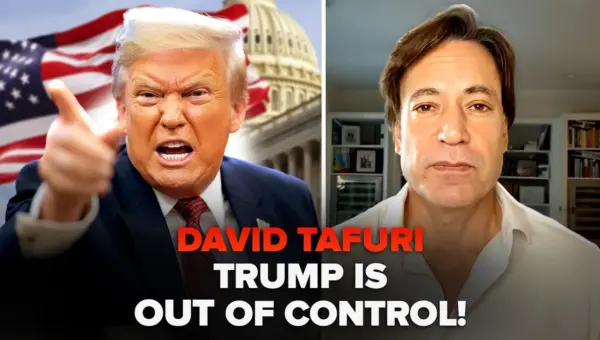
Trump Halts Iran Strikes Amid Stalled Diplomacy
President Trump announced a pause on planned strikes against Iran, citing productive talks, though Iran denies negotiations occurred. Reports also suggest a potential U.S. ground operation on Iran's Hark Island. The situation raises concerns about international support for Ukraine and potential shifts in U.S. foreign policy.
Iran’s Missile Threat Reduced by 90%, Analyst Says
An analyst reports that Operation Epic Fury has degraded Iran's missile launchers by 90%, despite challenges in targeting hidden sites. The conflict's duration and media coverage are also discussed, with implications for global energy markets and investor confidence.