Presidential Gaffes Raise Questions About Leadership
Recent events involving President Trump's public appearances and Senator JD Vance's statements on foreign policy and allegations against Ilhan Omar are raising questions about leadership and political discourse. Reports of the President appearing to doze off in meetings and his own jokes about the 25th Amendment, alongside Vance's disputed claims about the Iran conflict and his exploration of legal remedies against a congresswoman, highlight concerns about competence and due process.

Presidential Gaffes Raise Questions About Leadership
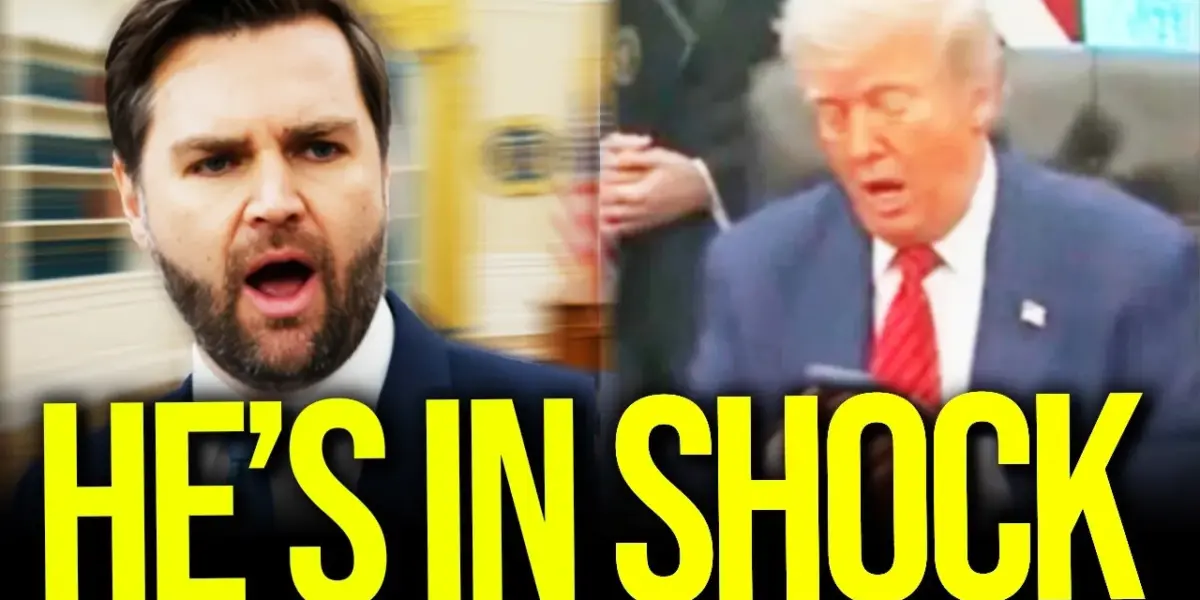
Recent events and statements have sparked concern and debate about the current state of presidential leadership, particularly regarding public appearances and policy discussions. Reports suggest that President Trump’s staff have advised him to stay awake during public events. This advice reportedly stems from instances where cameras caught him appearing to doze off during a cabinet meeting in December and again during an announcement about lowering the cost of weight loss medication in November. While a press secretary stated he was merely ‘resting his eyes,’ the optics raise questions about a president’s ability to remain engaged.
The transcript highlights a critical concern: is staying awake for important meetings a basic expectation for a president? The speaker argues that even attending one’s own cabinet meetings should be considered the bare minimum for the office. This is especially relevant when the nation faces significant global challenges, such as ongoing conflicts in the Middle East and rising prices, which are affected by international turmoil.
Senator Vance’s Stance on Foreign Policy and Gas Prices
The analysis also turns to Senator JD Vance, who has been notably quiet on the war in the Middle East. Previously, Vance positioned himself as an advocate against new wars, stating that the absence of conflict was a key benefit of Donald Trump’s policies. However, his recent interview on the war in Iran presents a different perspective.
In the interview, Vance suggested that the conflict in Iran was the cause of rising gas prices. He also stated that the president had accomplished the ‘gross majority’ of military objectives and that the situation would be short-lived, leading to a decrease in gas prices. He framed the objective as ‘neutering’ Iran for a long time to prevent future threats, including their pursuit of nuclear weapons.
However, the transcript strongly disputes Vance’s claims. It argues that the military objectives have shifted and that claims of success are not accurate. The article points out that Iran’s South Pars gas field, which is shared with Qatar, was struck by Iran and then by Israel. This event has caused oil prices to skyrocket globally, with estimates suggesting that rebuilding the damaged infrastructure could take three to four years, contradicting the idea of a short-term conflict.
The 25th Amendment and Cognitive Assessments
A recurring theme is President Trump’s own discussion of the 25th Amendment. He has reportedly joked about it, even in situations where he is being questioned by reporters. This behavior has been met with awkward laughter and applause, which the speaker finds concerning, especially given that Trump himself brings up the amendment.
The transcript also touches on President Trump’s discussions about a cognitive exam he took. He claimed to have aced a ‘very hard test’ multiple times, involving complex mathematical equations. However, fact-checkers have identified the test as the Montreal Cognitive Assessment, a 10-minute screening for dementia. This test typically includes naming animals, drawing a clock, and simple counting, not advanced math problems. This discrepancy raises questions about the president’s portrayal of his cognitive abilities.
Allegations Against Ilhan Omar and Due Process
The analysis shifts to allegations made by JD Vance concerning Representative Ilhan Omar. Vance claims that Omar committed immigration fraud, suggesting she married her brother. He stated that he had discussed this with Stephen Miller and was exploring ‘legal remedies’ to investigate and potentially deport or denaturalize her.
The speaker criticizes this approach, questioning why an investigation or due process isn’t being followed. The idea that Vance is discussing potential legal actions with Stephen Miller, outside of formal investigative channels, is presented as problematic. The speaker implies that Vance’s comments lack substance and due diligence, especially when discussing serious accusations that could lead to deportation.
Why This Matters
The events and statements discussed are significant because they directly relate to the fitness and competence of individuals in high-level political office. A president’s ability to stay alert and engaged during critical meetings is essential for effective governance, especially during times of international crisis. Similarly, the accuracy of claims made by public figures, whether about foreign policy or personal cognitive abilities, impacts public trust and understanding.
Furthermore, the way political figures discuss potential legal actions against opponents, particularly when it involves accusations of immigration fraud and threats of deportation, raises concerns about the use of political power and the principles of due process. The intentional mispronunciation of names and the focus on personal attacks over policy debates can undermine respectful political discourse.
Implications, Trends, and Future Outlook
This situation reflects a broader trend in modern media and politics, where sensational headlines and attention-grabbing statements often overshadow substantive policy discussions. The competition for viewer attention can lead to an emphasis on personality and controversy over factual reporting and reasoned debate.
The reliance on social media and partisan news sources for information can create echo chambers, where individuals are less exposed to diverse viewpoints. This makes it challenging for the public to form well-informed opinions. Tools like Ground News, which aim to provide a more balanced view of media coverage, highlight the need for media literacy and critical consumption of news.
Looking ahead, the focus on these types of controversies may continue as long as they generate engagement. However, there is a growing demand from the public for more serious and fact-based political discourse. The future of political communication will likely depend on the ability of media outlets and political figures to balance the need for attention with the responsibility of providing accurate and thoughtful information.
Historical Context
Discussions about a president’s cognitive fitness are not new. Throughout history, there have been periods where the health and mental acuity of leaders have been subject to public scrutiny and speculation. Concerns about a president’s ability to perform their duties have sometimes led to serious constitutional considerations, such as the invocation of the 25th Amendment, which provides a mechanism for removing a president deemed unable to discharge their duties.
Similarly, political rhetoric involving accusations of fraud and calls for deportation has a long history. However, the current environment, amplified by social media, allows such rhetoric to spread rapidly and reach a wider audience. The specific context of immigration policy and allegations of fraud against elected officials remains a sensitive and often contentious issue in American politics.
Source: Trump SHAKEN BY 25th Amendment BOMBSHELL (YouTube)

Related Articles

Protests Grow as Trump Faces War and Executive Overreach
Protests are growing across the nation as Americans voice concerns over executive power and foreign policy. The "No Kings" movement highlights public frustration with military spending and domestic budget cuts, calling for a return of power to the people.

Vance Fuels Fear: Nuclear Vest Claims Echo War-Mongering Tactics
Senator JD Vance's controversial "nuclear vest" claims about Iran are drawing sharp criticism, with many seeing echoes of past fear-mongering tactics used to justify war. The remarks raise questions about scientific feasibility and responsible communication of national security threats.
Mixed Signals: Trump’s Iran Stance Fuels War & Negotiation Chaos
Conflicting messages from Donald Trump regarding Iran's Strait of Hormuz threats and subsequent negotiation claims create diplomatic chaos. Expert analysis highlights the importance of autonomy in negotiation and warns against arbitrary deadlines, while the core question of U.S. involvement in such conflicts remains.