President Claims Iran War Near End Amid Market Swings
President Trump has claimed the war with Iran is "very complete, pretty much," a statement that significantly impacted oil prices, causing them to drop from nearly $120 to $85 a barrel. This comes as Iran names a new hardline leader, Mojtaba Khamenei, and amid concerns over rising gas prices affecting American consumers. Analysts warn of continued market volatility and potential long-term economic consequences.


President Claims Iran War Near End Amid Market Swings
WASHINGTON D.C. – On day ten of the ongoing conflict with Iran, President Trump made striking comments suggesting the war is nearing its conclusion, a statement that sent shockwaves through global financial markets. The Dow Jones Industrial Average surged in late-day trading following the President’s remarks, which were made in an interview with CBS. This surge came after initial dips driven by concerns over the economic toll of the conflict. The price of oil also experienced a dramatic shift, plummeting from a weekend high of nearly $120 a barrel to around $85 a barrel after the President’s pronouncements.
Economic Repercussions and Presidential Assurances
The volatile oil market has had a direct impact on everyday Americans, with the average price per gallon of gasoline soaring by nearly $0.50 in the past week alone. This rise in fuel costs comes in the wake of stunning images from the weekend showing massive explosions and flames after Israel’s military struck an oil depot in Tehran. The strike followed an announcement by Middle Eastern oil producers to reduce production due to the ongoing conflict.
Amidst this economic upheaval, the Trump administration has been working to allay concerns about rising gas prices, a potential liability for the President and his party in the upcoming midterm elections. White House officials have characterized the current situation as a “short-term disruption.” They argue that while there may be a slight increase in oil and gas prices, the ultimate removal of the “rogue Iranian regime” will benefit the oil industry and lead to lower prices in the long run.
“This is a short term disruption. We’re seeing a slight increase in oil and gas prices, but ultimately taking out the rogue Iranian regime is going to be a good thing for the oil industry industry, and those prices are going to come back down.”
The administration maintains that the President remains focused on ending the conflict and growing global energy supply, viewing the current situation as a temporary impediment to energy production that will ultimately result in greater production and lower prices.
Iran Appoints New Hardline Leader, Escalating Tensions
In a significant development over the weekend, Iran named Mojtaba Khamenei, the son of the former Supreme Leader Ayatollah Ali Khamenei, as its new supreme leader. This appointment has been met with concern and is seen by some as a move that could prolong the war. Israel’s military has vowed to pursue every successor appointed by Iran.
President Trump, when asked about this development, told NBC News, “I think they made a big mistake. I don’t know if it’s going to last. I think they made a mistake.” Meanwhile, the fighting in the region continues to escalate. When questioned by Meet the Press moderator Kristen Welker about the conditions under which Iran would agree to end the war, Iran’s Foreign Minister stated:
“Everywhere people have been killed, places have been destroyed, and now they want to ask for a ceasefire again. Well, this this doesn’t work like this. So there should be a permanent end of the war. And unless we get to that, I think we need to. You know, continue fighting for for the sake of our people and our security.”
Potential for U.S. Troop Deployment and Civilian Casualties
The question of whether the U.S. will deploy troops into Iran remains a significant point of discussion. Sources tell NBC News that the President has privately expressed serious interest in such a deployment. When pressed on the circumstances under which ground troops might be sent in, the President stated, “I don’t even want to talk about it now. It’s I don’t think it’s an appropriate question. You know, I’m not going to answer it.” He added, “Could there be? Possibly, for very good reason. Have to be very good reason. And I would say if we ever did that, they would be so decimated, that they wouldn’t be able to fight at the ground level.” Defense Secretary, however, conveyed a more resolute stance, stating, “President Trump knows. I know you don’t tell the enemy. You don’t tell the press. You don’t tell anybody what what your limits would be on an operation. We’re willing to go as far as we need to in order to be successful.”
Adding to the complexities, a strike on what appears to be a girls’ elementary school in southern Iran, resulting in numerous casualties, has become a point of contention. The President stated his opinion that the incident was perpetrated by Iran, citing their “inaccurate” munitions and lack of accuracy. However, officials are still investigating the incident, with some reports suggesting it may have been a U.S. munition, a claim the President disputes.
Market Volatility and Expert Analysis
The dramatic swings in oil prices are a direct reflection of the uncertainty surrounding the conflict. John Kilduff, Founding Partner of Again Capital, explained the volatility as a “violent reaction” to unprecedented headlines. He noted that initial fears of production shutdowns and the closure of the Strait of Hormuz drove prices up, but the President’s comments and the prospect of a coordinated release of strategic petroleum reserves offered some relief.
Kilduff cautioned that the market is placing significant trust in the President’s statements, and if those statements are not backed up by reality, prices could rebound sharply. He reiterated concerns that the Strait of Hormuz could remain closed, potentially pushing gas prices to $4 a gallon or higher, with lasting implications for the global supply chain.
Broader Implications and Future Outlook
The conflict’s impact extends beyond fuel prices, affecting the cost of food, manufacturing, shipping, and air travel, as oil is a fundamental component of the U.S. economy and global supply chains. The situation in Iran, coupled with the appointment of a hardline leader and the ongoing military actions, suggests a prolonged period of instability in the Middle East.
As the situation unfolds, all eyes will be on further pronouncements from the President regarding the war’s conclusion, the administration’s strategy to stabilize energy markets, and the potential for any U.S. military involvement on the ground. The coming days will be critical in determining whether the President’s optimistic outlook on the war’s end and subsequent economic recovery will materialize.
Source: Meet the Press NOW — March 9 (YouTube)

Related Articles

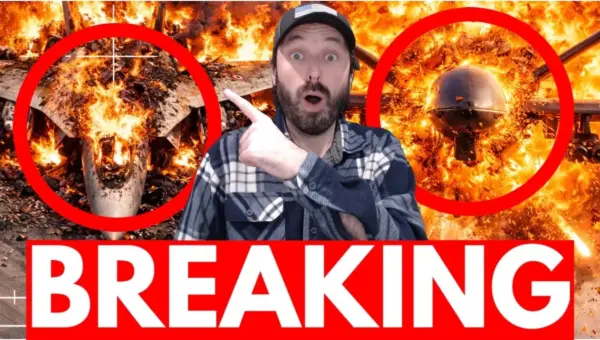
Iran’s Air Power CRUMBLES Amidst Drone War Escalation
Reports and footage suggest a significant blow to Iran's air force and drone capabilities amidst escalating aerial combat. With key installations targeted and advanced fighter jets and drones reportedly destroyed, the conflict appears to be reaching a critical phase, potentially leading to a winding down of hostilities.
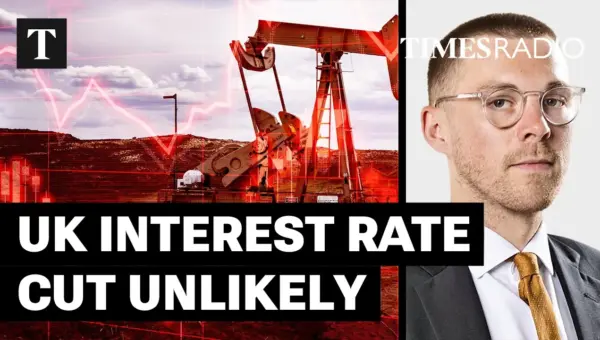
Iran War Fuels Inflation Fears, Bank of England Rate Cuts Unlikely
The escalating conflict in Iran has triggered a sharp rise in oil prices and heightened inflation fears, making Bank of England interest rate cuts unlikely this year. Financial markets are now anticipating potential rate hikes amidst geopolitical uncertainty and disrupted energy supplies.

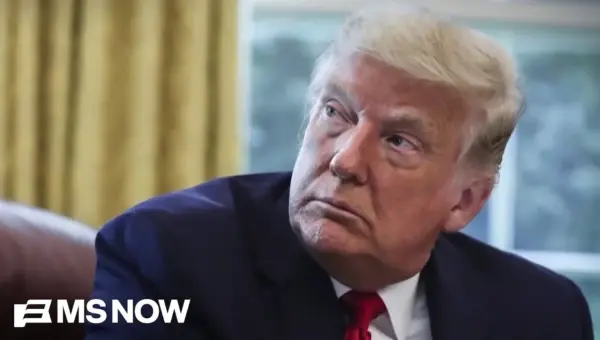
Trump’s Iran War Justification Falters Amidst Economic Fallout
The Trump administration's justifications for military action against Iran are facing intense scrutiny amidst emerging economic challenges. Reports indicate a shifting rationale and a lack of concrete evidence, while fuel prices and the cost of goods are on the rise.