Polls Show Trump’s Approval Collapsing Amidst Crisis
New Fox News polls reveal a sharp decline in President Trump's approval ratings, with majorities disapproving of his handling of the economy, inflation, and foreign policy. This widespread dissatisfaction, even among Republicans, mirrors historical trends seen during presidential crises.

Polls Show Trump’s Approval Collapsing Amidst Crisis
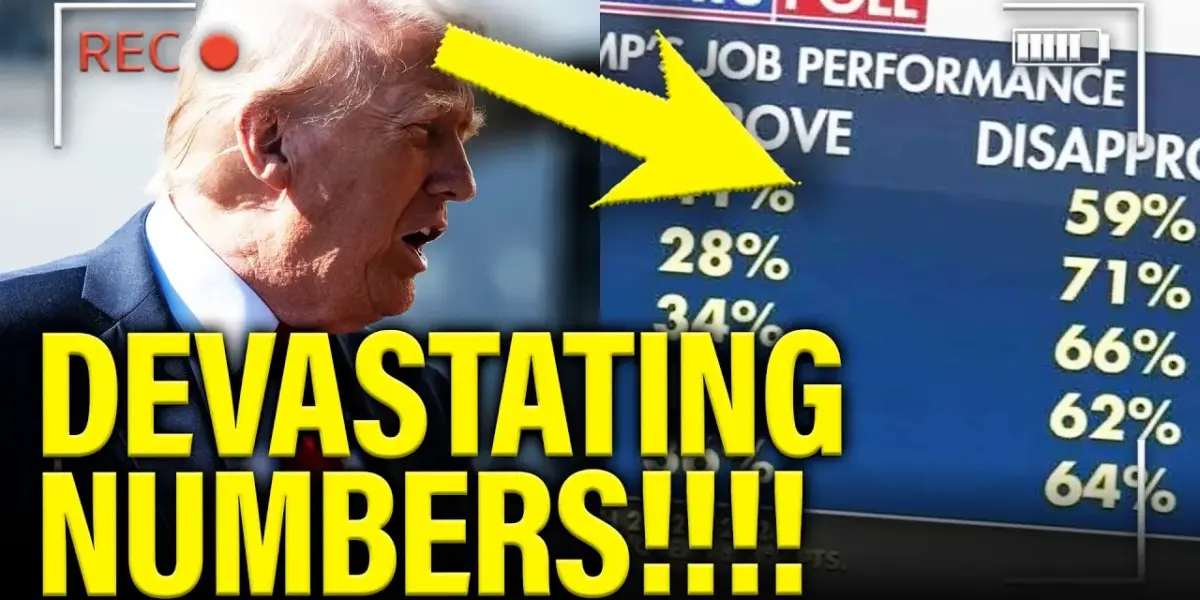
New polls from Fox News paint a grim picture for President Trump’s standing with the American people. His approval ratings have hit new lows, with a significant majority of registered voters disapproving of his performance on key issues like Iran, inflation, and the overall economy. These numbers are not coming from partisan sources, but from outlets like Fox News itself, highlighting a widespread dissatisfaction.
A Steep Decline in Public Opinion
The data reveals a sharp drop in Trump’s approval. A staggering 64% of registered voters disapprove of his handling of Iran, while inflation and the economy fare even worse, with 71% and 66% disapproval, respectively. These issues are closely linked to rising oil prices, which directly impact the cost of living for most Americans. The attention on the Strait of Hormuz, a critical oil shipping route, underscores this connection.
Polls from various sources, including Reuters and Ipsos, show Trump’s net approval rating significantly underwater. Some polls place his approval as low as 36%, a level historically associated with major presidential crises. For context, President Nixon resigned when his approval ratings dipped into the high 20s, and President George W. Bush saw similar lows during the 2008 financial crisis. Trump’s current numbers are dangerously close to these historical markers.
Internal Divisions and Policy Criticisms
Adding to the president’s challenges, there are visible divisions within his own party. For instance, some Republicans have publicly voiced disapproval of potential military actions, such as ground forces in Iran. This internal dissent, alongside concerns about the administration’s planning and communication regarding foreign policy and immigration, appears to be further eroding public confidence.
Critics point to a perceived lack of clear planning and day-to-day changes in strategy, even within the same press conferences. Republican leaders on Homeland Security committees have expressed a need for more information and clearer options regarding military actions. The White House, it seems, is struggling to build a strong case for its policies, both to its own party and to the broader public.
The current military incursion is noted as one of the least popular in modern American history. Support for such actions has been declining across multiple polls, suggesting a public weary of prolonged or poorly explained conflicts.
Concerns Over Voting Rights and Mail-In Ballots
Beyond foreign policy and the economy, the transcript touches upon concerns regarding voting rights and the integrity of mail-in ballots. While President Trump has frequently raised concerns about potential fraud in mail-in voting, he himself has used the mail-in ballot system. This has led to accusations of hypocrisy, with critics suggesting that the push against mail-in ballots is an effort to suppress votes, particularly from working individuals who may find it difficult to vote in person.
The SAVE Act is mentioned as potentially consolidating federal voter data, which raises questions about voter privacy and the ability to purge voter rolls. The Supreme Court’s consideration of a case regarding mail-in ballots further highlights the ongoing debate. The argument presented is that mail-in ballots increase accessibility for voters with less flexible schedules, and that efforts to restrict them disproportionately affect these individuals. This is framed as a key reason why the Republican party might oppose such measures.
Economic Woes and Voter Sentiment
The cost of living remains a significant concern for voters, and President Trump’s performance on this issue is particularly damaging. When he was re-elected, he held a lead over Kamala Harris on the cost of living. However, his net approval rating on this issue has plummeted to a record low, 41 points underwater. This is seen as a major political hurdle, making it difficult for him or the Republican party to win elections.
The situation is even more dire among independent voters. Their disapproval rating regarding the cost of living is a staggering 60 points underwater. This represents a massive shift from a previous lead and is described as a “political nightmare” for the Republican party heading into future elections.
With rising gas prices and the ongoing impact of the Iran war, these economic pressures are expected to continue, potentially worsening Trump’s approval numbers. The transcript concludes by emphasizing that these negative trends, particularly concerning the economy and voter sentiment, pose a significant challenge for the president and his party.
Why This Matters
These poll numbers are more than just statistics; they reflect a deep public unease with the current administration’s handling of critical issues. The widespread disapproval on the economy, inflation, and foreign policy suggests that voters are increasingly questioning the direction of the country under Trump’s leadership. The fact that these low ratings are coming from traditionally more favorable news sources like Fox News underscores the severity of the situation.
Implications and Future Outlook
The current polling data suggests a challenging road ahead for President Trump and the Republican party. Historically, presidents with approval ratings this low have faced significant political headwinds, often leading to electoral losses or even resignation. The deep disapproval among independent voters, a crucial swing demographic, is particularly concerning for the GOP.
The connection between rising gas prices, inflation, and voter sentiment cannot be overstated. If these economic pressures continue, it is likely that Trump’s approval ratings will decline further. This could have a profound impact on upcoming elections, potentially paving the way for Democratic victories in key races.
Furthermore, the internal party divisions and public criticism of the administration’s foreign policy decisions signal a lack of unified support. This can weaken the president’s ability to govern effectively and rally public opinion. The debate over voting rights and mail-in ballots also highlights underlying tensions about democratic processes and access to the ballot box, which could become a significant issue in future elections.
Historical Context
The transcript draws parallels to past presidencies, such as Nixon and George W. Bush, whose approval ratings dropped significantly during times of crisis. These historical examples serve as a stark warning about the potential consequences of sustained public disapproval. When a president’s approval ratings fall into the high 20s or low 30s, it often signals a crisis of confidence that can lead to severe political repercussions.
The current situation, with Trump’s approval ratings nearing these critical levels, suggests that the administration is facing a moment of significant vulnerability. The public’s reaction to issues like the economy, inflation, and foreign policy is a critical factor in determining the long-term success or failure of any presidency. The current polling indicates that, for a growing number of Americans, the administration is failing to meet expectations on these vital fronts.
Source: Trump FUMES over DISASTER Fox News POLL (YouTube)

Related Articles

Millions Protest Trump, CPAC Shows GOP Divisions
Millions protested Donald Trump nationwide with "No Kings" rallies, citing war, deportations, and constitutional fears. Meanwhile, CPAC revealed deep divisions within the Republican party, with Donald Trump absent for the first time since 2016. Concerns over foreign policy and domestic economic struggles emerged as key issues, potentially shifting political momentum.

Trump’s Ramblings Expose Leadership Gaps and Chaos
Donald Trump's recent public statements, including unusual comments on "sex" and boasts about a cognitive test, have drawn criticism. Reports of security breaches involving an administration official and incoherent foreign policy discussions further fuel concerns about leadership.

Vance’s Nuclear Vest Claim Stuns, Raises Alarms
Vice President J.D. Vance's suggestion of an Iranian "nuclear vest" has drawn criticism for its scientific implausibility and vague language. The claim raises concerns about official communication and national security strategy.