Poland Emerges as Europe’s New Military Superpower with Massive Defense Buildup
Poland has rapidly transformed from a former Soviet bloc nation into Europe's emerging military superpower, with defense spending at 4.8% of GDP—the highest per capita in NATO. The country now maintains the third-largest armed forces in the alliance and is building a tank fleet larger than the UK, France, and Germany combined.

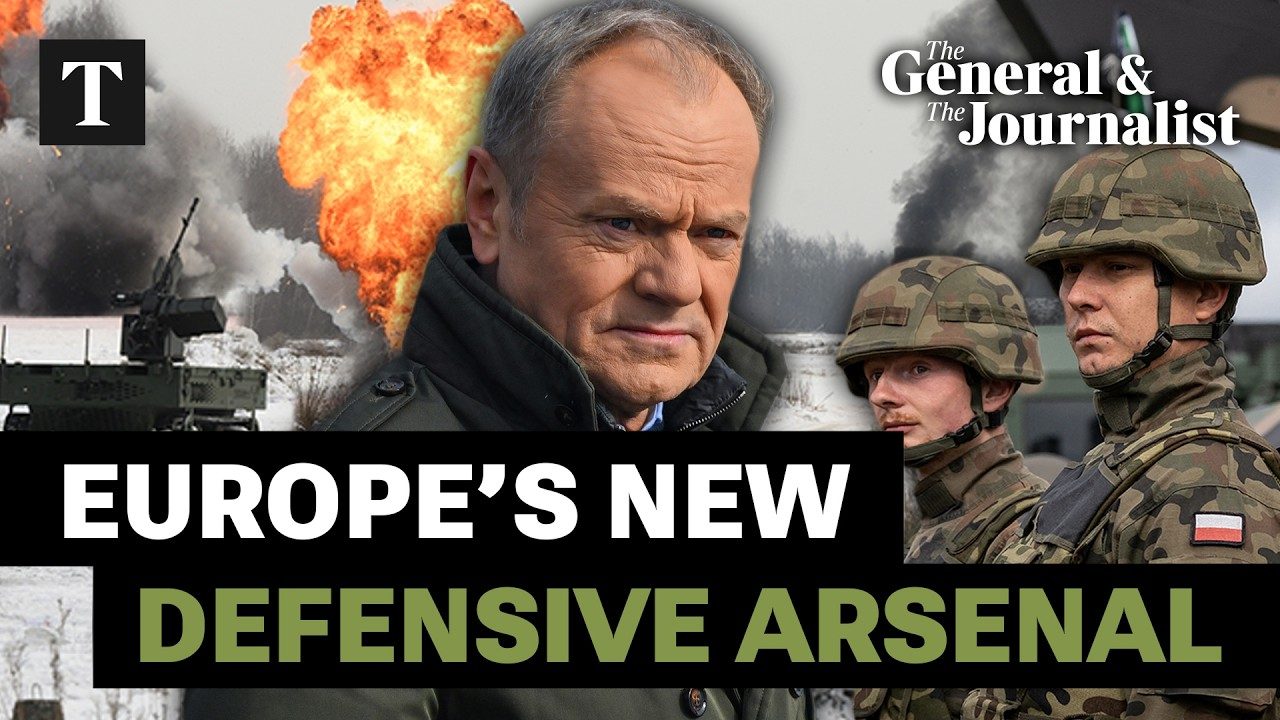
Poland has undergone one of the most dramatic military transformations in modern European history, evolving from a former Soviet bloc nation to what many now consider Europe’s new military superpower. With defense spending reaching 4.8% of GDP—the highest per capita in NATO, even exceeding the United States—Poland is rapidly reshaping the continent’s strategic balance.
The Numbers Behind the Transformation
The scale of Poland’s military expansion is staggering. The country’s armed forces now rank as the third largest in NATO, with 216,000 professional soldiers and plans to expand to 300,000 troops—four times the size of the British Army. Perhaps most striking is Poland’s tank fleet: currently possessing 612 main battle tanks with plans to increase to 1,100, which will exceed the combined tank forces of the UK, France, and Germany.
This military buildup is supported by an annual defense budget of approximately €44-45 billion, projected to exceed 5% of GDP—a level matched only by countries like Estonia and Lithuania. The investment represents not just a numerical expansion but a fundamental shift in European military power dynamics.
From Economic Ruin to European Powerhouse
Poland’s military renaissance is built on the foundation of an extraordinary economic transformation. Just 35 years ago, the country was trapped behind the Iron Curtain, characterized by widespread poverty, crumbling infrastructure, and economic hardship. The early 1990s brought deregulation and a painful transition that saw wealth concentrated among a few while many struggled to maintain basic living standards.
However, since joining the European Union in 2004, Poland has experienced almost unbroken economic growth, with 2020 being the only year GDP declined—and even then, only by 2%. This sustained growth has created a remarkable convergence with Western European living standards. In purchasing power parity terms, Warsaw’s average income now reaches €67,000 annually, matched only by London across Europe.
The economic miracle has been driven by several factors: a highly educated population, strong institutions despite political challenges, and what economists consistently identify as a distinctive work ethic that exceeds German or French standards. This cultural commitment to seizing the opportunity presented by communism’s fall has been central to Poland’s transformation.
The Security Imperative
Poland’s military expansion stems from deep historical memory and contemporary security concerns. The country has experienced repeated invasions and occupations throughout its history, including periods when it was entirely partitioned off the map by Prussia, Russia, and Austria. These historical experiences created lasting institutional memory about the importance of military preparedness.
The modern trigger for Poland’s defense buildup can be traced to Russia’s annexation of Crimea in 2014, followed by the full-scale invasion of Ukraine in 2022. Poland shares a 200-mile border with Ukraine, making the war a daily reality. Long military convoys traversing Polish motorways and the presence of international forces supporting Ukraine underscore the country’s proximity to active conflict.
The threat extends beyond conventional warfare. Poland faces what security experts term “gray zone” operations—hybrid warfare tactics including sabotage, disinformation, and recruitment of local operatives. Polish intelligence reports observing approximately 300 such incidents daily, requiring a 24/7 direct line to the prime minister. Recent examples include railway bombings carried out by Ukrainian saboteurs under Russian FSB direction and drone incursions that penetrated hundreds of kilometers into Polish airspace.
Military Modernization Strategy
Poland’s approach to military modernization reflects lessons learned from observing Western European defense procurement failures. Rather than ordering boutique numbers of bespoke platforms like Germany, Poland has purchased in massive bulk, particularly from South Korea. This includes large orders of K2 Black Panther tanks and K9 howitzers, with elements of local production.
The country has also reintroduced compulsory military training, with every 18-year-old male required to undergo military assessment. The goal is to build a reserve force that, combined with regular troops, could reach half a million personnel—a substantial deterrent against any potential aggressor.
This expansion comes at significant cost. Poland has opened the second-largest deficit in the European Union, essentially borrowing against future generations’ income to fund current security needs. The government has also redirected spending from other areas, with education receiving only 1% of the budget, though digital efficiency gains help offset some costs.
Reshaping European Power Dynamics
Poland’s military transformation is fundamentally altering European diplomatic and strategic relationships. The traditional “big three” of Britain, France, and Germany has evolved into a “big four” that necessarily includes Poland. New diplomatic formats have been created specifically to ensure Polish participation in major European security discussions.
The respect Poland has earned is evident in NATO command considerations. American discussions about transferring European command responsibilities now routinely mention Polish generals alongside German candidates for crucial positions like Supreme Allied Commander Europe and command of the joint NATO center responsible for Central European defense.
However, this military strength hasn’t yet fully translated into proportional diplomatic influence. Despite the Polish foreign service’s capabilities, there remains work to be done in converting military power into sustained diplomatic clout.
Nuclear Ambitions and Future Challenges
Poland’s security calculations increasingly include nuclear considerations. President Duda’s recent statements about potentially developing nuclear capabilities reflect growing questions about the reliability of extended deterrence. While Poland lacks the uranium resources for independent nuclear development, it actively seeks nuclear sharing arrangements similar to those Germany, Italy, and Belgium maintain with the United States.
This nuclear debate reflects broader European concerns about American commitment, particularly given recent political developments. Poland, like other European nations, is exploring ways to reduce dependence on US security guarantees while maintaining effective deterrence against potential threats.
Looking Forward
Poland’s transformation from a struggling post-communist economy to Europe’s emerging military superpower represents one of the most significant geopolitical shifts in contemporary Europe. With economic growth on track to surpass the UK’s GDP by 2031 and military capabilities that already exceed most European neighbors, Poland is positioned to play an increasingly central role in European security architecture.
The country’s strategy appears focused on defensive deterrence rather than power projection, reflecting lessons learned from its tumultuous history. As Poland continues to modernize its forces and expand its influence, its example may well inspire other European nations to reconsider their own defense priorities in an increasingly uncertain security environment.
Poland’s rise demonstrates that with sustained political will, economic growth, and strategic focus, even countries with difficult histories can emerge as major powers. As Europe faces its most serious security challenges since World War II, Poland’s transformation from occupied territory to military superpower offers both hope and a model for others to follow.
Source: Why Poland Is Becoming Europe’s New Superpower (YouTube)

Related Articles


Ukraine’s Drone Factories: A European Game Changer
Ukraine's burgeoning drone production facilities across Europe are transforming it from a recipient of aid into a crucial innovator in global defense. This shift is not only bolstering Ukraine's resilience but also reshaping European military strategies and fostering economic sustainability for the war-torn nation.


Europe Braces for Potential Russia Conflict Within Years
European defense experts warn of an escalating risk of military confrontation with Russia, potentially within the next three to five years. The urgency stems from the evolving nature of warfare, emphasizing the need for rapid modernization and integration of advanced technologies like drones, alongside a crucial focus on national resilience.

Franco-German Fighter Jet Project Faces Uncertain Future
A major European defense initiative, the Future Combat Air System (FCAS), is jeopardized by a Franco-German dispute over fighter jet specifications and industrial leadership. The project, intended to create a next-generation combat cloud, faces potential collapse if disagreements on nuclear capability and carrier operations are not resolved.