Petraeus: Iran Conflict Inevitable, ‘Staying Out Is Not An Option’
General David Petraeus warns that staying out of the conflict with Iran is no longer an option for the UK and regional powers. He details the likely military objectives and the uncertain outcome for the Iranian regime, while acknowledging the significant global economic repercussions.

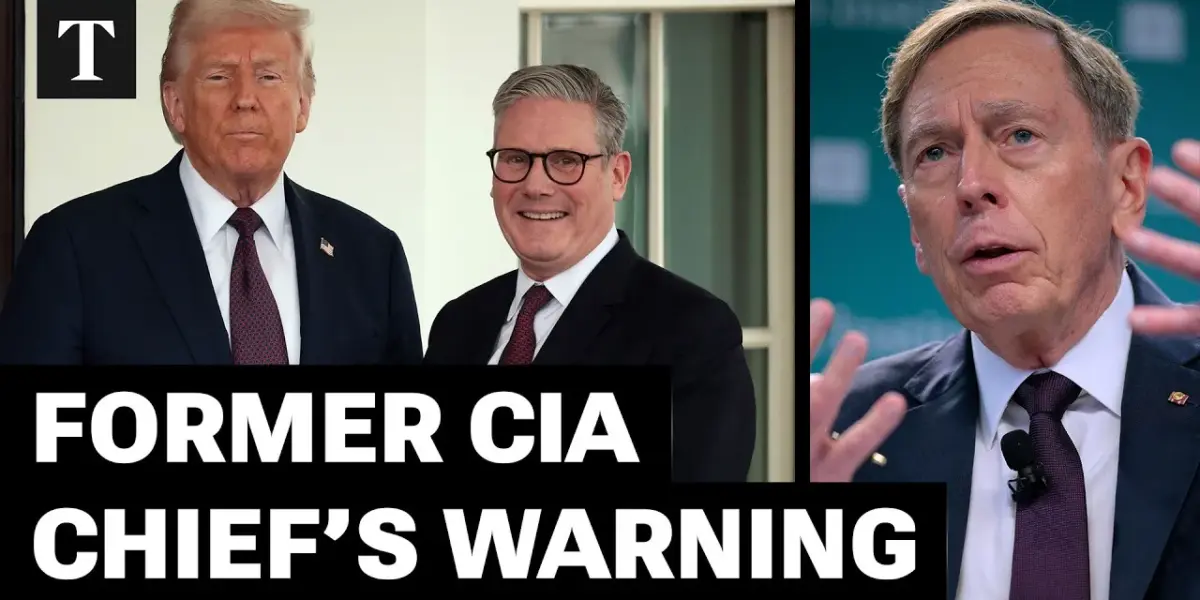
Petraeus Warns UK: Iran Conflict Inevitable, ‘Staying Out Is Not An Option’
Former CIA Director and General David Petraeus has issued a stark warning regarding the escalating conflict with Iran, asserting that the notion of remaining neutral is no longer viable for the UK and regional powers. Speaking from Washington D.C., Petraeus, renowned for his prescient question “How does this end?” during the Iraq War, outlined a complex scenario where military action against Iran has already begun, with significant implications for the Middle East and the global economy.
The Unfolding Scenario: Military Objectives and Uncertain Outcomes
General Petraeus believes the current military operations, likely initiated by Israel and supported by the United States, are aimed at achieving specific objectives. “I think it will certainly end with Iran’s remaining nuclear components f destroyed completely,” he stated. He anticipates substantial degradation of the regime’s forces, with missile stocks, launchers, and manufacturing facilities heavily damaged, alongside similar impacts on drone facilities. Leadership, he noted, has already been significantly affected.
However, the ultimate outcome hinges on a critical question: “will the regime still be standing however battered and however uh damaged and degraded.” Petraeus highlighted the potential role of internal opposition, particularly the Islamic Revolutionary Guards Corps (IRGC), which possesses its own substantial military branches established for regime preservation. The coherence and resilience of the national police and the Basij militia, described as over 200,000 “street thugs,” are also key factors.
A significant unknown is whether the regular military, the Artesh, could emerge as an opponent to the hardline IRGC leadership. The ongoing process of selecting a replacement for the Supreme Leader, Ayatollah Khamenei, adds another layer of uncertainty, particularly following reports of an attack on the Assembly of Experts in Qom.
“The real question of course is will the regime still be standing however battered and however uh damaged and degraded… and that’s where I think it does depend.”
– General David Petraeus
The Role of Intelligence and Covert Action
When questioned about advising a strike on Iran with so many unknowns, Petraeus clarified the roles of military leaders and the CIA director. “Neither of them recommends to go or not to go. They set out the risks and the facts. Andy, they give options for the president to achieve the objectives he has laid out and they identify the risks, the pros, the cons of these different options.” He expressed confidence that the military’s mission has not been to overthrow the regime, as that would necessitate a massive invasion of a country significantly larger than Iraq.
Petraeus also alluded to the possibility of ongoing covert activities, drawing parallels to Mossad’s past operations. “Is there more than just their effort to augment the kinetic activities here? Is there some kind of effort to try to enable those that might be willing to break off from uh the hardline elements?” he pondered, referencing Iran’s potential to be an economic superpower if not for its current leadership’s policies and its support for proxies.
Regional Responses and the UK’s Position
The recent decision by the UK to send helicopters with counter-drone capabilities and the missile destroyer HMS Dragon to protect personnel at RAF Akrotiri in Cyprus underscores the evolving regional dynamics. Petraeus noted that Iran’s attacks on civilian infrastructure in Gulf States have backfired, forcing nations like those in the Gulf and potentially Jordan to reconsider their neutrality. “Staying out has not proven to be an option,” he asserted.
He views the UK’s actions not as being “drawn in” but as a pragmatic response to direct threats, such as the likely drone attack on the Cyprus base from Hezbollah. Petraeus acknowledged the lessons learned from the Iraq War might be influencing decisions, but emphasized that Iran’s actions have presented a clear and present danger that cannot be ignored.
Economic Repercussions and Global Impact
The conflict’s economic implications are already being felt globally, with equity markets diving and gas and oil prices soaring. As chairman of KKR’s global institute and Middle East operations, Petraeus highlighted the immediate impact on oil prices, which have risen significantly. He anticipates a temporary effect, but acknowledges that the disruption to oil and gas transit through the Strait of Hormuz and other key waterways could have severe second and third-order effects.
While acknowledging the potential for economic disruption, Petraeus expressed confidence that the conflict’s duration will be relatively short, estimating two to four weeks. This assessment is based on the belief that military and Israeli objectives regarding Iran’s nuclear, missile, and drone capabilities will be sufficiently degraded within that timeframe.
The Uncertain Future of Iran
The most significant question remains what kind of Iran will emerge from this conflict. Petraeus expressed skepticism about the likelihood of a popular uprising toppling the regime, given the heavily armed and organized nature of the forces loyal to it. He cited an assessment suggesting a significant shift within the regime from true believers to “charlatans,” implying a potential for pragmatism among some elements, but cautioned against expecting a swift, democratic transition akin to Eastern European color revolutions.
Ultimately, Petraeus fears the most likely scenario is that the regime, though bloodied and degraded, will survive. “Unless there is the emergence of some force that breaks away from the armed forces or whatever is of sufficient number and capability and and arms together with the people uh can topple this regime that has driven Iran into a ditch,” he concluded.
Looking Ahead
The coming weeks will be crucial in determining the trajectory of the conflict and its impact on Iran and the wider region. Attention will focus on whether internal opposition forces can coalesce and challenge the existing power structure, and how the international community, particularly European nations, will navigate the escalating tensions. The economic fallout and the potential for further escalation will also remain critical areas to monitor.
Source: General Petraeus Warns Starmer: Staying Out Of Iran Conflict Is Not An Option (YouTube)

Related Articles
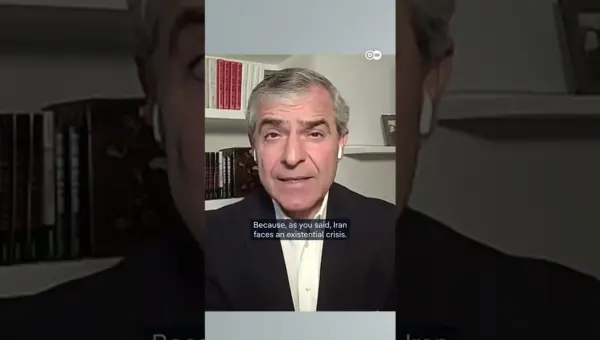
Iran Conflict: A ‘War of Choice,’ Analyst Argues
An analyst speaking with DW News challenges the Western narrative on Iran, arguing that the current conflict is a "war of choice" driven by specific political leaders rather than an unavoidable threat. The analysis suggests Iran has been on the defensive while facing internal and external pressures.
Red Sea Crisis Sparks 15% Shipping Cost Surge
Military actions in the Red Sea have effectively shut down freight traffic, forcing a 15% longer and more expensive detour around Africa. Major shipping lines are imposing significant surcharges, boosting carrier profits amid supply chain uncertainty.

Trump’s Mideast Gamble: War, Evacuation Chaos, and Market Meltdown
Reports indicate escalating conflict in the Middle East, with the U.S. struggling to evacuate its citizens and facing severe market repercussions. The rationale behind recent military actions and their unintended consequences are under scrutiny, highlighting a complex and volatile geopolitical situation.