Pentagon’s ‘Woke’ Crackdown on Elite Universities Sparks National Security Concerns
The Pentagon is dramatically rethinking its longstanding partnerships with elite universities, with Secretary of Defense Pete Hegseth accusing institutions like the Ivy League of being "too woke" and fostering "globalist and radical ideologies." This move, which could cut graduate programs for active-duty service members, has sparked widespread concern among military leaders and analysts who argue that isolating the officer corps from diverse intellectual thought risks creating strategic blind spots and undermining national security in an increasingly complex world.

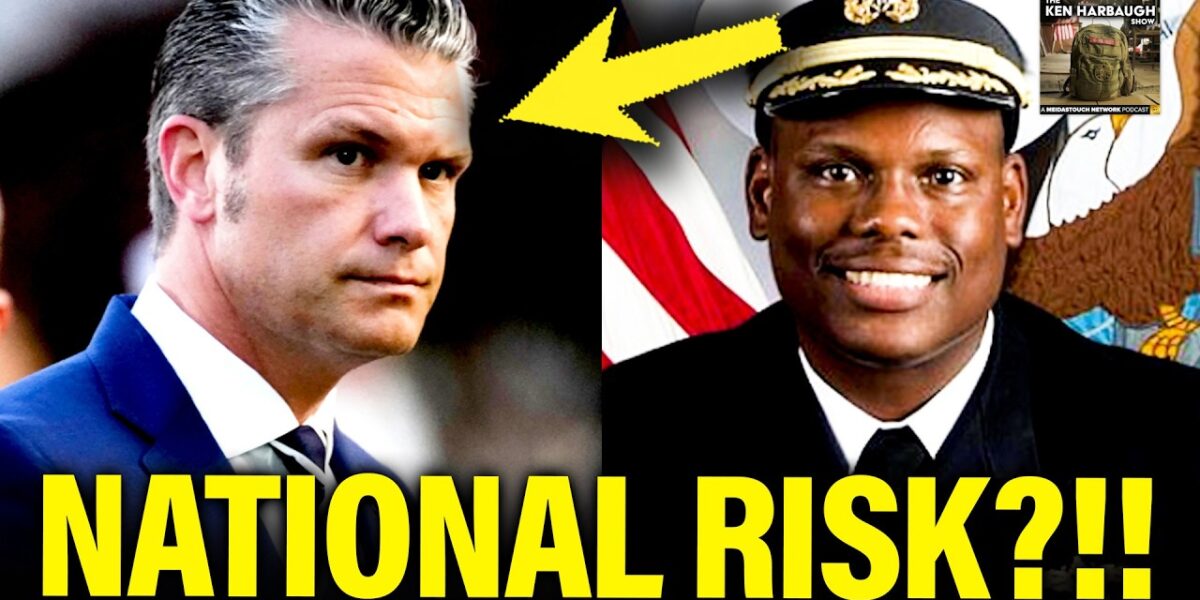
Pentagon’s ‘Woke’ Crackdown on Elite Universities Sparks National Security Concerns
Washington D.C. – The Pentagon is currently embroiled in a contentious debate over the future of military education, with Secretary of Defense Pete Hegseth leading a charge to sever long-standing ties with many of the nation’s most prestigious academic institutions. Citing concerns over “woke” ideologies, pervasive institutional bias, and a perceived lack of viewpoint diversity, Hegseth’s directive threatens to dismantle decades of partnerships that have shaped military leadership and strategic thought.
The move, which has been met with significant pushback from both active-duty and retired military personnel, seeks to curtail active-duty service members’ participation in graduate programs at Ivy League universities and other top-tier schools. Critics warn that this policy, framed by some as a populist stand against elitism, risks isolating the officer corps, fostering strategic blind spots, and ultimately undermining the United States’ national security.
A Legacy of Collaboration: Military and Academia
The relationship between the U.S. military and the nation’s leading universities is a cornerstone of American defense strategy, a partnership that dates back to the 1950s. This collaboration gained significant momentum during the Cold War, particularly under President Ronald Reagan, who championed efforts to equip military leaders with advanced graduate degrees. The rationale was clear: complex geopolitical challenges demanded intellectually agile and broadly educated officers capable of nuanced strategic thinking.
For decades, this meant sending promising officers to institutions renowned for their rigorous academic environments, diverse intellectual discourse, and access to cutting-edge research. These programs were not merely about acquiring a degree; they were about fostering critical thinking, exposing military leaders to diverse perspectives, and building vital bridges between the military and civilian intellectual spheres. Officers would engage with top scholars in fields ranging from international relations and economics to science, technology, engineering, and law – disciplines crucial for understanding the multifaceted nature of modern warfare and global diplomacy.
The Pentagon’s New Directive: A ‘Woke’ Offensive?
Secretary Hegseth’s recent announcement signals a dramatic departure from this established tradition. Earlier this month, the Pentagon declared its intention to cut ties with Harvard, with Hegseth stating, “Too many of our officers came back looking too much like Harvard, heads full of globalist and radical ideologies that do not improve our fighting ranks.” This sentiment reflects a broader concern articulated by the Pentagon Chief: that the Ivy League, and other elite institutions, suffer from a “pervasive institutional bias” and a “lack of viewpoint diversity” detrimental to military leadership.
The directive has given military services until Friday to review their long-standing partnerships with these universities, a move that could effectively bar active-duty service members from attending graduate programs at these institutions. The Army has already identified 34 universities at risk of being excluded from tuition aid programs. This list is extensive, encompassing not only nearly all Ivy League schools (with the exception of Dartmouth) but also other highly respected institutions such as MIT, Carnegie Mellon, Duke, Johns Hopkins, Emory, and Florida Tech.
Hegseth has also suggested that directing active-duty military personnel to state universities might be a more cost-effective alternative. While cost is always a consideration, critics argue that this financial argument masks a deeper ideological agenda rooted in the ongoing cultural battles gripping the nation.
Hypocrisy and the Pursuit of Knowledge
Perhaps the most striking criticism leveled against this policy is the perceived hypocrisy of its proponents. Secretary Hegseth himself holds graduate degrees from Princeton and Harvard – institutions he now lambasts for fostering “globalist and radical ideologies.” Similarly, former President Donald Trump, a key figure in shaping this administration’s populist rhetoric, frequently touts his affiliation with the University of Pennsylvania’s Wharton School, often exaggerating the extent of his academic achievements there. This irony, where those who have benefited immensely from elite education now seek to deny it to others, has not gone unnoticed.
Commentators like Bobby Jones of Minus Touch and Valent Media Networks have highlighted this blatant contradiction, arguing that the very individuals claiming to push back against elitism are deeply embedded within and have greatly benefited from the very system they criticize. This framing suggests that the policy is less about genuine concern for military readiness and more about scoring political points in a broader “culture war.”
Voices of Dissent: The Strategic Imperative of Diverse Thought
The proposed cuts have elicited strong objections from within the military establishment. Retired Rear Admiral Mark Montgomery, a University of Pennsylvania graduate who served as the Navy’s director of operations in the Pacific, called the proposal “very counterproductive.” Montgomery emphasized the value of exposure to differing viewpoints, stating, “Look, I didn’t agree with my faculty a lot of the time, but I actually found that that gives you critical thinking skills.”
Lieutenant Colonel Tim Ryman, an active-duty Marine currently attending Yale, penned an open letter to Secretary Hegseth, urging reconsideration. Ryman underscored the critical importance of engaging with future civilian leaders: “The students I engaged with today will very likely become tomorrow’s journalists, policymakers, and business leaders. They are future members of Congress who will vote on defense budgets and authorizations for military force.” This interaction, Ryman argues, is essential for building mutual understanding and ensuring informed decision-making regarding national security.
Furthermore, military service academies like West Point and the Naval Academy, while excellent institutions, do not possess graduate schools in specialized fields such as STEM, computer science, engineering, law, or medicine. This structural gap necessitates external academic partnerships to provide officers with the advanced, specialized knowledge required for modern military operations.
Warfare in the 21st Century: Beyond the Battlefield
The core argument against Hegseth’s policy hinges on the complex, multi-dimensional nature of contemporary warfare. War, as many strategists argue, is not solely a military endeavor; it is deeply political, economic, and technological. Senior military officers, therefore, require more than just tactical prowess; they need a profound understanding of international relations, global economics, cultural nuances, and rapidly evolving technologies like cyber warfare and artificial intelligence.
“Officers need to have access to upper-tier thinkers,” Jones emphasized. “They need to be part of communities that are highly academic in looking at how moves that they may make or may be responsible for will have ripple effects immediately, midterm, and long-term.” Exposure to diverse perspectives and subject matter experts at elite universities, he argues, can mean the difference between a strategically sound, limited engagement and a protracted, costly quagmire.
Historical examples abound to support this claim. The Manhattan Project, which developed the atomic bomb, was a monumental academic and military strategic partnership that irrevocably altered the course of history. Similarly, the Cold War containment strategy was largely conceived and refined by scholars and economists, then implemented by military forces worldwide. Even the strategic planning for World War II heavily relied on academic think tanks, not just for winning the war but for shaping the post-war world order.
In today’s interconnected global landscape, where diplomatic, economic, and military instruments are inextricably linked, an officer corps isolated from these broader intellectual currents risks developing dangerous strategic blind spots. Without understanding the intersections of various philosophies and ideas, military leaders may be ill-equipped to wage and win wars while minimizing human and material costs.
Eroding Civil-Military Relations and the ‘War on Intellectualism’
Critics also warn of the long-term consequences for civil-military relations, a foundational principle of American democracy. The historical integration and mutual respect between civilian experts and military professionals have been crucial for national success. Weakening this bond, they argue, could lead to a dangerous divide, where both sides view each other with suspicion, unable to speak the same language.
Jones drew parallels to the Soviet Union, where a stark division between political and war-fighting arms ultimately contributed to the military’s erosion. He suggested that the current administration’s approach fosters a “populism versus preparedness” tension, prioritizing cultural grievances over military readiness. This, he contends, is part of a broader “war on intellectualism,” where critical thinking and independent expertise are viewed as threats to a particular political agenda.
Examples cited include instances where senior military leaders have reportedly pushed back against proposals deemed unconstitutional or strategically unsound. Admiral Alvin Hally’s resignation from US Southern Command, reportedly over a refusal to conduct an indiscriminate raid in Venezuela, is presented as evidence that a well-educated officer corps is capable of independent judgment and adherence to constitutional duties. Punishing the institutions that foster such critical thinking, according to this view, is a dangerous and self-defeating strategy.
National Security at Stake
Ultimately, the debate transcends partisan politics and cultural squabbles; it delves into the very core of national and international security. Professional military education, its proponents argue, is not about conformity to a particular ideology but about cultivating the sharpest minds to navigate an increasingly complex global environment. Removing access to diverse perspectives and the best possible subject matter experts from senior military education, they contend, will not only make the world more dangerous but also diminish the United States’ standing on the global stage.
The Pentagon’s decision to re-evaluate these crucial academic partnerships represents a significant gamble. Whether it will result in a more ideologically aligned military or a less prepared and strategically vulnerable one remains to be seen, but the stakes for American leadership and security are undeniably high.
Source: Navy Commander BLOWS WHISTLE on PENTAGON NIGHTMARE (YouTube)

Related Articles

Senator Kelly: Khamenei’s Death is Positive, But Lacks a US Strategy
Senator Mark Kelly welcomed the death of Iranian Supreme Leader Ali Khamenei, calling it a "good thing." However, he sharply criticized the current U.S. administration for lacking a coherent strategy to manage the significant geopolitical shift. Kelly emphasized that "hope is not a strategy" and called for clear objectives and actionable plans to ensure American security.

Dem Leader Questions Iran Strike Rationale, Cites ‘War of Choice’
Senator Mark Warner questions the White House's justification for military strikes in Iran, labeling it a 'war of choice' due to a lack of perceived imminent threat. He highlights shifting rationales and calls for presidential transparency regarding goals and potential casualties.
Trump’s Iran Actions Linked to Election Interference Claims
An analysis suggests Donald Trump's actions regarding Iran are strategically linked to his claims of election interference, aiming to justify a national emergency and assert control over voting processes. Meanwhile, ongoing scrutiny of the Epstein case highlights missing FBI documents related to allegations against Trump, raising concerns about a potential cover-up and calls for greater transparency and accountability.