Pentagon Spokesperson’s Garbled Iran War Rhetoric Sparks Outrage
Pentagon spokesperson Pete Hegseth's recent press briefing on Iran war goals has been widely criticized for its aggressive tone, vague rhetoric, and lack of clear objectives. The address has raised concerns about the administration's strategic communication and competence.

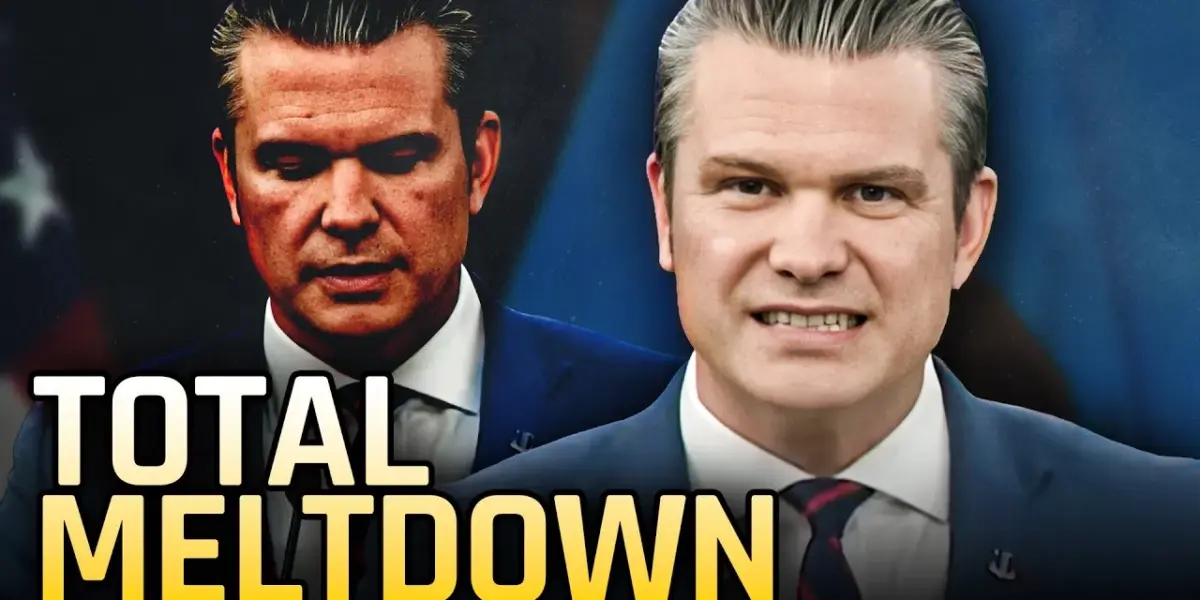
Pentagon Spokesperson’s Garbled Iran War Rhetoric Sparks Outrage
In a recent press briefing that has drawn sharp criticism, Secretary of War Pete Hegseth delivered remarks regarding U.S. military objectives in Iran that have been widely perceived as incoherent and inflammatory. The address, intended to clarify war aims, instead devolved into a defensive and aggressive monologue, leaving many questioning the clarity of the administration’s strategy and the competence of its spokespersons.
A Yelling Match Before Questions Begin
The briefing began not with a measured statement, but with Hegseth preemptively addressing what he characterized as the “media outlets and political left screaming endless wars, stop.” He declared, “This is not Iraq. This is not endless. Our generation knows better and so does this president.” This opening salvo, described by observers as “yelling at everybody before you’re even taking questions,” immediately set a combative tone. The speaker in the transcript suggests that such an aggressive opening indicates a speaker believes they are in the right, but criticizes the lack of reasoned discourse.
Vague Buzzwords and Unanswered Questions
Hegseth then proceeded to outline what the U.S. would *not* be doing, stating: “No stupid rules of engagement, no nation building quagmire, no democracy building exercise, no politically correct wars. We fight to win.” The phrase “no politically correct wars” in particular drew immediate scrutiny. The transcript author questions its meaning, suggesting it could be misinterpreted to imply a license for offensive language or behavior, rather than a strategic directive. The criticism leveled is that Hegseth, deeply embedded in conservative media, is resorting to “Republican talking points and buzzwords” without genuine understanding or applicability to the current geopolitical situation.
When pressed on the duration of the conflict, Hegseth dismissed the question as a “typical NBC gotcha type question,” asserting that “President Trump has all the latitude in the world to talk about how long it may or may not take.” This response was characterized as evasive and lacking substance. Similarly, when asked about the prospect of “boots on the ground,” Hegseth responded with a rhetorical question: “Why in the world would we tell you, you, the enemy, anybody, what we will or will not do in the pursuit of an objective?” This was met with derision, as the objective itself had not been clearly defined, beyond the nebulous notion of being “not politically correct.” The speaker in the transcript interprets this as a sign of immaturity and lack of strategic thinking, referring to Hegseth as a “manchild.”
Historical Context: The Perils of Vague War Aims
The historical record is replete with examples where unclear or shifting war aims have led to prolonged conflicts, strategic blunders, and significant human cost. The Vietnam War, for instance, was plagued by a lack of clear objectives and evolving rationales, contributing to its eventual failure and deep societal divisions. Similarly, the post-9/11 wars in Iraq and Afghanistan, initially justified by specific threats, saw objectives morph into nation-building exercises and counter-insurgency campaigns, leading to protracted engagements with immense financial and human expenditures.
The rhetoric employed by Hegseth, particularly the dismissal of “nation building” and “democracy building,” echoes sentiments that have surfaced during various military engagements. However, without clearly articulated alternatives or objectives, such statements can be interpreted as a retreat from strategic engagement rather than a focused plan. The emphasis on simply “fighting to win” is a common refrain in wartime, but its effectiveness hinges entirely on what “winning” entails and how it is to be achieved.
Why This Matters
The clarity and coherence of messaging from high-ranking defense officials are paramount, especially during times of heightened international tension or military action. When spokespersons resort to aggressive rhetoric, vague terminology, and evasive answers, it:
- Undermines public trust and confidence in the administration’s handling of foreign policy and military operations.
- Creates confusion among allies and potential adversaries regarding U.S. intentions and commitments.
- Can embolden adversaries by revealing a lack of strategic depth or resolve.
- Fails to provide a clear mandate for military personnel and a justification for the sacrifices they are expected to make.
Implications, Trends, and Future Outlook
The incident highlights a concerning trend in political communication, where soundbites and combative posturing often supersede substantive policy discussion. The reliance on emotionally charged buzzwords like “politically correct wars” serves to energize a base but does little to inform or persuade a broader audience, including international partners. This approach risks alienating moderate voices and experts who seek rational, evidence-based foreign policy.
The criticism that Hegseth is merely regurgitating “Republican talking points” suggests a broader challenge within political discourse: the erosion of independent thought and the prioritization of partisan loyalty over strategic acumen. In matters of national security, such a deficit can have grave consequences.
Looking ahead, the situation underscores the need for greater transparency and intellectual rigor in how military objectives and strategies are communicated. The “manchild” characterization, while harsh, reflects a public and media demand for maturity and competence from those entrusted with decisions of war and peace. The future outlook depends on whether the administration can pivot from reactive rhetoric to proactive, clearly defined strategic communication, or whether it will continue down a path of vague pronouncements and escalating tensions.
“The greatest enemy of knowledge is not ignorance, it is the illusion of knowledge.” – Stephen Hawking (paraphrased in spirit by the transcript’s critique of Hegseth’s communication)
The transcript implies that the current approach, characterized by aggression and vagueness, has already led to loss of life and risks further escalation. The author concludes with a stark assessment, identifying the “two craziest and dumbest people imaginable calling the shots here,” referring to Hegseth and President Trump, and predicting further escalation.
Source: Hegseth Spews Garbled Nonsense About Iran War Goals (YouTube)

Related Articles
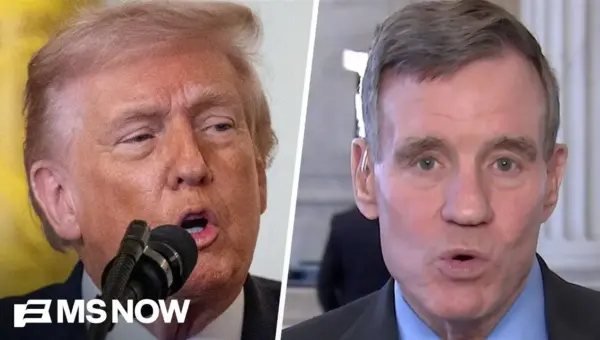
Senator Warner: No Imminent Threat Justified U.S. Strikes on Iran
Senator Mark Warner has asserted that intelligence presented to him did not indicate an imminent threat to the U.S. that would justify military strikes against Iran. He described the engagement as a "war of choice" by the Trump administration, challenging the official narrative and highlighting concerns for American citizens in the region.

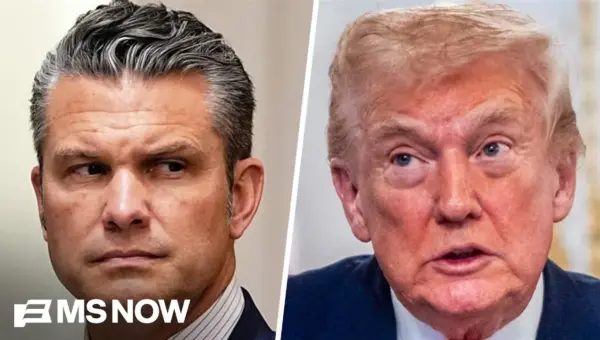
Senator Coons Blasts Trump Admin’s ‘Stunning’ Lack of Iran War Planning
Senator Chris Coons of Delaware has sharply criticized the Trump administration's Iran strategy, calling the lack of planning "stunning." He questioned the unclear objectives and vague rationale behind military actions, and highlighted the administration's unpreparedness for post-conflict scenarios, leaving Americans stranded abroad amidst escalating tensions.

US War with Iran: Escalation, Shifting Justifications, and Regional Chaos
Operation Epic Fury, the US and Israeli war with Iran, is escalating with mounting casualties and regional spread. Controversial statements reveal the US may have initiated strikes due to anticipated Israeli action and subsequent Iranian retaliation, while justifications for the war continue to shift.