Pentagon Chief Bars Press Over Photos, Critics Say It Looks ‘Small’
Defense Secretary Pete Hegseth's decision to bar press photographers from Pentagon briefings on the Iran conflict has sparked controversy, with critics arguing it prioritizes image over substance. Meanwhile, recent drone attacks and complex geopolitical realities challenge the administration's narrative of success.

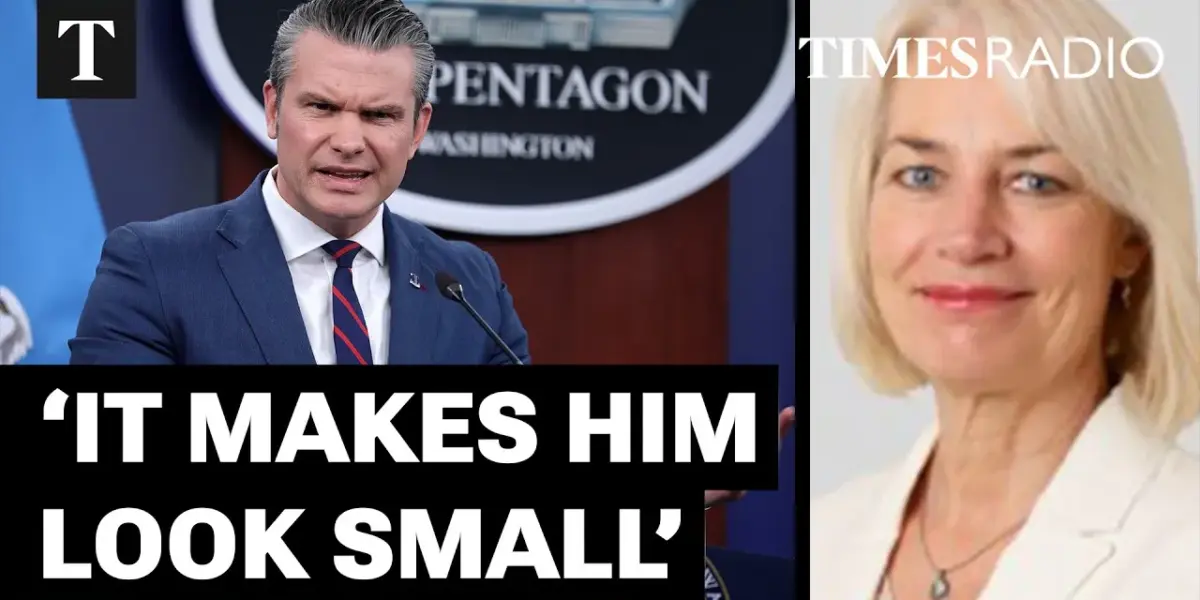
Pentagon Restricts Press Access Amidst Iran Conflict Briefings
In a move drawing sharp criticism, U.S. Defense Secretary Pete Hegseth has reportedly barred press photographers from attending briefings concerning the ongoing conflict with Iran. This decision, stemming from Hegseth’s dissatisfaction with unflattering images, has led to accusations that the defense chief is prioritizing presentation over substance, making his actions appear ‘small’ on the international stage.
Hegseth has also voiced strong disapproval of journalists, lambasting them for what he perceives as downplaying Washington’s campaign against Iran, a conflict he has characterized as an ‘unprecedented success.’ These developments raise significant questions about transparency and the management of public perception during sensitive military operations.
‘Looks Maxing’ Secretary of War?
Sarah Baxter, Director of the Mary Culvin Center for International Reporting, noted Hegseth’s background as a former news anchor, suggesting his emphasis on presentation is deeply ingrained. Baxter wryly dubbed him the ‘looks maxing secretary of war,’ citing his public persona, which she described as having a ‘cartoonish Johnny Bravo lookalike kind of persona with the quaffed hair and the chiseled jaw.’
“He he really thinks that um this war is all about presentation as well as massive kinetic force and you know to some extent maybe modern media methods you know maybe maybe he’s right to pay attention to that stuff but I can’t help thinking it makes him look small,” Baxter stated.
The focus on image over substance is a broader trend, as Baxter observed, with ‘looks maxing’ seemingly taking over various aspects of public life. She found it extraordinary that while the U.S. is deploying ‘maximum force’ against Iran, Hegseth, in charge of this ‘massive war machine,’ is reportedly fixated on how photographers portray him.
A War on Photographers and Influencers
Hegseth’s actions extend beyond photographers. Baxter revealed that he has banned numerous major news organizations from daily news briefings at the Pentagon. While some have been readmitted, it’s suggested that Hegseth initially sought to surround himself with ‘influencers’ instead.
His frustration with traditional media was evident in his comments regarding news banners and on-screen graphics, which he felt were consistently negative. “Why are they always so negative?” he reportedly questioned, underscoring his belief that the war’s narrative is as crucial as its military execution.
Straights of Hormuz and Missteps
The defense secretary’s public statements have also come under scrutiny. His assertion that the Strait of Hormuz is ‘open’—immediately followed by the caveat that ‘Iran is bombing it’—went viral, prompting questions about his grasp of the situation on the ground.
“I’m going to presume he’s a bit brighter than he comes across. I mean, is he or is he I mean, is everyone in America? It’s easy for us over here in the UK to sneer and laugh at Pete Hegseth as a slightly ridiculous figure… But in America, actually, is he chiming with a lot of voters?”
Baxter, however, suggested that Hegseth does not resonate with a broad base of American voters. She recalled an incident approximately a year prior, dubbed ‘Signal Gate,’ where confidential discussions involving top brass and the Vice President about potential military action against the Houthis were reportedly leaked to Jeffrey Goldberg of The Atlantic magazine. No one has yet faced consequences for this breach.
Trump’s ‘Sacrificial Lamb’ and Broader Implications
Looking ahead, Baxter posited that Hegseth might be positioned as Donald Trump’s ‘sacrificial lamb’ should the ongoing conflict continue to be problematic. She drew a parallel to the situation in Minneapolis with ICE, where intense pressure on citizens led to the deaths of two American citizens, followed by administration denials that were later contradicted by video evidence.
Baxter sees parallels in the current situation regarding Iran, where the administration aims to project an image of smooth progress. However, recent drone attacks on the U.S. embassy in Baghdad and the U.S. embassy in Saudi Arabia, including its CIA station, suggest a more complex reality. These incidents, she argued, make past events like the attack on the U.S. base in Rafah ‘look like child’s play.’
While acknowledging America’s potential to win an air power conflict, Baxter questioned the long-term strategy and outcomes. She echoed the comparison to Minneapolis, suggesting that leaders focused on presentation over substance, and who lose the ‘PR war,’ may ultimately face dismissal, citing former Governor Kristi Noem as an example.
Vice President Vance’s Quiet Stance
The article also touches upon the notable silence of Vice President JD Vance, a war veteran himself. There is a perception that Vance may disagree with the intervention in Iran and is navigating a delicate path to remain aligned with the administration while distancing himself from a war proving more complicated than anticipated.
Baxter believes this situation is not benefiting Vance. While he might privately believe the intervention was a mistake and could later claim, ‘I told you so,’ she suggested that he might never be forgiven for such a stance. The potential for other voices, such as Tucker Carlson, a vocal opponent of the war and a former friend of Vance, to gain prominence is also noted.
Public Opinion and Trump’s Political Standing
Regarding public sentiment in America, Baxter indicated that polling for Trump was already unfavorable before the conflict began. The administration, she stated, entered the war without adequately preparing the American public, and the situation has not significantly improved Trump’s standing.
While Trump retains his core ‘MAGA’ base, key figures within that movement are reportedly splintering over the war. Baxter concluded that if Trump can achieve a swift victory and withdraw, it would benefit him. However, if the conflict devolves into a ‘quagmire,’ it is ‘going to look bad’ for his administration.
Source: Pete Hegseth’s Move To Bar Press From The Pentagon ‘Makes Him Look Small’ | Sarah Baxter (YouTube)

Related Articles
Pentagon Chief Blocks Black, Female Officers’ Promotions
Pentagon chief Pete Hegseth is reportedly blocking the promotions of four Army officers, two Black and two women, to one-star general. This decision follows reports of alleged discriminatory remarks made by a top aide to Secretary Hegseth regarding President Trump's comfort standing with Black female officers.

Tiger Woods Arrested for DUI After Crash
Golf legend Tiger Woods was arrested for DUI in Florida following a dramatic rollover crash. Meanwhile, a government shutdown continues as House Republicans block a Senate deal, leading to airport chaos and TSA worker pay issues. The stock market also plummeted into correction territory amid fears of a prolonged Iran conflict.
Trump’s Iran War Plans Criticized Amid Border Funding Standoff
Lawmakers and analysts are criticizing the Trump administration's handling of the Iran conflict and its approach to border funding, arguing that a lack of clear planning and a focus on political battles are making the U.S. less safe. Concerns are particularly high regarding the FBI's priorities and the potential impact of these issues on national security.