Passive Income Promises Fall Short for Most Investors
Popular "passive income" strategies like real estate rentals and starting a business often require significant time, capital, and effort, with substantial risks involved. Historical data suggests that consistent, long-term investing in diversified assets like the S&P 500 remains the most accessible and historically reliable path to wealth accumulation for most individuals.


Passive Income Promises Fall Short for Most Investors
The allure of passive income, often described as “mailbox money,” is a powerful draw for many seeking financial independence. However, a closer examination of popular strategies reveals that true passivity is rare, and significant effort, capital, and risk are often involved. From rental properties to entrepreneurship, achieving a truly hands-off income stream can be elusive, with traditional investing often proving to be the most accessible and historically reliable path.
Real Estate: The Burdens of Landlording
Rental properties are frequently touted as a premier investment, particularly through methods like the BRRRR strategy (Buy, Rehab, Rent, Refinance, Repeat). This approach aims to acquire distressed properties, renovate them to increase value, generate rental income to cover expenses, and then refinance to extract initial capital for reinvestment. While scalable and tangible, the reality of managing rental real estate is far from passive. Self-managing landlords can spend an average of 12 hours per month on property management, a figure that escalates with a larger portfolio. Many landlords do not replace their full-time income until they own at least five to six properties. This requires not only significant time but also substantial capital to cover repairs, maintenance, tenant acquisition, and unforeseen expenses. Investors are cautioned to ensure they have sufficient personal funds to manage mortgage payments without relying on “other people’s money” (OPM) until they are financially stable in the venture.
Entrepreneurship: A Grueling Path to Profitability
Starting a business is another common route pursued for passive income, but data suggests this endeavor demands immense dedication. Businesses typically take two to five years to become profitable, a period characterized by long hours and hard work. Statistics from the Bureau of Labor Statistics indicate a challenging landscape: only about 35% of businesses survive to the 10-year mark, and more than one in five new businesses fail within their first year. Entrepreneurship requires significant seed capital to navigate the initial, often unprofitable, years and a deep-seated passion to overcome inevitable cash flow disruptions and operational headaches. While the rewards of successful entrepreneurship can be substantial, it is a path not suited for the faint of heart and is far from a “click a few buttons” solution.
Investing: The Power of Patience and Consistency
In contrast to the active management required for real estate and business ventures, investing, particularly in broad market index funds like the S&P 500, offers the closest approximation to a passive income stream. This strategy is highly accessible, requiring neither substantial wealth nor specialized skills to begin. Contributions can be automated through retirement accounts or brokerage apps, making it a truly hands-off approach once set up. The historical data strongly supports this method: there has never been a 20-year period in the history of the S&P 500 where the annualized return was negative. This means that consistent, disciplined investment over two decades has historically resulted in positive returns, regardless of market fluctuations or the starting point. While less glamorous than other strategies, the “boring” nature of long-term, consistent investing, combined with patience, is a proven path to wealth accumulation.
What Investors Should Know
The concept of “passive income” often masks the significant effort, capital, and time required. Rental property ownership demands active management and financial resilience. Starting a business is a high-risk, high-effort undertaking with a substantial failure rate. Traditional investing, particularly in diversified index funds like the S&P 500, offers the most historically reliable and accessible path to wealth creation, provided investors maintain discipline and a long-term perspective. A wealth survey of clients revealed that over 76% of millionaires identified primarily as savers and investors, not entrepreneurs, underscoring the effectiveness of this more conventional approach.
Success in any wealth-building strategy hinges on thorough research, a clear plan, and diligent execution. While the allure of quick riches through “passive income” schemes is strong, the data suggests that enduring financial success is more often built through consistent effort, strategic patience, and a realistic understanding of the work involved.
“The truth is that any form of what’s labeled passive income is going to take a lot of discipline, likely a lot of money, and definitely a lot of time. So, be prepared for that. And don’t get sold into false narratives that you can just buy someone’s course, click a few buttons, and have a six-figure business running in the background.”
Source: The Passive Income Myth (YouTube)

Related Articles


Slash Rental Costs: 7 Ways to Boost Your Profit
Discover seven essential strategies for reducing operational expenses on your rental properties. From negotiating closing costs and seller credits to optimizing insurance and material sourcing, these practical tips can significantly boost your cash flow and profitability without sacrificing property quality. Learn how smart shopping and creative negotiation can save you thousands per deal.
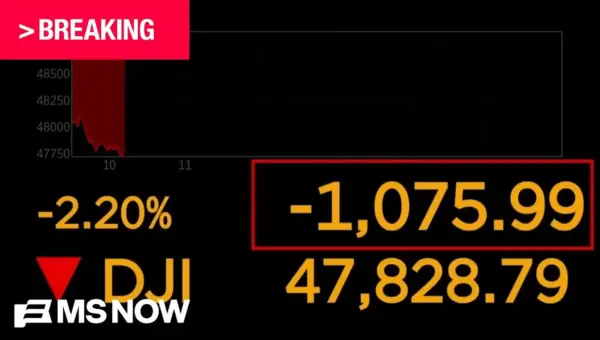
Stocks Plunge as US-Iran Conflict Sparks Market Sell-Off
U.S. stock markets plummeted today as escalating tensions between the U.S. and Iran triggered widespread risk aversion. Major indices saw significant losses, with even safe-haven assets like gold and silver declining. Energy prices, particularly natural gas, surged dramatically.


Stocks Plunge Amid Broad Market Sell-Off
Equity markets experienced a significant downturn as major indices suffered substantial losses, indicating a broad-based sell-off. This sharp decline suggests a widespread risk-off sentiment, impacting various sectors and highlighting the inherent volatility of financial markets.