Parents Drive Medical Breakthroughs for Rare Diseases
Parents are becoming powerful drivers of medical innovation for rare genetic diseases. From legislative action in Florida to accelerated gene therapies and ultra-personalized treatments, families are pushing boundaries to find cures and improve lives. This movement leverages personal stories, financial resources, and media platforms to accelerate research and offer hope.

Parents Drive Medical Breakthroughs for Rare Diseases
For families facing rare genetic diseases, the journey is often a lonely and challenging one. However, a growing movement of parents is transforming this landscape. They are not just seeking answers but actively driving innovation in medical research and treatment. Their efforts are leading to significant advancements, offering hope and new possibilities where little existed before.
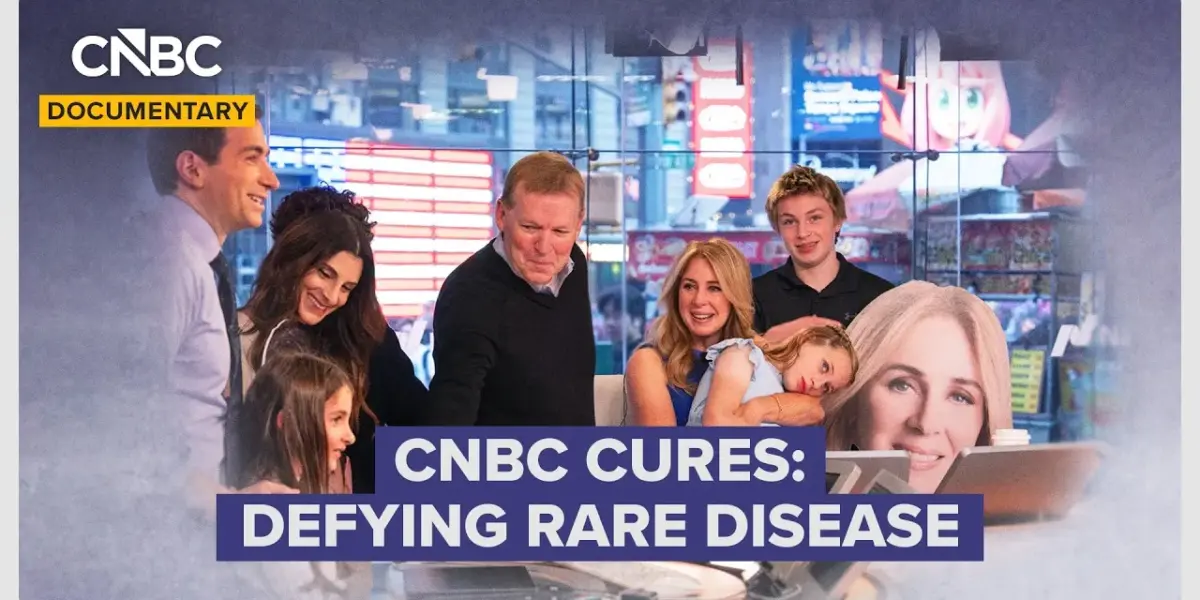
Becky Quick, a morning anchor at CNBC, shared her personal story as the mother of Kaylie Quail, who has a rare genetic disease called SYNGAP1. She admitted it took nine years to feel ready to share their family’s story publicly. “We tell stories all the time. We’ve just never told this story. We’ve never told our story,” Quick said. Her husband, Matt Quail, a producer at CNBC, explained their unique position. “Because of the position we’re in, we can be in front of the camera here and we can really use that for good,” he stated.
Kaylie, described as having a “sunshine personality,” was a happy baby. However, by six months, her parents noticed developmental differences. The journey involved numerous doctor visits and therapy sessions, with hopes shifting from general recovery to more specific milestones like walking, talking, or making friends. A particularly poignant moment was Kaylie’s first birthday party, which felt more like a somber occasion. She was unable to blow out her birthday candle, a simple act that highlighted the challenges they faced.
The official diagnosis of SYNGAP1 came just before Kaylie’s third birthday in September 2019. SYNGAP1 affects brain development, often leading to autism, seizures, developmental delays, and intellectual disability. “Kaylie has been given, you know, a, you know, a short straw,” Quick reflected, acknowledging the difficulty but reminding herself that Kaylie is the one truly suffering. “We have a great life. We have to remember that she’s the one that. You know we’re fighting for.”
Legislative Action and Early Detection
In Florida, a new law called the Sunshine Genetics Act (HB 907) represents a significant step forward. This legislation aims to change how serious conditions are detected early by offering whole genome sequencing for newborns. State legislator Adam Anderson, who introduced the bill, lost his son Drew to Tay-Sachs disease, a fatal inherited disorder. “But what if you could stop it from happening in the first place?” Anderson asked, highlighting the shift from reaction to prevention.
The initiative, initially rolling out at Tampa General Hospital, will be free for parents who opt in. It is funded by state and private sources. A recent study by New York Presbyterian found that 3.2% of babies, over 100,000 newborns annually, are born with clinically actionable conditions. Early diagnosis can lead to interventions like special diets or supplements, potentially improving or saving lives. “An accurate diagnosis earlier helps ensure that the right treatment path is in front of these families,” said GeneDx CEO Katherine Stueland.
Accelerated Gene Therapies Offer New Hope
The pace of medical innovation is also accelerating, particularly in gene therapy. KJ Muldoon, diagnosed at two days old with a severe enzyme deficiency called CPS1, is a testament to this. His parents opted for a custom gene editing therapy developed by Dr. Rebecca Ahrens-Nicklas and Kiran Musunuru. The team worked at an unprecedented speed, creating the therapy in just six months, a process that typically takes years. “We couldn’t spend one, two, three, four, five years is what it usually takes to develop a drug,” Dr. Ahrens-Nicklas explained.
Rich Horgan also pursued a personalized gene editing therapy for his younger brother, Terry, who had an ultra-rare form of Duchenne muscular dystrophy. Terry passed away after a clinical trial, but his brother’s efforts, which took nearly four years, were driven by a desire to help future patients. “He’s not doing it for him. He’s doing it for the other patients,” Horgan shared of his brother’s message.
Ultra-Personalized Treatments for Nano-Rare Diseases
For conditions affecting only a handful of patients worldwide, like Susannah Rosen’s KIF1A gene mutation, traditional drug development models often fall short. Susannah’s condition slowly damages nerves. Her parents, Luke and Sally Rosen, founded a foundation and connected with Dr. Stanley Crooke, who leads n-Lorem. This non-profit organization develops ultra-personalized therapies, specifically antisense oligonucleotides (ASO), for diseases with very small patient populations, sometimes as few as 30 people.
N-Lorem currently treats over 40 patients, with a goal to expand its reach. Dr. Crooke noted the cost of developing these treatments can be around $1.2 million per life, with hopes to reduce it to $700,000. While Susannah’s therapy has not cured her, it has significantly reduced her pain and slowed disease progression, offering a measure of relief and hope. “If we can slow that down and curb that severity of disease, then, then maybe, you know, wheelchair or not, maybe I’ll be able to, um, you know, dance with her at prom or something,” her mother, Sally Rosen, expressed.
Leveraging Fame and Funding for Research
Financial windfalls are also fueling rare disease research. Allen, a participant in Prime Video’s reality series “Beast Games,” won a $10 million jackpot. His son, Lucas, suffers from creatine transporter deficiency (CTD), a rare condition affecting an estimated 500 people globally. Creatine is crucial for brain function, and disruptions can lead to significant developmental issues. Allen plans to use his winnings and newfound platform to drive research for a cure. “We got to, we got to go,” he stated regarding his commitment.
John Crowley’s story is another powerful example. After his children Megan and Patrick were diagnosed with Pompe disease, a severe and often fatal muscular disorder, he left his career. He co-founded Novozyme Pharmaceuticals, later acquired by Genzyme for over $100 million, to develop a treatment. Today, Pompe disease is manageable, and his children are adults living full lives. “The science, the technology is there. It’s just exploding. We’re in the golden age of medicine,” Crowley remarked.
The Growing Collective Effort
Parents like Jeffrey Allen, who walked 365 miles across California to honor his son Lucas’s battle with CTD, are demonstrating extraordinary dedication. He sees the current efforts as benefiting future families. “The true beneficiaries are, are families who haven’t even started yet,” Allen said.
CNBC Cures aims to amplify these stories and the broader movement. “I still deep down believe that Kaylie was put on this planet for a reason,” Becky Quick shared, reflecting on her daughter’s journey. “And this may be it.” This collective fight, fueled by parental love and a surge in medical innovation, is indeed rewriting the rules of medicine and defying the odds for rare disease patients worldwide.
Source: How Rare Disease Patients Are Rewriting The Rules Of Medicine (YouTube)

Related Articles


FDA Speeds Drug Reviews, Approves Therapies in Record Time
The FDA is dramatically speeding up drug reviews with a new priority program, leading to approvals in record time, sometimes within 60 days. This initiative aims to bring life-changing therapies to patients faster by cutting red tape and streamlining processes, without compromising safety. The agency is also tackling issues like illegal marketing of compounded drugs and improving drug safety reporting.


Trump’s ‘Genetics’ Remark Fuels Racialization of Immigration Debate
Donald Trump's controversial suggestion that immigrant criminality is linked to "genetics" is analyzed as part of a pattern of racially charged immigration rhetoric and policy. This piece explores the historical context of such arguments and their implications for contemporary immigration debates.


Decoding Medical Drama: Real Health Insights from TV
A medical drama analysis reveals critical insights into patient communication, cardiac diagnostics, and healthcare access. Learn how to navigate medical encounters and understand complex conditions.