Palantir AI Fuels Defense, Commercial Growth: Profits Soar
Palantir Technologies reported a 137% year-over-year surge in its commercial revenue during the fourth quarter. CEO Alex Karp discussed the company's AI technology's impact on modern warfare, particularly in the Middle East, and the growing importance of securing AI infrastructure.

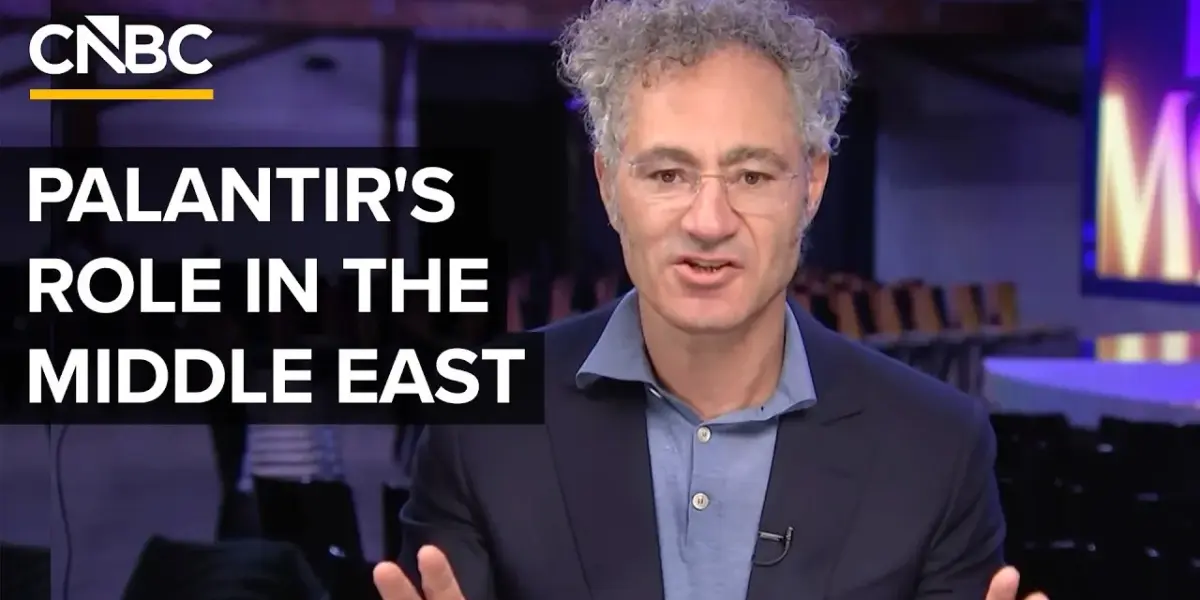
Palantir’s AI Dominance: Driving Defense and Commercial Expansion
Palantir Technologies, a company increasingly at the nexus of artificial intelligence and national security, is experiencing a dramatic surge in its commercial business, with revenue leaping an astonishing 137% year-over-year in the fourth quarter. This explosive growth was showcased at Palantir’s recent annual Artificial Intelligence Platform conference, which convened leaders from global giants like GE Aerospace and Nvidia, as well as key government partners, including the U.S. Navy. The conference underscored the growing demand for Palantir’s AI-driven solutions, particularly as the company’s role in modern warfare, specifically the ongoing conflict in the Middle East, takes center stage.
CEO Alex Karp on AI’s Transformative Role in Warfare
In an exclusive interview, Palantir CEO Alex Karp articulated the profound impact of the company’s defense technology on contemporary conflict. “The fact that you can now target more precisely, more accurately, more quickly, and that you, meaning America, can bring it to bear against adversaries and enemies, has shifted the way in which war is fought,” Karp stated, highlighting the precision and speed enabled by advanced AI systems. This enhanced targeting capability represents a significant evolution from traditional warfare methodologies.
Project Maven: A Key Enabler in Modern Geopolitics
Palantir is perhaps most widely recognized for its involvement in Project Maven, a sophisticated surveillance technology designed to identify hostile actors. While the specifics of its deployment remain confidential, reports suggest its utility in high-stakes geopolitical situations. When questioned about the potential use of Project Maven against high-profile targets, Karp emphasized the broader strategic imperative of modernizing infrastructure. “You have to take infrastructure, both commercial and in government that was built for an industrial age, and you have to transform that into infrastructure that takes advantage of the industrial capacities and then puts them in a position where they can use post-industrial technologies,” he explained. This highlights a fundamental shift from legacy systems to AI-powered operational frameworks.
Expanding Reach in the Middle East and Beyond
Karp also touched upon Palantir’s technology assisting allies in the Middle East who are currently facing threats. “I have read that Palantir’s Project Maven is the core backbone of that, and then I’ve also read that all the allies, Arab and non-Arab in the Middle East, may or may not be users of our platform as well. And that’s expanding rapidly.” This suggests a growing reliance on Palantir’s platforms by a widening coalition of nations seeking to enhance their defense capabilities in a volatile region.
The Growing Threat to AI Infrastructure
The conversation also addressed the emerging risks associated with the increasing digitization and reliance on AI infrastructure. The recent bombing of three Amazon data centers last week served as a stark reminder of the vulnerabilities inherent in these critical systems. Karp acknowledged the evolving threat landscape, stating, “They’re evil. They’re not stupid. Even there, you see a revolution.” He stressed Palantir’s focus on its core business while acknowledging the strategic importance of AI infrastructure. “Going after AI infrastructure could elevate this conflict to a new level. And it just speaks to how cyber and artificial intelligence is already changing the dynamics of this war.” This underscores the dual-edged nature of advanced technology, where its proliferation also introduces new vectors for conflict and attack.
Market Impact and Investor Considerations
What Investors Should Know
- Explosive Commercial Growth: Palantir’s commercial segment is experiencing hyper-growth, with Q4 revenue up 137% year-over-year, indicating strong market adoption beyond its traditional government contracts.
- Defense Sector Relevance: The company’s AI and data analytics platforms are proving critical in modern defense strategies, particularly in high-conflict zones, which could lead to sustained government demand.
- Infrastructure Vulnerability: The increasing reliance on digital and AI infrastructure makes these assets potential targets, introducing new geopolitical risks that could impact technology companies.
- Technological Modernization: Palantir’s focus on transforming industrial-age infrastructure into post-industrial, AI-enabled systems positions it as a key player in the ongoing technological revolution across sectors.
- Geopolitical Tailwinds: The current global geopolitical climate, especially in the Middle East, appears to be creating a favorable environment for companies providing advanced defense and intelligence solutions.
Palantir’s dual success in the booming commercial sector and its critical role in defense highlights its unique market position. The company’s ability to adapt and deploy advanced AI capabilities in rapidly evolving environments, from corporate boardrooms to active war zones, suggests a robust and resilient business model. As AI continues to reshape global dynamics, Palantir appears poised to remain a significant player, navigating both the opportunities and the inherent risks of this transformative technology.
Source: How The Palantir CEO Says Its Impacting Modern Warfare (YouTube)

Related Articles


AI Threatens White-Collar Jobs, Reshaping U.S. Workforce
Artificial intelligence is poised to significantly reshape the U.S. job market, raising concerns among recent graduates and experienced professionals about future employment. While some lawmakers call for regulation, experts emphasize adaptation and learning to work with AI.


AI’s Dual Future: Hope and Hazard for Humanity
Artificial intelligence presents humanity with both immense potential and significant risks. 'The AI Doc' explores this dual nature, highlighting AI's ability to solve global problems while warning of dangers like job loss and existential threats. The film aims to spark crucial conversations about shaping AI's future to align with human values.


NJ Teacher Uses AI Chatbot to Boost Student Writing Scores
A New Jersey teacher has developed an AI chatbot to help students improve their writing skills, leading to a 22% increase in pass rates. The tool provides instant feedback and targeted guidance, acting as a valuable supplement to traditional instruction. The teacher emphasizes that AI is a tool to assist educators, not replace the crucial human element in teaching.