Pakistan Strikes Afghanistan in Major Border Escalation
Pakistan has launched airstrikes against Afghanistan, targeting cities including Kabul, in a major escalation of border tensions. Islamabad accuses the Taliban of harboring militants responsible for attacks within Pakistan. The situation has been described as "open war," with analysts warning of renewed regional instability.

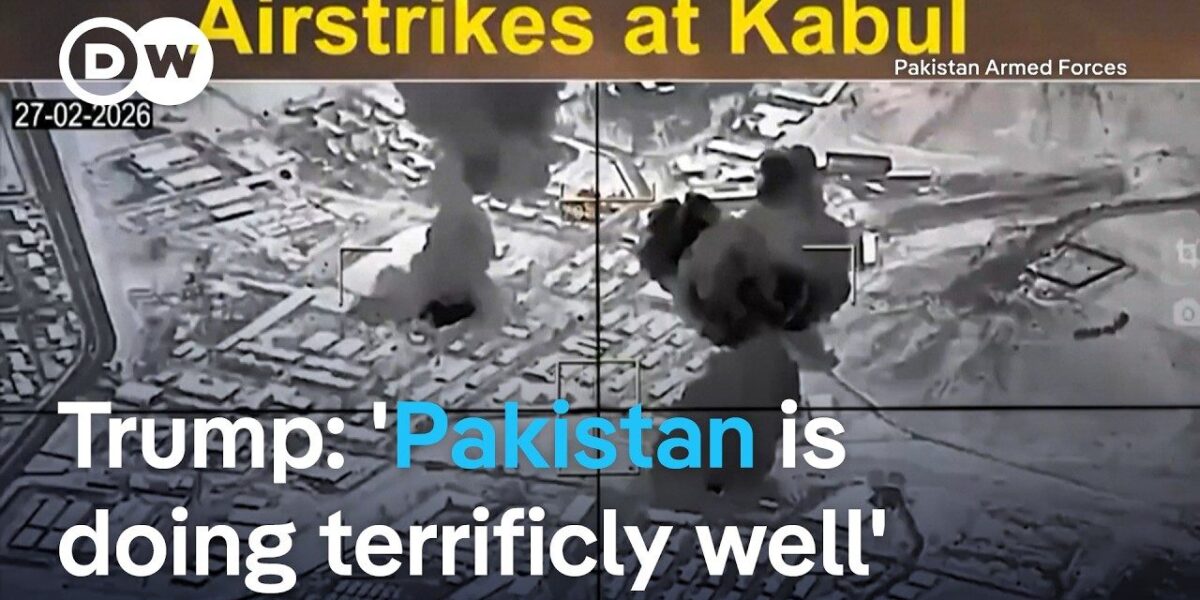
In a significant escalation of long-standing border tensions, Pakistan has launched airstrikes targeting cities in Afghanistan, including the capital Kabul. The Pakistani military confirmed the strikes on Tuesday, marking the first time it has directly targeted Afghan military facilities. The action follows repeated accusations by Pakistan that the Taliban government in Kabul harbors militants responsible for cross-border attacks within Pakistan. The situation has been described by Pakistan’s defense minister as an “open war” between the two neighboring nations.
Escalating Hostilities Erupt into Airstrikes
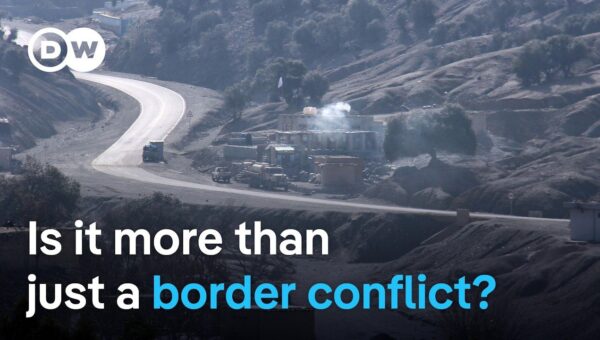
The recent Pakistani airstrikes are the culmination of months of escalating tensions. The Bajaur district in Pakistan, situated near the Afghan border, bears visible scars from previous attacks attributed to the Afghan Taliban, with damaged homes and businesses from cross-border shelling. Residents have recounted harrowing experiences, with one individual stating, “A shell from Afghanistan hit our house, injuring our children, a son and a daughter, as well as my wife. All of them are in hospital.”
Pakistan’s military has stated that at least a dozen of its soldiers have lost their lives due to cross-border attacks originating from Afghanistan. In response, the army claims to have eliminated hundreds of Taliban fighters through its retaliatory airstrikes. Footage released by the Pakistani military purports to show these strikes hitting Afghan military facilities in Kabul, as well as sites in Kandahar and Paktia provinces. While Pakistan possesses significantly superior military capabilities, the Taliban, hardened by decades of conflict, are known for their proficiency in guerrilla warfare.
The Core Dispute: Terrorism and Safe Havens
At the heart of the conflict lies Pakistan’s assertion that the Afghan Taliban regime is providing sanctuary to militants who conduct terrorist activities on Pakistani soil. Moed Ysef, Vice Chancellor of Beacon House National University in Lahore and former national security advisor to Pakistan’s prime minister, articulated the Pakistani position: “The Afghan Taliban regime has to make a choice. The question has been with them for a long time, which is whether they want to choose good relations with Pakistan or choose terrorism and terrorists.”
Conversely, the Taliban denies harboring militants, framing Pakistan’s security concerns as an internal issue. They insist on a diplomatic resolution, with a Taliban spokesperson stating, “We have always emphasized a peaceful solution, and we still want the issue to be resolved through talks.” This stance is in contrast to Pakistan’s experience, where a previously agreed-upon ceasefire, brokered by Turkey and Qatar last October, has reportedly collapsed, with Pakistan alleging the agreement was not honored.
International Scrutiny and Potential Intervention
The heightened conflict has drawn international attention, with questions arising about potential external involvement. Notably, former U.S. President Donald Trump was recently asked about the possibility of intervention. He responded by highlighting his positive past relationship with Pakistan, stating, “Would I get along with Pakistan and you know very well very very well. You have a great prime minister. You have a a great general there. You have a great leader and I think two of the people that I really respect a lot and I think that uh Pakistan is doing terrifically well.”
However, analysts like Moed Ysef downplay the likelihood of any U.S. military intervention. “I don’t think uh President Trump is uh about to intervene. Frankly uh the US is probably still jaundiced and jaded with its experience of Afghanistan. I think no external power wants to go back to uh having an active role at least militarily in Afghanistan,” Ysef commented. He also noted that the current regional geopolitical climate, particularly concerning Iran, further diminishes the prospect of external military engagement in Afghanistan.
Afghanistan’s Role as a Potential Terror Hub
A significant concern for Pakistan and the international community is the potential resurgence of Afghanistan as a hub for various terrorist groups. Ysef estimates that between 20,000 to 30,000 militants with agendas extending beyond Pakistan are present in the country. “Nobody wants to go back to the time when Afghanistan was being seen as the hub of global terrorism,” he warned. He suggested that Pakistan’s current actions, while escalating conflict, could be seen as an effort to prevent a larger global threat.
Pakistan’s primary demand from the Afghan Taliban government is unequivocal: the cessation of cross-border terrorism. This demand is crucial for Pakistan’s broader geoeconomic strategy, which aims to foster regional connectivity, particularly through Afghanistan to Central Asia. The ongoing conflict jeopardizes these ambitions.
Social and Diplomatic Ramifications
Beyond the military and economic implications, the conflict carries significant social consequences. Pakistan has hosted millions of Afghan refugees over the past four decades, fostering deep societal bonds. However, recent years have seen a deterioration of these relations due to the persistent security issues emanating from Afghanistan. “It’s all turning to hatred over the past two or three years unfortunately because of what’s been coming from Afghanistan,” Ysef observed. He also acknowledged a perception among some Afghans that Pakistan has historically exerted undue influence over their country, adding another layer to the complex relationship.
The situation underscores the urgency for a resolution. While mediators like Turkey and Qatar have previously attempted to broker ceasefires, the deep-seated intelligence regarding militant activities and the lack of sustained commitment from the Afghan Taliban have hampered progress. Ysef emphasized the critical need for international pressure, stating, “Anybody and everybody who can come in and convince or force the Afghan Taliban to simply just give up terrorism and then work with others like civilized neighbors I think they have a lot to gain.”
Looking Ahead
The immediate future hinges on whether the Afghan Taliban will take concrete steps to address Pakistan’s security concerns, particularly regarding militant sanctuaries. The collapse of the previous ceasefire and Pakistan’s decision to resort to direct military action suggest that patience has worn thin. The international community faces a critical juncture, needing to balance the imperative of preventing Afghanistan from becoming a global terrorist haven with the goal of regional stability and humanitarian concerns for the Afghan population. The coming weeks will likely reveal whether diplomatic channels can be reopened or if the kinetic option will continue to define the relationship between these two neighbors.
Source: Might Trump intervene militarily in Pakistan-Afghanistan conflict? | DW News (YouTube)

Related Articles

Protesters Storm Pakistan Consulate Amid Outrage Over Gaza Conflict
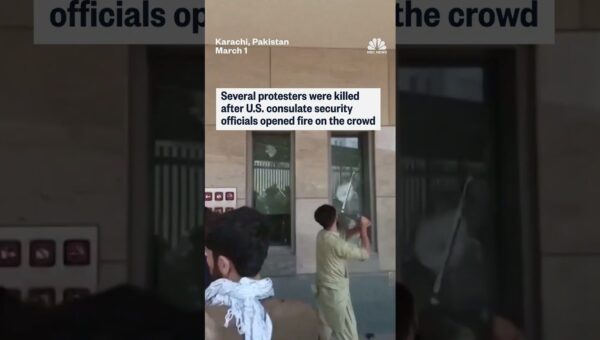
Protesters stormed the U.S. Consulate in Karachi, Pakistan, Friday, breaching its perimeter amid outrage over the ongoing conflict in Gaza. The demonstration saw extensive vandalism and anti-U.S. and anti-Israel chanting, highlighting the deep anger felt across the nation regarding the Middle East crisis.

US and Israel Launch Airstrikes on Iran; Tehran Retaliates
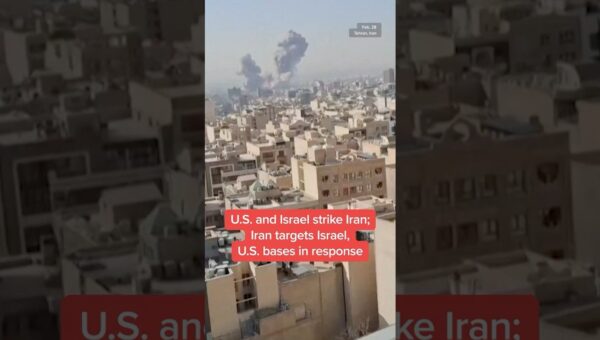
The U.S. and Israel have conducted major airstrikes on targets across Iran, prompting a retaliatory response from Tehran. Iran reportedly targeted Israel and U.S. bases in the UAE and Bahrain. This escalation heightens regional tensions and raises concerns for global stability.
Pakistan Bombs Afghanistan in Major Border Escalation
Pakistan has launched significant airstrikes across Afghanistan, targeting cities including Kabul, in a major escalation of border tensions. Citing accusations of Afghanistan harboring militants, Pakistan's defense minister declared "open war." The conflict has displaced civilians and prompted calls for de-escalation amid complex regional security dynamics.