Operation Absolute Resolve: Trump’s Venezuela Gambit Unveils the ‘Donroe Doctrine’ and a New Era of Global Power Dynamics
In a dramatic early morning raid, US forces captured Venezuelan President Nicholas Maduro, signaling a radical shift in American foreign policy. Dubbed 'Operation Absolute Resolve,' the swift military action, while tactically successful, has ignited a constitutional crisis, raised profound questions about international law, and unveiled a controversial 'Donroe Doctrine' prioritizing resource extraction over democratic transition. The long-term implications for Venezuela, regional stability, and global order remain deeply uncertain as the US navigates a path fraught with economic skepticism and political quagmires.

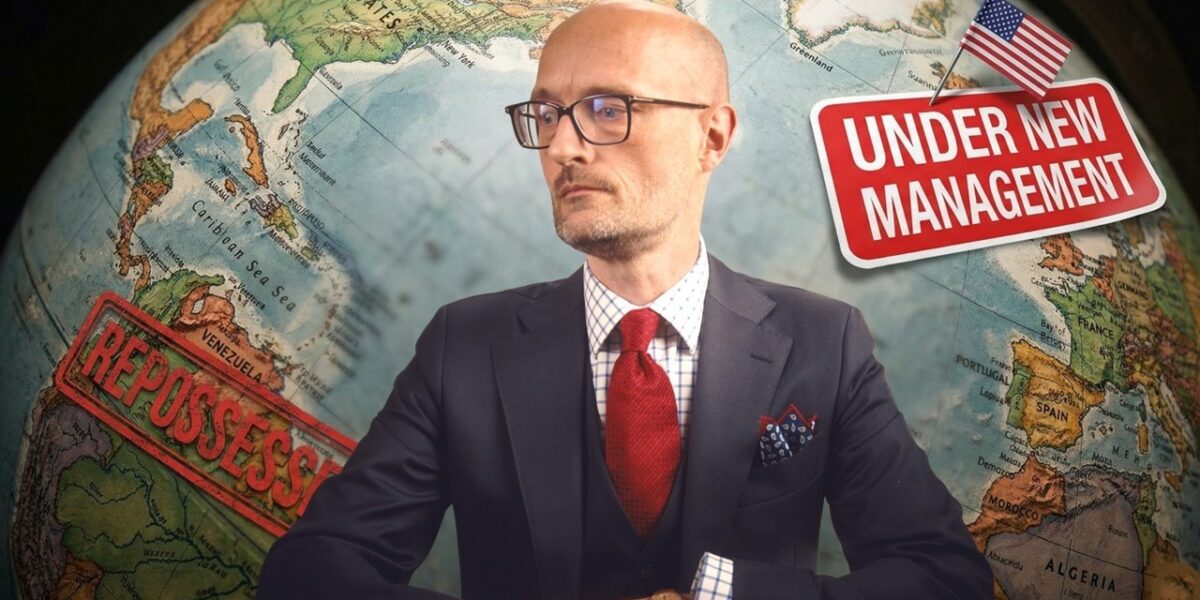
Operation Absolute Resolve: Trump’s Venezuela Gambit Unveils the ‘Donroe Doctrine’ and a New Era of Global Power Dynamics
In the pre-dawn hours of Saturday, January 3rd, 2026, Washington D.C. buzzed with an unusual energy, subtly signaled not by official communiqués, but by a peculiar surge in late-night pizza orders near the Pentagon. This informal indicator, often a harbinger of significant defense activities or crises, proved prescient. Just hours earlier, from his Mar-a-Lago club, President Donald Trump had issued a terse, final command: “Good luck and Godspeed.” What followed was an unprecedented military operation that would send shockwaves across the globe, fundamentally altering the landscape of international relations.
Within a mere few hours, Nicholas Maduro, the embattled leader of Venezuela, was dramatically apprehended from his Caracas compound. The audacious assault, code-named Operation Absolute Resolve, showcased a textbook display of modern military might and precision. A strike force comprising over 150 aircraft, launched from 20 disparate locations, descended upon the Venezuelan capital. The United States Space Force and Cyber Command meticulously “turned off the lights” of Caracas, simultaneously disabling the nation’s air defenses, while elite Delta Force operators were deployed via low-flying Nightstalker helicopters. Maduro, reportedly caught attempting to reach a steel safe room, was soon photographed blindfolded and bound aboard the USS Iwo Jima. By late Saturday, he had been delivered to a New York jail, facing federal charges of narco-terrorism.
The swiftness and scale of Maduro’s capture marked a high-profile tactical victory for the Trump administration, yet it immediately ignited a firestorm of debate and criticism. While Secretary of State Marco Rubio initially attempted to frame the raid as a primarily law enforcement operation, the sheer magnitude of the deployment—involving an aircraft carrier and 14,000 troops—rendered such a characterization implausible. From Mar-a-Lago, President Trump was far more direct, announcing unequivocally that the United States would now “run and be in charge of Venezuela.” This declaration, devoid of any mention of democratic transition or international collaboration, left allies and observers stunned, signaling a radical departure in American foreign policy.
The Dawn of the ‘Donroe Doctrine’: A New Imperial Posture
The audacious intervention in Venezuela formally ushered in what President Trump has termed the “Donroe Doctrine.” Originating as a sardonic New York Post headline a year prior, the president officially embraced the label during a Mar-a-Lago press conference, boasting that his administration had “superseded the 1823 original by a real lot.” This new framework represents a profound reinterpretation of President Monroe’s original doctrine, which defensively warned European powers against interference in the Western Hemisphere as Latin American nations gained independence. The “Donroe Doctrine,” by contrast, boldly asserts the United States’ right to effectively “own and manage the hemisphere’s most vital resources.”
This aggressive posture marks a startling U-turn for a president who, during his campaigns, often championed a policy of “MAGA isolationism” and promised to avoid “fruitless foreign entanglements.” Yet, the administration’s actions in Venezuela, and its subsequent rhetoric, have painted a picture of a nation ready to wield its military and economic might with unprecedented assertiveness. White House Deputy Chief of Staff Steven Miller, a key architect of this new approach, explicitly defended this philosophy in a recent television interview, arguing that the world is “governed by the iron laws of strength rather than international law illusions.”
The implications of this doctrine extend far beyond Venezuela’s borders. Cuba, heavily reliant on Venezuelan oil imports, immediately felt the fallout. Secretary of State Rubio, a staunch hardliner of Cuban descent, views Maduro’s fall as a precursor to the ultimate collapse of the Cuban regime, with President Trump declaring that the island’s economy is “now going down for the count.” Further afield, nations like Iran and Russia condemned the raid as “state terrorism,” watching with alarm as the US implemented a “maximum pressure model” that could easily be turned against them. The Chinese foreign ministry swiftly denounced the operation as a “blatant use of force against a sovereign state.”
Analysts at institutions like the Brookings Institution expressed profound concern that this early victory in Caracas could serve as a dangerous template for adversaries. If the international community tacitly accepts a “might equals right” philosophy in the Western Hemisphere, Beijing, for instance, might perceive a clear “green light” for its own territorial ambitions, particularly concerning Taiwan. The appetite for further adventurous foreign policy was perhaps most provocatively captured by Katie Miller, Steven Miller’s wife, who, shortly after Maduro’s capture, posted a map of Greenland colored in the stars and stripes with the terse caption, “Soon.” This highly symbolic gesture hinted at an even broader, more audacious interpretation of American regional dominance under the new doctrine.
The Allure and Illusion of Venezuelan Oil Wealth
The central justification for this “raider strategy,” as critics termed it, rested on the staggering promise of Venezuela’s natural resources. The country is frequently cited as holding 303 billion barrels of proven oil reserves, a figure representing between 17% and 20% of the global total. However, among energy analysts and veteran investors, these numbers are viewed with deep skepticism. High-profile energy investors like John Arnold have pointed out that this figure was initially reported by Hugo Chavez to OPEC to bolster the regime’s international standing and has been uncritically repeated by global bodies ever since. Some estimates suggest that the reserves may be exaggerated by as much as 220 billion barrels, significantly reducing their true economic value.
Even if these colossal reserve figures were accurate, the quality of Venezuelan oil presents formidable challenges. Unlike the high-quality, light sweet crude found in the US Permian Basin, Venezuelan oil is predominantly heavy and sour, possessing the consistency of molasses and a high sulfur content. Its characteristics are similar to the oil extracted in Canada, which typically trades at a lower price point, around $43 per barrel. Extracting Venezuelan oil is technically difficult, requiring specialized infrastructure and processes. For transport, it must be blended with dilutants like naphtha, which Venezuela paradoxically imports from Russia. The high sulfur and CO2 content necessitate expensive stainless-steel pipes and vessels, which are both costly to install and challenging to maintain.
Industry projections further dampen the economic enthusiasm. While existing Chevron operations in Venezuela might be profitable at current market prices due to pre-existing infrastructure and contractual arrangements, new or regenerated operations would likely not be. Rice University’s Baker Institute for Public Policy (Rice dead Energy in transcript) estimates that new projects in Venezuela would require an oil price of at least $80 per barrel to break even. With global crude prices hovering around $60, much of the wealth the US administration hopes to extract is currently worth less than the cost of getting it out of the ground. This economic reality starkly contrasts with the president’s optimistic pronouncements of imminent billions in investment.
Adding to these geological and market challenges is the catastrophic state of Venezuela’s oil industry. Under the successive regimes of Hugo Chavez and Nicholas Maduro, Petróleos de Venezuela, S.A. (PDVSA), once a world-class energy giant, was systematically transformed into a cash machine for the military and a vehicle for political patronage. Decades of cannibalization, underinvestment, and neglect have hollowed out its infrastructure. Refineries currently operate at a mere 20% of their original capacity, pipelines are over 50 years old and prone to leaks, and critical equipment lies in disrepair. The human capital required for a sophisticated oil industry has also evaporated; most skilled engineers, geologists, and technicians have fled the country, leaving oil fields to be managed by military personnel with little to no technical expertise.
For American oil majors, this is far from the gold rush politicians are pretending it is. While the president speaks of billions in imminent investment, industry giants are more focused on being paid the money they won in legal settlements after their assets were nationalized under Hugo Chavez. ExxonMobil and ConocoPhillips, for instance, are still chasing over $10 billion in unpaid compensation for assets seized decades ago. This deep-seated reluctance was explicitly articulated by ExxonMobil CEO Darren Woods, who, striking a skeptical tone at a White House meeting, described Venezuela as “uninvestable” without significant changes to its legal system and commercial frameworks. Woods, noting that Exxon had had its assets seized twice before, warned that a third entry would require “durable investment protections that simply do not exist today.” Public companies, he implied, are unlikely to commit billions to a region defined by such a high break-even price and massive political risk.
It makes far more economic and strategic sense for these companies to invest in drilling onshore in the United States or in Guyana, where extraction costs are near $35 a barrel and the rule of law is far more predictable. Chevron, the last US major on the ground in Venezuela, may expand at the margins, but most executives are reluctant to commit fresh capital to a country where a presidential tweet can upend foreign policy overnight. Chevron recently completed a $53 billion acquisition of Hess, which gives the US supermajor a 30% stake in Guyana’s rapidly expanding offshore sector, where the break-even price of extraction is half what it is in Venezuela, and without the political risk. Without genuine investment and a clear pathway to profitability, the Venezuelan plan looks less like a strategic masterstroke and more like an expensive exercise in resource imperialism, built on questionable geology and even more dubious economics.
Post-Capture Quagmire: Governance and Political Realities
While the economic rationale of the Venezuelan incursion rests on questionable geology, the political plan for governing Venezuela appears even more tenuous. Critics immediately pointed to a “conspicuous lack of next day planning.” Capturing a foreign leader and his wife, they argued, does not automatically mean the United States is suddenly in charge of a nation of 28 million people, a population twice the size of Germany. Historical parallels loom large and ominously: when Saddam Hussein was pulled from a spider hole in 2003, it did not transform Iraq into a peaceful American asset; instead, it signaled the start of a bloody, decades-long insurgency. Similarly, the 2011 ousting of Muammar Gaddafi in Libya left behind a fractured state run by competing militias, not a stable democracy.
In Caracas, the regime was quick to signal that it would not go quietly. As news of Maduro’s capture spread, police and paramilitaries known as “colectivos” took to the streets to reassert control in what was suddenly a headless state. The real shock wasn’t the military incursion itself—which followed months of visible escalation, a massive military buildup in the Caribbean, drone strikes on Venezuelan dock facilities, and the seizure of sanctioned oil tankers—but the total absence of any discussion regarding a democratic transition or the installation of the opposition leader who won the 2024 election with more than two-thirds of the vote.
Instead of messaging focused on a pivot towards liberty, the traditional hallmark of American intervention, the rhetoric focused almost entirely on the spoils of war. President Trump announced that the interim authorities would hand over between 30 million and 50 million barrels of crude, worth up to $3 billion, to be sold at his “personal discretion.” Early on, Trump had claimed that the military buildup related to the illegal drug trade, but after the raid, there was no pretense that this had been about anything other than the capture of the oil wealth of a nation that claims to sit on one-fifth of the world’s proven oil reserves. By prioritizing resources over rights, the administration signaled a move towards a new, coercive regional doctrine.
In the vacuum left after Maduro’s capture, the Trump administration did not turn to the internationally recognized democratic opposition. Instead, it signaled its intent to work with the very figures who served as the backbone of the existing oppressive regime: the Rodriguez siblings, Delcy and Jorge. These powerful figures rose to prominence as loyalists to Hugo Chavez and then Maduro. Jorge Rodriguez, a trained psychiatrist, serves as the National Assembly’s president and chief political strategist. Delcy, his sister, who served as both vice president and oil minister, is now the acting president of Venezuela. While often described as the pragmatic face of the regime, she remains deeply implicated in its most brutal misdeeds, from the systematic repression of dissidents to the blatant 2024 election fraud.
The decision to sideline Maria Corina Machado, the Nobel Prize-winning leader of the opposition, has stunned the Venezuelan diaspora and international observers. Despite Machado winning a landslide opposition primary and her handpicked candidate, Edmundo Gonzalez, securing two-thirds of the vote in 2024, Trump dismissed her role, claiming she “doesn’t have the support or respect within the country.” This frostiness appears rooted in Trump’s long-standing desire for the Nobel Peace Prize himself. Sources close to the White House indicate that Trump viewed Machado’s acceptance of the award as an “ultimate sin.” One insider noted, “If she had turned it down and stated it belonged to Trump, she’d be president of Venezuela today.” In a bizarre turn of events, Trump reportedly told Sean Hannity he would accept the prize if Machado offered it to him, prompting an immediate clarification from the Norwegian Nobel Committee that the award is final and cannot be revoked, shared, or transferred.
This unusual alignment has led observers, such as former UN ambassador Louise Blas, to conclude that what occurred in Venezuela was not a traditional regime change but a “negotiated extraction.” In this view, Maduro was sacrificed by elements of his own governing apparatus, led by the Rodriguez siblings, to preserve the existing power structure in exchange for a deal with Washington. This arrangement allows the US to claim the high-profile symbolic victory of Maduro’s capture while the Rodriguez faction maintains control over the internal state machinery. The result is a cynical “oil for cash pathway,” a strategy intended to secure resource extraction while avoiding the quagmire of a direct, long-term American occupation.
However, the idea that Delcy Rodriguez could run Venezuela on behalf of the White House is a massive gamble that overlooks the internal architecture of the Chavista state. While Rodriguez may be economically literate, she and her brother represent the civilian wing of a regime fundamentally held together by the security services and the military. It is unclear why high-ranking generals or other senior party officials would agree to take orders from a leader who appears to be taking direction from Washington—the very “imperialist enemy” that Hugo Chavez spent decades framing as an existential threat to his Bolivarian revolution. PDVSA itself is run by the military, and asking these officers to flip their loyalty to a US proxy administrator is a direct challenge to their ideological and financial interests. Furthermore, Delcy lacks direct command over the colectivos, the armed militias who are roaming the streets hunting “traitors.” These militias remain loyal to hardline ideologues, not pragmatic negotiators. If the security services refuse to follow her, the US may find that maintaining its proxy regime requires the very “boots on the ground” that Trump has spent years promising to avoid.
A Legal Minefield: International Law, Domestic Courts, and Executive Power
The Caracus incursion, while tactically successful, has plunged the United States into a profound legal and constitutional crisis. Legal experts point to Article 2, Paragraph 4 of the UN Charter, which explicitly prohibits the use of force against the territorial integrity or political independence of any state. This fundamental principle of international law has no “narco-terrorism carve out” for kidnapping a foreign leader, making the legality of Operation Absolute Resolve highly contentious on the global stage. The administration’s selective application of justice is further complicated by President Trump’s recent pardon of Juan Orlando Hernandez, the former president of Honduras. Hernandez was sentenced to 45 years in prison for managing a cocaine superhighway that moved 400 tons of the drug—a scale that dwarfs the specific charges currently leveled against Maduro. Overriding such a conviction suggests that drug indictments are now being used as a tactical tool for regime stabilization rather than a consistent law enforcement priority.
Domestically, the administration’s actions have ignited a constitutional crisis. Operation Absolute Resolve was executed without a single reference to conventional democratic oversight, bypassing Congress entirely. While the president claimed to have spent months consulting with US oil majors on the “day after scenario,” executives at ExxonMobil and ConocoPhillips have since denied any prior knowledge of the raid or its aftermath. By failing to seek a formal Authorization for Use of Military Force (AUMF), the administration has dangerously expanded executive power, drawing sharp criticism from lawmakers across the political spectrum.
Nicholas Maduro, despite the legal controversy surrounding his capture, faces a daunting path in US courts. Legal analysts and recent commentary in The Economist suggest that Maduro is unlikely to “beat his rap,” primarily because US domestic law is remarkably indifferent to the methods by which a defendant is brought to justice. Under the Kerr-Frisbie doctrine, a 19th-century ruling that essentially states, “We don’t care how you got here, we’re just glad you could make it,” US courts have repeatedly held that the power to try a person is not impaired by the fact that they were brought into the jurisdiction via forcible abduction. Furthermore, Maduro’s primary defense, head of state immunity, rests on a thin reed. Since the United States has not recognized him as Venezuela’s legitimate leader since 2019, the State Department will likely issue an immunity determination that denies him the protections typically afforded to world leaders.
The prosecution’s case also reveals a striking gap between political branding and legal reality. For years, the administration characterized Maduro as the kingpin of the “Cartel of the Suns,” a group that the State Department designated as a foreign terrorist organization. Yet, the indictment largely abandons the claim that any such organization exists. Instead, it portrays the cartel as an abstraction, a convenient shorthand for a decentralized system of institutionalized corruption and a patronage network managed by Venezuela’s military and political elite. Critics point out that the DEA’s National Drug Threat Assessment has never officially mentioned the Cartel of the Suns as a major trafficking organization, leading to accusations that the administration may have oversold its case to provide a legal rationale for the incursion. While Maduro may have a credible argument that the charges are politically motivated or that the Cartel of the Suns is a fantasy cooked up by US politicians, his attempts to dismiss the charges will most likely fail. When the trial gets going, it will look like any other narco case, resting on the strength of the evidence. According to legal experts, the bar to show participation in a criminal narcotics conspiracy is quite low, and it won’t be hard for jurors to grasp that Venezuela is a way station for Colombian drugs and that its most senior officials knowingly enabled their transit. There could, however, be a diplomatic off-ramp for Maduro, where if he offers enough value to America, he might negotiate his own release.
The Trump administration’s hostility towards international law is felt most acutely at the International Criminal Court (ICC) in The Hague. Judge Kimberly Prost, who oversees cases of genocide and war crimes along with 11 other ICC officials, were sanctioned by the US government in August. Prost was targeted for her role in authorizing an investigation into alleged war crimes by US personnel and the CIA in Afghanistan. The impact on Prost has been profound: US companies, including Amazon and Microsoft, cancelled her accounts, meaning she can no longer shop online or use US-based email services. With her bank accounts frozen and credit cards canceled, she describes a paralyzing existence where she’s on the same list as international terrorists, organized crime bosses, and Russian oligarchs—a surreal consequence for a judge dedicated to global accountability. This targeting of international courts coincides with a massive shift in domestic priorities in the United States, further underscoring the administration’s embrace of unilateral power.
The Broader Implications: A World Reshaped
The Caracas incursion has sent shockwaves far beyond Latin America, signaling a dramatic pivot in US foreign policy towards a coercive model of resource extraction. Just days after the raid, the president proposed a historic $1.5 trillion military budget for 2027, a nearly 50% increase from the prior year. Billed as the creation of a “dream military,” this war chest expansion during a time of nominal peace signals an intent to normalize the kind of military assertiveness seen in Venezuela. The “Donroe Doctrine” reached its most transactional expression when the president announced the seizure of $3 billion worth of oil, which he said was being transported by US charter tankers directly to American unloading docks. In a post on his version of Twitter, he announced that he would personally control the money made from this oil to ensure that it’s used to benefit the US and Venezuela, with the caveat that Caracas may only purchase American-made products with the proceeds. This model allows Washington to extract the spoils of the incursion while bypassing the US Treasury and the responsibilities of a formal occupation. By forcing the interim government into a lopsided partnership that prioritizes US commercial interests, the administration has fundamentally redefined the role of American power in the hemisphere.
The “raider logic” has already pivoted from the Caribbean to the Arctic. On Friday, the president escalated his rhetoric regarding Greenland, dismissing Denmark’s 500-year-old territorial claim as irrelevant and warning that the US would acquire the island “the easy way or the hard way.” By characterizing long-standing defense treaties as mere leases that the US no longer intends to honor, the White House has signaled that even NATO allies are not immune to the transactional logic of the Donroe Doctrine. The Danish prime minister has already warned that any military move on Greenland would spell the end of NATO. Yet, the administration seems undeterred, even floating plans for direct cash payments of up to $100,000 to individual Greenlanders to encourage secession. This aggressive expansion of American territorial ambitions, coupled with the disregard for international treaties and alliances, poses a significant threat to global stability.
Ultimately, the Caracas incursion will be judged by its global ripple effects. While the immediate win may provide a temporary distraction from domestic affordability crises and other scandals—leading to “wag the dog” accusations—the long-term project of running a nation of 28 million people remains a high-stakes gamble. Analysts at the Cato Institute, a conservative think tank, warn that by ignoring its stated anti-war principles, the administration risks a “Middle East-style quagmire” that effectively puts America last. This strategic drift is most evident in the decision to co-govern Venezuela with Delcy Rodriguez, a socialist fanatic and core member of the existing regime, rather than supporting the victors of the 2024 election. By opting for a repackaged version of the Chavista status quo, Washington is choosing stability over the type of democratic transition that it has championed in the past.
The economic promise of Venezuelan oil is increasingly viewed as a mirage by industry veterans. With Venezuelan oil infrastructure in a state of catastrophic decay and the global market already awash in cheaper crude, the billions in investment the president demands are unlikely to materialize, especially as his administration continues to bypass the very rule of law that investors require for security. Legal experts point out that the “controlled by me” plan for oil revenue likely violates the Miscellaneous Receipts Act and the Anti-Deficiency Act, creating a quasi-budget process that bypasses congressional appropriations and transparency. As the president proposes a record $1.5 trillion “dream military” budget to fund these territorial ambitions, adversaries in Moscow and Beijing are watching with interest, seeing a template for their own regional designs on Taiwan and beyond. The United States has proven that it has the military might to decapitate a regime in a single night, but it is yet to prove that it has the statesmanship to build a lasting peace from the spoils.
Source: Trump vs. The World (YouTube)

Related Articles
Trump: Iran Strikes Ahead of Schedule, Expects ‘Great Deal for World’
Three U.S. service members have been killed amid escalating conflict with Iran, President Trump confirmed. He stated that strikes are ahead of schedule, with senior Iranian leaders killed, and expressed optimism for a "great deal for the world" despite ongoing talks with Iranian officials.
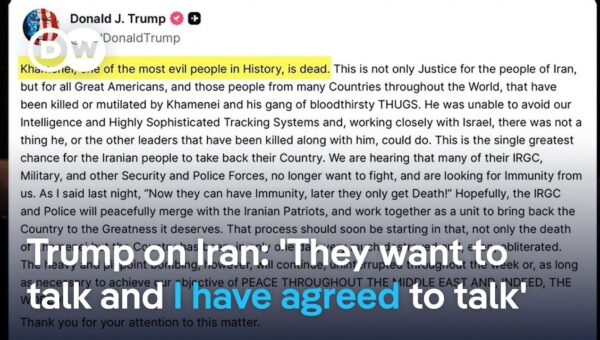
Trump Agrees to Talks with Iran After Major Strikes
President Donald Trump has agreed to talks with Iran's leadership following coordinated strikes that reportedly killed key figures, including the Supreme Leader. While Trump claims significant military successes, U.S. strategy remains unclear, and public opinion shows limited support for the actions amid rising American casualties.
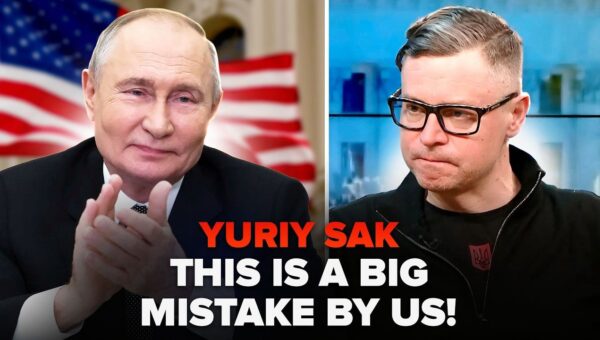
Trump’s Putin Stance: US Strategy and Global Implications
Analysis suggests Donald Trump's approach to the Ukraine war involves pressuring Kyiv, but US involvement is crucial for resolution. China's influence and the 'MAGA' agenda's geopolitical implications are key factors.