OpenClaw Emerges: AI Agent Automates Life 24/7
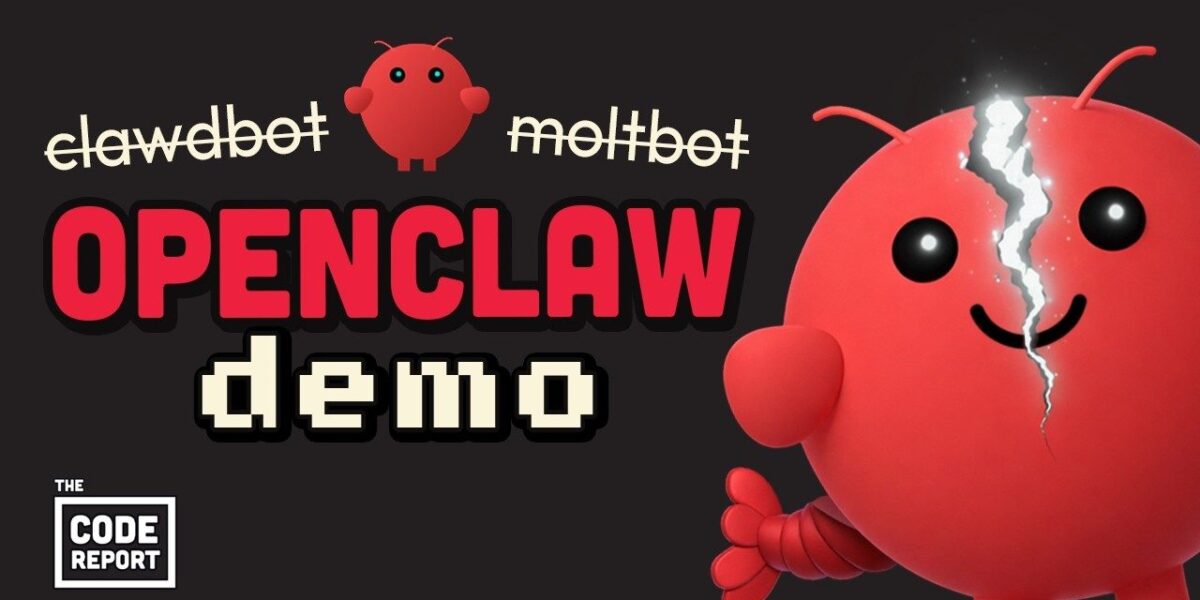
OpenClaw, a new open-source AI agent, is gaining rapid traction for its ability to automate tasks 24/7 and integrate with messaging apps. Initially named Claudebot, the project faced a naming dispute before settling on OpenClaw, highlighting the fast-paced and sometimes contentious nature of AI development.

OpenClaw Emerges: AI Agent Automates Life 24/7
In the rapidly evolving landscape of artificial intelligence, a new open-source project named OpenClaw has captured the attention of developers and tech enthusiasts alike. Launched on January 30th, 2026, OpenClaw is not just another chatbot; it’s a sophisticated AI agent designed to operate autonomously, 24 hours a day, seven days a week, and integrate deeply into users’ daily lives. The project, initially known as Claudebot and later briefly as Moltbot, has seen a meteoric rise in popularity, amassing over 65,000 GitHub stars in an unprecedented timeframe and even reportedly causing a surge in Mac Mini sales due to its hardware demands.
From Claudebot to OpenClaw: A Naming Odyssey
The journey to OpenClaw’s current identity has been marked by a notable naming dispute. The project, created by Peter Steinberger, founder of the developer tools company PSDFKit, initially launched as Claudebot. This name drew the ire of Anthropic, the company behind the well-known AI model Claude. Citing potential confusion and brand dilution, Anthropic reportedly issued a cease-and-desist, leading to a swift renaming. The project briefly became Moltbot, a name that apparently did not resonate with its creator or community. Ultimately, it settled on OpenClaw, a name that retains a hint of its original inspiration while establishing a new, distinct identity.
Under the Hood: Technology and Capabilities
OpenClaw is built using TypeScript and functions as a wrapper around powerful AI models, including Anthropic’s Claude and OpenAI’s GPT-5. Its core innovation lies in its ability to remain active and operational continuously, without the need for breaks, and its capacity to remember past interactions and information. This persistent operation allows it to manage a wide array of tasks:
- Personal Assistance: Automating daily routines, managing calendars, and organizing email inboxes.
- Information Retrieval: Monitoring stock market performance and providing real-time updates on investments.
- Development Workflow: Deploying code, running scripts, and generating software engineering interview questions.
- Communication: Interacting with users via popular messaging platforms like Telegram, WhatsApp, Slack, and Discord.
A key feature of OpenClaw is its flexibility in deployment. Users can self-host the agent on a variety of hardware, from a compact Raspberry Pi to a more powerful Mac Mini or a virtual private server (VPS). This self-hosting capability offers a significant advantage, eliminating the need for recurring subscription fees often associated with commercial AI services.
Setting Up OpenClaw
The installation process for OpenClaw is designed to be straightforward, typically requiring a single command for deployment, with Linux being the recommended operating system. Once installed, users can access the OpenClaw command-line interface. The initial setup involves an onboarding process that includes a crucial security documentation review. Users then need to connect an AI model provider, which can be done by inputting API keys for services like Anthropic or by integrating with free, open-source models.
The next critical step is integrating a messenger application. OpenClaw supports a range of platforms, with Telegram being highlighted for its ease of setup. This involves interacting with Telegram’s BotFather to create a new bot and obtain an access token, which is then provided to OpenClaw. The agent also features a concept of ‘skills’ – pre-built functionalities or custom scripts that extend its capabilities. These can be further enhanced through ‘MoltHub,’ a repository for additional skills. Finally, ‘hooks’ allow OpenClaw to tap into various lifecycle events, enabling it to maintain memory across sessions and trigger automated follow-up actions.
Interacting with OpenClaw
After setup, OpenClaw provides a web-based dashboard for management, offering chat interfaces and extensive configuration options. However, the primary mode of interaction is through the connected messaging apps. Users pair the OpenClaw agent with their messenger account using a pairing code generated during setup. Once connected, users can interact with their personalized AI assistant, which can be configured with specific personalities and behaviors. For instance, an assistant named ‘Jeff’ could be instructed to act like a ‘casual gremlin.’
The true power of OpenClaw becomes evident when building automations directly through chat commands. A user can ask OpenClaw to monitor a specific stock, like Microsoft. OpenClaw not only retrieves the current data but also sets up a background automation to continuously track the stock and send alerts on Telegram for significant price movements. This eliminates the need for manual checking and provides proactive information delivery.
Why This Matters
OpenClaw represents a significant step towards truly integrated and autonomous AI assistants. Its open-source nature, combined with its ability to operate 24/7 and perform real-world actions, democratizes access to advanced automation capabilities. For individuals and small businesses, it offers a cost-effective alternative to expensive proprietary AI solutions, allowing for personalized automation of tasks that were previously time-consuming or required dedicated human effort. The ability to self-host also addresses growing concerns around data privacy and control, as sensitive information can remain within the user’s own infrastructure.
The project’s rapid adoption highlights a strong demand for tools that bridge the gap between AI models and practical, everyday applications. OpenClaw’s success suggests a future where AI agents are not just conversational partners but active participants in managing and optimizing our digital and physical lives. The flexibility in choosing AI backends and messaging platforms further ensures its adaptability to diverse user needs and preferences.
Sponsorship and Future Outlook
The video transcript also mentions Tracer, an agent orchestration layer designed to enhance the capabilities of coding agents. Tracer’s ‘epic mode’ aims to streamline the process of building software by allowing users to define project goals, which the system then breaks down into actionable tickets. It uses a system called ‘Bart Simpson’ to monitor agent progress and correct deviations, ensuring projects stay on track. This highlights the broader trend of developing sophisticated tools to manage and optimize AI agent performance in complex tasks.
OpenClaw’s emergence is a testament to the power of open-source innovation in the AI space. As it continues to develop and its community grows, it is poised to become a foundational tool for a new generation of personalized AI automation.
Source: The wild rise of OpenClaw… (YouTube)

Related Articles


AI Agent Progress Accelerates Dramatically
A recent chart from Meter Research reveals AI agents are accelerating their progress at an unprecedented rate, replacing significant hours of human labor. With models like Claude Opus 4.6 demonstrating remarkable capabilities, industry leaders and researchers are grappling with the implications for the future of work and society.


AI Breakthrough: Hyper-Realistic Clothing Simulation Achieved
A new physics-inspired technique revolutionizes digital clothing simulation, delivering hyper-realistic results with unprecedented speed and efficiency. By intelligently allocating detail and predicting material behavior, it overcomes the long-standing compromise between visual fidelity and computational cost.
New CPU Algorithm Outpaces GPUs in Physics Simulation
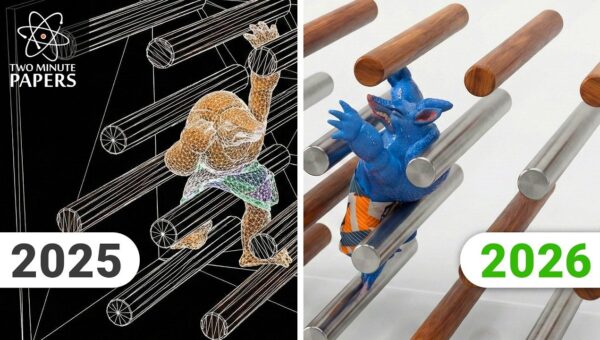
A new physics simulation algorithm leverages CPU power through domain decomposition, achieving speeds up to 66x faster than previous methods and even outperforming GPUs. This breakthrough promises more realistic animations and advanced scientific modeling.