OpenAI’s Sora 2: A Leap in Video Generation
OpenAI's Sora 2 marks a significant step in AI video generation, boasting enhanced realism and introducing a social media app with unique safety features. The development raises questions about AI's true capabilities, its training data dependencies, and its potential impact on science and society.


OpenAI Unveils Sora 2: A New Era for AI Video Generation
OpenAI has launched Sora 2, its latest advancement in text-to-video generation, sparking debate about its true capabilities and its place in the rapidly evolving AI landscape. While some hail it as a significant leap forward, others see it as an incremental improvement, drawing comparisons to existing models like Google’s V3. This article delves into the key aspects of Sora 2, exploring its features, potential impact, and the broader context of AI development.
Dual Models and Rollout Strategy
A subtle but significant detail regarding Sora 2 is the existence of two versions: Sora 2 and Sora 2 Pro. OpenAI has indicated that the higher-quality Sora 2 Pro will initially be available to Pro users on sora.com and later within the app. This raises questions about whether the most impressive demonstrations, which went viral, were generated using the Pro version, potentially setting a higher bar than what the standard Sora 2 will offer to a wider audience. The high computational cost of running such advanced models is a likely factor behind this tiered approach and OpenAI’s need to manage profitability.
The rollout strategy for Sora 2 is also noteworthy. The system card reveals that the invitation-based access is a deliberate choice to slow down adoption, likely for safety and iterative improvement. Initially, access is limited to the US and Canada, exclusively on iOS, and offered as a premium service with usage caps that are expected to decrease as more users join. The absence of an API at launch, though promised for the coming weeks, further emphasizes this controlled release, aligning with OpenAI’s safety-first approach.
Benchmarking and Comparisons: The Challenge of Definitive Answers
Direct comparisons between Sora 2 and its predecessors, as well as competitors like Google’s V3, are complex. OpenAI claims that Sora 2 possesses an unprecedented level of intelligence for a video model, suggesting it has a superior “world model” – its internal understanding of how the world works. However, features like image-to-video and video-to-video generation are not yet publicly available, though the latter may be addressed through future features like “Cameos.”
The difficulty in definitive comparisons is compounded by several factors. The distinction between Sora 2 and Sora 2 Pro, and the various quality and speed versions of V3, make direct head-to-head analysis challenging. Furthermore, credible leaks suggest an imminent release of V3.1. A crucial point highlighted is the fundamental dependence of all AI models, including LLMs like Gemini and ChatGPT, on their training data. A model excelling at a specific prompt, such as generating a gymnast, might simply have more relevant training data for that domain, rather than possessing superior general intelligence.
For instance, Sora 2’s impressive generation of Cyberpunk-style content suggests extensive training on game tutorials. Similarly, its reported proficiency in generating anime, surpassing V3, can likely be attributed to its training data. The notion that Sora 2 has mastered physics is also being met with skepticism. Some demonstrations, while visually impressive, exhibit physics that appear more “video gamey” than realistic, with unnatural bounces and movements.
Sora App: Social Media with Guardrails
OpenAI’s foray into social media with the Sora app aims to differentiate itself from platforms like Meta’s Vibes, which faced criticism for generating “AI slop.” OpenAI is implementing several features to encourage creation over consumption and ensure user safety:
- No infinite scroll for users under 18.
- Nudges to encourage content creation.
- Visible and invisible watermarks on all generated videos.
- Strict opt-in for the use of personal likeness.
- Input classification and potential blocking.
- Output moderation through a reasoning model.
- Blocking of image-to-video and video-to-video generation categories.
A unique feature is “Cameos,” which allows users to insert their likeness into videos. This requires users to record specific phrases provided by OpenAI, verifying their identity and preventing unauthorized use of their image. This feature is currently exclusive to Sora 2 and aims to set a higher standard for digital likenesses in an era of deepfakes.
The Master Plan: Well-being and Societal Impact
Sam Altman, CEO of OpenAI, has outlined an ambitious vision for the Sora app, detailed in a recent blog post. The app will include periodic checks on user mood and well-being. More significantly, OpenAI has committed to a rule where, if the majority of users do not feel their lives have improved from using Sora over a six-month period, “significant changes” will be made, potentially leading to the discontinuation of the service. This bold promise serves as a guarantee against criticism regarding the launch of another social media platform.
However, OpenAI’s track record with promises, particularly regarding regulatory compliance, raises questions about the long-term adherence to such commitments. The company’s increased lobbying efforts suggest a potential shift from its initial stance of aggressively supporting regulation.
Why This Matters: Beyond Entertainment to Scientific Advancement
The implications of Sora 2 extend beyond entertainment. Will Depw, a lead on Sora 2, highlighted the potential for AI video generation to serve as simulators for Reinforcement Learning (RL), a critical bottleneck in scientific research. The ability to create realistic simulations could accelerate discoveries in various fields.
In contrast to Sora 2’s focus on digital creation, companies like Periodic Labs are pushing the boundaries of AI in physical science. With $300 million in funding, Periodic Labs aims to automate scientific experimentation. Their approach involves using deep learning to predict experimental outcomes, deploying humanoid robots for autonomous execution, and organizing vast amounts of existing experimental data into LLM-friendly formats. They are also developing AI models optimized for literature review to identify promising experiments. This initiative represents a starkly different, real-world application of AI, focused on accelerating fundamental scientific breakthroughs.
The Future of AI and the Turing Test
The rapid progress in AI video generation, exemplified by Sora 2, brings us closer to passing the visual Turing test – the point where AI-generated video becomes indistinguishable from reality. While Sora 2 isn’t quite there yet, the trajectory is clear. The implications are profound, potentially leading to a future where personalized content generation is commonplace, with features like inserting one’s likeness into any show becoming a reality.
Looking further ahead, the convergence of visual, auditory, and even sensory AI could lead to the creation of fully immersive artificial worlds. The ability of AI to “crush” every sensory benchmark, creating experiences indistinguishable from reality, presents both exciting opportunities and significant ethical challenges. Sora 2, in this context, can be seen as a pivotal step on a path that is both fascinating and treacherous.
Advancements in LLMs and Cost Efficiency
The conversation around AI advancements also includes Large Language Models (LLMs). Anthropic’s Claude 4.5 Sonnet is touted as a leading coding model, with early benchmarks showing significant improvements over previous versions. Notably, Claude 4.5 Sonnet is reported to be five times cheaper than models like Claude 4.1 Opus, demonstrating a trend where new breakthroughs in AI are followed by significant cost reductions, making advanced capabilities more accessible.
This pattern suggests that within months, we might see video generation models, perhaps from Chinese companies, matching Sora 2’s quality at a fraction of the cost and with fewer restrictions.
Career Opportunities in AI
For those interested in contributing to the AI field, platforms like 80,000 Hours offer a job board with a focus on positive impact. The board features a daily updated list of remote and in-person roles, spanning various experience levels, from entry-level to senior positions.
Source: Sora 2 – It will only get more realistic from here (YouTube)

Related Articles


AI’s Economic Shift: Ownership is the New Wage
Artificial intelligence is projected to significantly reduce the economic value of human labor within a decade. Experts suggest that capital ownership, rather than wages, will become the primary means of wealth accumulation. Investors are urged to consider this shift in their long-term strategies.


Nvidia Earnings Signal AI Revolution’s Next Phase
Nvidia's latest earnings report reveals accelerating revenue growth and profitability, signaling a new phase in the AI revolution driven by sophisticated AI agents. The company's strong performance underscores the growing demand for computational power as AI transitions into a core digital infrastructure component.

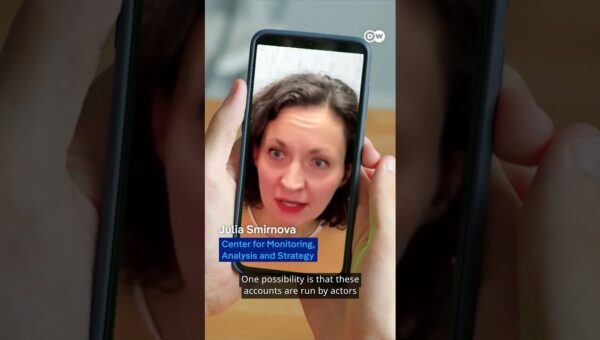
Germany’s Fake Laws: AI Disinformation Campaign Exposed
Viral AI-generated videos falsely claim Germany has enacted absurd laws, including fines for flushing toilet paper. Experts reveal a disinformation campaign aiming to portray Germany as chaotic, with potential commercial or political motives behind the fabricated content.