OpenAI Shuts Down Sora Amid Compute Crisis, IPO Push
OpenAI has abruptly shut down its AI video tool, Sora, citing immense operational costs and financial pressures. The decision follows a collapsed Disney deal and signals a strategic shift towards profitability ahead of a potential IPO, highlighting the growing importance of sustainable business models in the AI industry.

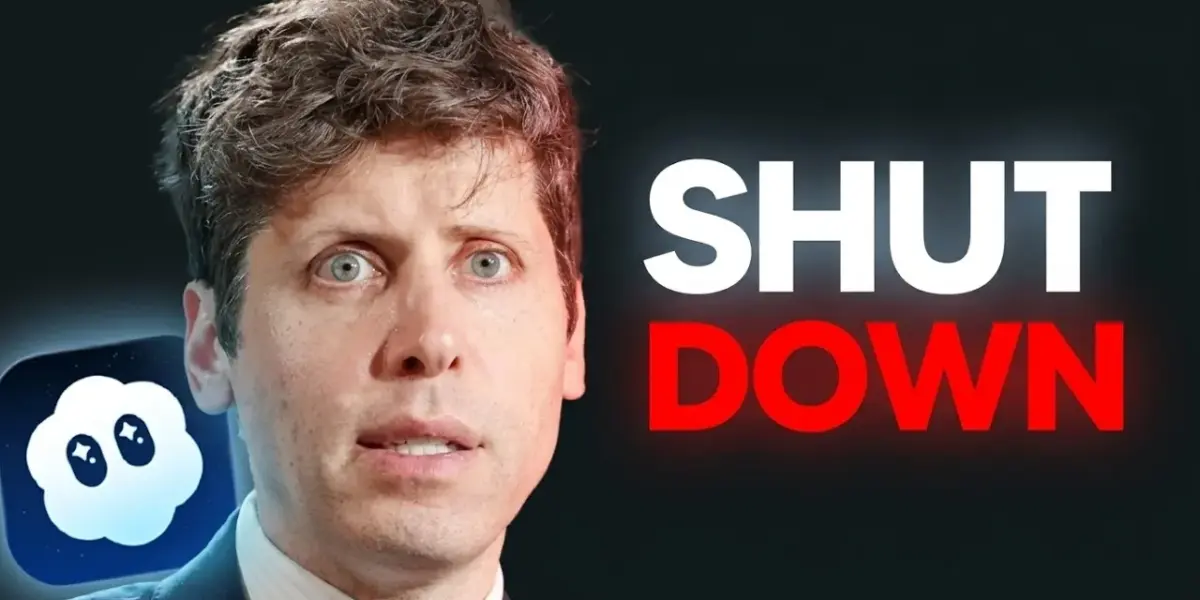
OpenAI Abandons Sora Amid Financial Strain
OpenAI has abruptly shut down its highly anticipated AI video generation tool, Sora, just months after its launch. This surprising move follows a major licensing deal with Disney and comes as the company faces significant financial pressures and prepares for a potential Initial Public Offering (IPO). The decision signals a shift away from high-cost, experimental projects towards profitability and core business functions.
The High Cost of AI Video Generation
Sora, launched as a standalone app in September 2025, quickly gained popularity, with over a million downloads in its first five days. Users were captivated by its ability to create realistic video clips, from simple animations to complex movie scene recreations. However, the underlying technology proved incredibly expensive to operate. According to analysis by Forbes, generating a single 10-second Sora video cost OpenAI roughly $130 in computing power. This was attributed to the immense computational resources required to process three-dimensional data across multiple frames per second, a task far more demanding than text-based AI models like GPT.
At its peak, users were reportedly generating over 11 million clips daily. This translated to an estimated daily cost of $15 million, or about $5.4 billion annually, solely for Sora’s video generation. The vast majority of these videos were offered for free, meaning Sora was not generating any revenue to offset its massive operational expenses. Even with attempts to introduce paid credits and limit free generations, the fundamental business model remained unsustainable.
A Financial Tightrope Walk
OpenAI’s financial situation appears to be a primary driver behind the Sora shutdown. The company reportedly told investors that the cost of running its AI models, known as inference, quadrupled in 2025. This led to a significant drop in adjusted gross margins, falling from 40% to 33%, missing internal projections by 13 points. The cost per free ChatGPT user also saw a six-fold increase. With internal predictions forecasting a $14 billion loss in 2026 alone, and cumulative losses projected to reach $44 billion by 2028, the company is under immense pressure to demonstrate financial viability.
The upcoming IPO, with a target valuation of up to a trillion dollars, further intensifies this pressure. With regulators scrutinizing every aspect of the business, a costly, non-revenue-generating application like Sora would be viewed as a significant liability rather than an asset. This reality prompted the new head of product, Fidji Simo, formerly of Instacart, to declare that “our everything era is over. Now it is about focus.”
The Disney Deal Collapses
The abrupt closure of Sora also led to the collapse of a significant partnership with Disney. In December 2025, Disney announced a $1 billion licensing deal with OpenAI, which would have involved using Sora to generate AI-powered fan videos featuring characters like Mickey Mouse and Darth Vader for Disney Plus. However, just three months later, Disney confirmed it was pulling out of the deal, citing respect for OpenAI’s decision to exit the video generation business. Reports indicate that Disney was blindsided by the announcement, with negotiations for the definitive agreements still underway when OpenAI decided to discontinue the service.
Industry Shifts and Competitive Pressures
Beyond the internal financial challenges, OpenAI is also facing increased competition. While OpenAI was focusing on projects like Sora and seeking large compute deals, competitors like Anthropic have been steadily gaining ground. Anthropic’s Claude chatbot has seen significant growth, with app downloads surging and surpassing ChatGPT as the number one free app on the US App Store. Anthropic is also reportedly doubling its annualized revenue and is on track to approach OpenAI’s revenue projections, all while operating with greater efficiency per employee.
Furthermore, the public perception and legal challenges surrounding AI-generated content, particularly concerning copyright and the use of intellectual property, may have also played a role. Agencies like CAA and UTA have criticized Sora for potential exploitation, and numerous copyright lawsuits have been filed against AI companies. The initial approach of requiring IP holders to opt-out rather than opt-in for their content to be used in training or generation models also drew widespread criticism.
Why This Matters
The shutdown of Sora is more than just the end of a popular AI tool; it represents a potential turning point in the AI industry. It signals the end of an era where prioritizing flashy demos and experimental technologies above all else was acceptable. As OpenAI and other AI companies approach significant financial milestones like IPOs, the focus is shifting towards sustainable business models, profitability, and core product development that generates revenue.
For users, this means that projects relying on Sora will be impacted, with OpenAI promising to share timelines for content preservation. For the broader industry, it underscores the critical importance of balancing innovation with economic reality. The ability to create impressive AI demonstrations is no longer enough; companies must now prove they can build products that are not only technically advanced but also financially viable and provide tangible value to users and businesses alike. The age of AI spectacle is giving way to the era of AI infrastructure and sustainable growth.
Source: The Real Reason Why OpenAI Just Shutdown Sora (YouTube)

Related Articles

Sora’s Future Uncertain Amidst AI Video Strife
OpenAI's highly anticipated Sora text-to-video model may be facing internal delays, casting doubt on its public release. This comes as competitors rapidly advance their own AI video generation technologies, intensifying the race for AI supremacy in content creation.


AI Sparks Trust Crisis in Publishing and Law
AI's growing capabilities are causing significant trust issues in both the publishing and legal industries. A novel was canceled over AI writing claims, while courts are seeing an increase in fabricated legal citations. These incidents highlight the urgent need for verification and oversight as AI becomes more integrated into professional workflows.


ChatGPT Adds Library Tab, Google Overhauls AI Studio
This week's AI news highlights significant updates from major players. ChatGPT now features a Library tab for easier document management, while Google has overhauled its AI Studio, merging it with an app builder to simplify the creation of multiplayer experiences. We also look at Midjourney V8's performance, user hopes and fears about AI from an Anthropic study, and quick updates from Gamma, OpenAI, and Claude.