OpenAI Renames Product Team to AGI Deployment
OpenAI has internally renamed its product team to "AGI Deployment," signaling a shift towards delivering advanced AI capabilities. This move comes as industry leaders like Jensen Huang and Mark Gubrad suggest AGI may have already been achieved, though definitions and timelines vary.

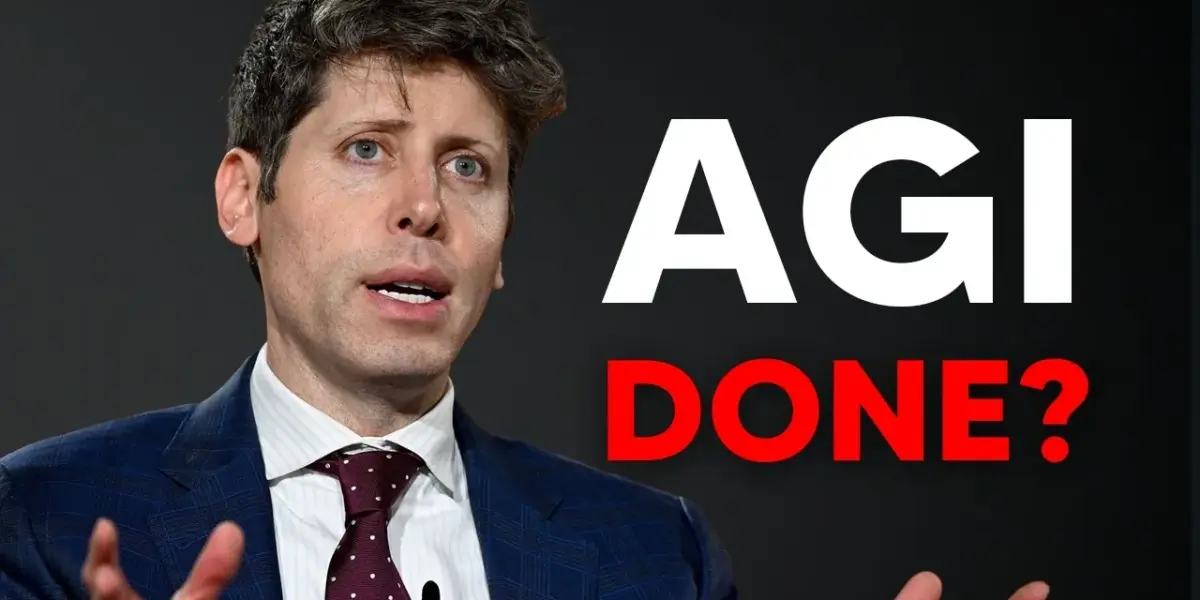
OpenAI Renames Product Team to AGI Deployment
OpenAI, the company behind ChatGPT, has made a significant internal shift, renaming its product team to “AGI Deployment.” This change, revealed internally by CEO Sam Altman on March 24, 2026, suggests a move from research and development to actively deploying advanced artificial intelligence systems.
Altman also informed his employees that he is stepping down from overseeing AI safety to focus on building data centers. He announced the completion of the initial development of their next AI model, codenamed “Spud,” and stated that the company is ceasing work on its video generation tool, Sora. The renaming of the product team to “AGI Deployment” signals a focus on delivering fully realized AI capabilities.
Industry Leaders Weigh In on AGI
This internal development at OpenAI comes amid growing discussion about the arrival of Artificial General Intelligence (AGI). AGI refers to AI that can understand, learn, and apply knowledge across a wide range of tasks at a human level. Recently, Jensen Huang, CEO of Nvidia, stated on the Lex Fridman podcast that he believes AGI has already been achieved. Huang defined AGI as an AI that could start, grow, and run a technology company worth over a billion dollars.
However, Huang also noted limitations, such as the AI’s inability to sustain a strategy over months or navigate unfamiliar situations like a human. He clarified his statement as a financial definition, where AI can generate significant economic value, even if temporarily. This perspective is noteworthy as Nvidia heavily profits from AI development through its chip sales.
Mark Gubrad, who coined the term AGI in 1997, also expressed his belief that AGI has been achieved. He stated that current language and general knowledge models perform at a high human level, albeit thousands of times faster, and that major scaling deficiencies are rapidly diminishing. Shane Legg, co-founder of Google DeepMind and a proponent of AGI research, has long predicted human-level AGI around 2025. He believes current models broadly meet the criteria he set years ago, acknowledging ongoing improvements and some limitations.
OpenAI’s Strategic Realignment
OpenAI’s internal changes reflect a strategic pivot. The AI safety team will now be integrated into the chief research officer’s division, while the security team will report to Greg Brockman, who leads a new scale division. Altman’s decision to step back from direct oversight of these teams allows him to concentrate on crucial infrastructure needs like data centers and fundraising.
The discontinuation of Sora, OpenAI’s advanced video generation model, and its integration into a broader desktop super app is a key part of this consolidation. This move includes the cancellation of a significant partnership with Disney. OpenAI’s focus appears to be shifting towards enterprise solutions, including coding agents like CodeX and browser functionalities.
The Business of AGI
The concept of AGI has significant financial implications for companies like OpenAI. OpenAI’s charter defines AGI as a highly autonomous system that outperforms humans in most economically valuable work. Under its original deal with Microsoft, achieving AGI would have allowed OpenAI to gain more independence from Microsoft’s cloud services and revenue sharing, a deal that has since been renegotiated.
OpenAI is currently valued at approximately $730 to $800 billion, with significant investments from major tech players. Declaring or implying the achievement of AGI could position the company as a historic leader in computing. While Altman himself has previously called the term “AGI” not very useful due to its varied definitions, his company’s actions suggest a strong belief in its imminent arrival or current existence.
Why This Matters
The renaming of OpenAI’s product team to “AGI Deployment” and the statements from industry leaders indicate a potential inflection point in AI development. While a formal declaration of AGI requires board and independent expert panel verification according to OpenAI’s charter, the company’s actions suggest they are preparing to deploy systems with capabilities previously considered futuristic.
The debate over whether AGI has truly arrived or if it’s more beneficial for powerful entities to claim it has, highlights the complex interplay between technological advancement and business strategy. Regardless of the exact definition, the focus on deployment suggests that advanced AI capabilities are moving from research labs to practical applications, with profound implications for the economy and society.
Source: Did OpenAI Just Quietly Build AGI? (YouTube)

Related Articles


Melania Trump’s AI Summit: A Glimpse into Tech’s Future?
Former First Lady Melania Trump hosted an AI summit, discussing humanoid robots and instant access to information. Commentary highlighted that such information access has long been available via the internet, raising questions about technological communication.


OpenAI Scraps Sora, Loses Billions, Eyes Robotics
OpenAI has shut down its Sora AI video app after incurring billions in losses and failing to generate significant revenue. The decision also terminates a planned $1 billion investment from Disney. The company is now pivoting its research focus to robotics.


Anthropic’s ‘Mythos’ AI Leaks, Sparking Security Fears
Anthropic's powerful new AI model, Claude Mythos, was accidentally leaked online, raising concerns about its advanced cybersecurity capabilities. While Anthropic emphasizes its role in helping defenders prepare for future AI threats, the leak has also sparked debate about its intentionality and impact on the cybersecurity market.