Oil Prices Surge as Middle East Conflict Escalates
Middle East tensions are escalating, driving oil prices towards $120 per barrel and impacting diesel and gasoline costs. Meanwhile, disappointing producer price data suggests the Federal Reserve may delay interest rate cuts, potentially until 2028, due to persistent inflation.


Oil Prices Surge Amidst Middle East Tensions
The global oil market is facing significant volatility as a recent strike on the South Pars gas field in the Persian Gulf, attributed to U.S. and Israeli forces, has sent shockwaves through energy prices. This incident, which occurred despite U.S. advisories to Israel against striking energy infrastructure without permission, has pushed Brent crude oil prices near $109 to $110 per barrel. Analysts warn that if the conflict is not resolved by the end of the month, oil prices could climb to $120 per barrel.
The impact is already being felt at the pump. Diesel futures have surged to highs not seen since 2022, reaching around $4.30 per gallon. Across the United States, gasoline prices have seen increases of 50% to 100%. Much of the natural gas produced at South Pars is destined for Turkey and Iraq, leading to frustration in Qatar and other Gulf allies as Iran vows retaliation.
Producer Prices Miss Expectations, Dampening Rate Cut Hopes
Adding to the market’s unease, recent producer price index (PPI) data came in significantly below expectations. The headline PPI, excluding food and energy, was expected to show a 0.3% increase but instead rose by 0.7%. Similarly, core PPI also missed forecasts, coming in at 0.5% instead of the anticipated 0.3%. This broad-based increase in service costs, including accommodation, wholesaling, and investment advice, complicates the Federal Reserve’s efforts to control inflation.
Financial Times reports suggest the Federal Reserve will likely hold off on interest rate cuts until the personal consumption expenditures (PCE) index, a key inflation gauge, returns to the 2% target. The PCE is currently estimated to be around 2.7%, and economists predict it could take until the first half of 2028 for it to reach the desired level. This delay in potential rate cuts, coupled with the escalating Middle East conflict, creates a challenging economic outlook.
Iran’s Growing Threat and Nuclear Concerns
Iran, a major global energy producer holding significant natural gas reserves, has issued evacuation orders for several energy facilities in the UAE, Qatar, and Saudi Arabia. Targeted facilities include Qatar’s Ross Lafen refinery and Al-Masila petrol complex, as well as Saudi Arabia’s Samref Refinery and Jubail Complex. The Alhassan gas asset in the UAE is also under threat.
Adding another layer of complexity, Russia has condemned the conflict, calling it unjustified and warning of long-term damage to global trade and the economy. Russia also labels attacks on its LNG tankers in the Mediterranean as terrorism. Meanwhile, U.S. intelligence assessments suggest the Iranian regime, though degraded, remains capable of launching attacks through proxies. There are concerns that if the regime survives, it will attempt to rebuild its missile and drone forces.
Conflicting reports have emerged regarding Iran’s nuclear capabilities. While some U.S. officials claim nuclear enrichment facilities have been destroyed, the International Atomic Energy Agency (IAEA) reports that the Esfahan nuclear enrichment facility is operational. It remains unclear if enrichment is ongoing or the whereabouts of 460 kilograms of 60% enriched uranium. This discrepancy raises questions about the true state of Iran’s nuclear program and the effectiveness of recent strikes.
Internal White House Divisions Emerge
Divisions appear to be surfacing within the White House regarding the ongoing conflict. Reports suggest that Senator JD Vance is less inclined towards extensive U.S. involvement in the Middle East, viewing it as a broken campaign promise. Conversely, former President Donald Trump is reportedly a strong supporter of Israeli Prime Minister Benjamin Netanyahu, potentially influencing a more interventionist stance.
This internal disagreement could signal a prolonged conflict, further impacting global markets. The situation is further complicated by Israel’s continued strikes in the region, including recent actions against Hezbollah in Beirut. Reports indicate that the Israeli Defense Forces (IDF) issued evacuation warnings prior to strikes on buildings in Lebanon, suggesting a targeted approach.
Market Impact and Investor Considerations
The escalating tensions in the Middle East and the concerning producer price data present a dual challenge for investors. The immediate impact is seen in soaring oil and natural gas prices, which can fuel inflation and dampen consumer spending.
What Investors Should Know:
- Energy Sector Volatility: Expect continued volatility in energy markets. The potential for further escalation could drive oil prices higher, benefiting energy producers but increasing costs for consumers and businesses.
- Inflationary Pressures: Higher energy costs contribute to broader inflationary pressures, making it less likely for the Federal Reserve to cut interest rates in the near term. This could mean a prolonged period of higher borrowing costs.
- Geopolitical Risk Premium: The ongoing conflict adds a geopolitical risk premium to asset prices, particularly those sensitive to energy supply and global trade routes.
- Long-Term Economic Outlook: The combination of sustained inflation and higher interest rates could slow economic growth. Investors may need to adjust their strategies to account for a more challenging economic environment.
The market’s anticipation of oil prices reaching $120 per barrel by the end of the month is a significant indicator. However, the current market sentiment, with lower call interest beyond $130-$140 per barrel, might suggest a degree of complacency regarding the duration of the conflict. Investors should remain vigilant as geopolitical events continue to shape market dynamics.
Source: Iran is getting even WORSE | Trump & BB ESCALATE (YouTube)

Related Articles


Israelis Forge Resilience Amidst Constant Bomb Shelter Drills
Life in Israel is a blend of resilience and constant vigilance, with many families adapting to frequent bomb shelter drills and even sleeping in makeshift shelters. Despite ongoing missile attacks, Israelis strive to maintain normalcy, though businesses face disruption and emotional fatigue is a growing concern.

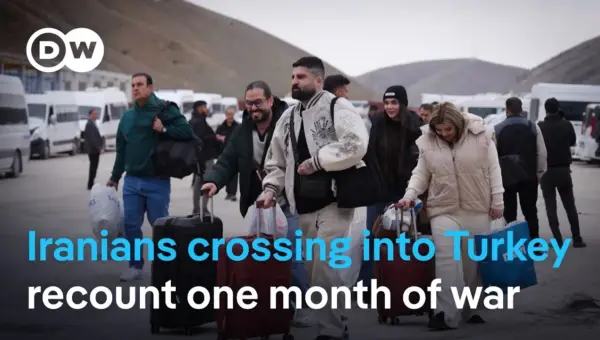
Iran War Exodus: Refugees Flee to Turkey Amidst Bombings
A train from Tehran brings refugees to Turkey, fleeing daily bombings and economic collapse. Many express deep fear for loved ones left behind, while some hold onto national pride and hope for victory. The conflict's impact is also felt economically in Turkey, with rising gas prices.


Israel Escalates Iran Strikes, Warns of Wider War
Israel has launched significant strikes inside Iran following continued missile fire, warning of further escalation. The conflict risks wider regional instability and economic disruption, especially concerning the Strait of Hormuz.