Oil Prices Surge Amid Iran Tensions: What’s Next?
Rising tensions in the Middle East have sent oil prices soaring, with Brent crude surpassing $116 a barrel. Experts point to actual supply shortages, exacerbated by potential blockades of the Strait of Hormuz and damage to infrastructure. Diversification of supply routes and energy sources are highlighted as crucial for future market resilience.

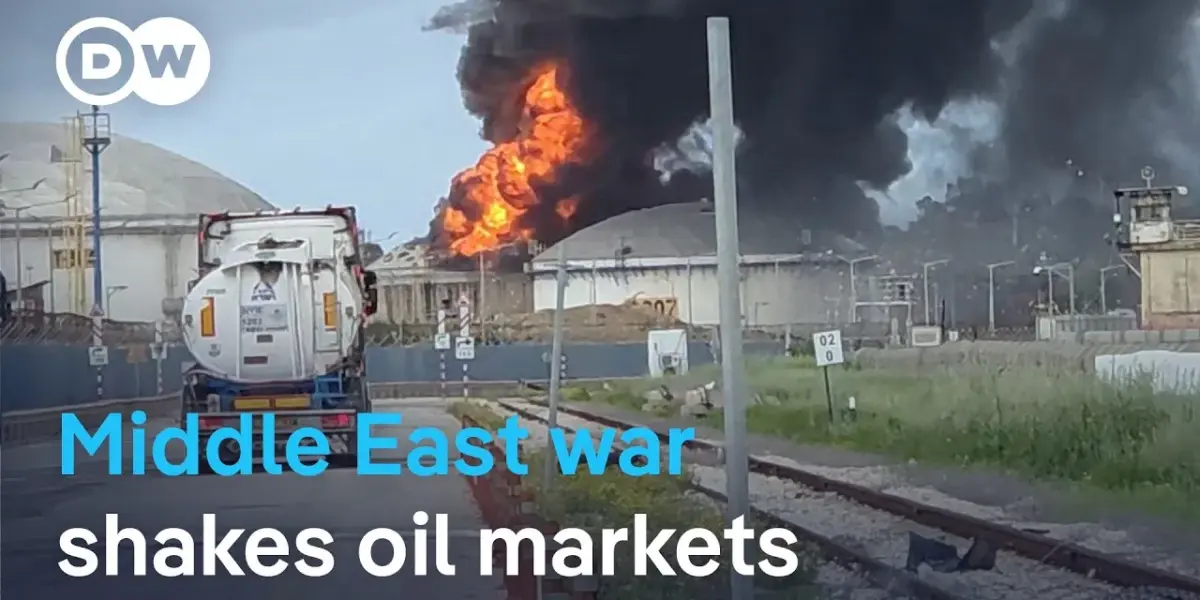
Oil Prices Spike Amid Geopolitical Tensions
Oil prices are climbing sharply again, with global markets on edge due to the conflict between the US and Iran. Concerns about potential US military action in Iran, a major oil producer, have sent shockwaves through the energy sector. President Donald Trump’s comments about potentially taking oil from Iran and considering US troops on the ground have intensified market fears.
This instability comes on top of existing worries. The Strait of Hormuz, a critical waterway for global oil transport, has been a point of concern. About 85% of oil exports from the Persian Gulf must pass through this narrow channel to reach international markets. Any disruption here can significantly impact supply and prices.
Market Reaction and Economic Impact
Brent crude, a key global oil benchmark, has surged past $116 a barrel. This represents a nearly 58% increase for March. Experts warn that if these prices hold, it could mark the largest single-month price jump on record. This dramatic rise can feel abstract to many, but it has real-world consequences.
Dr. Anna Makulka, a senior vice president at CGCN Group specializing in global energy markets, explained the impact. She noted that for every $10 increase in oil prices, gasoline prices typically rise by about 25 cents per gallon in the US. Before the recent conflict, gasoline prices were around $2.50 to $2.60 per gallon. Now, they are closer to $3.70. This suggests that rising oil costs could add $1.25 to $1.50 per gallon to the price at the pump.
Actual Shortage or Market Speculation?
Makulka clarified that the current price surge is driven by an actual shortage, not just market speculation. She explained that less oil is currently flowing from the Middle East because the Strait of Hormuz is effectively blocked. While some tankers can still pass, many are stranded, unable to deliver oil and petroleum products. This reduced supply directly leads to higher prices for both crude oil and refined products.
The situation is compounded by physical damage to energy infrastructure. In Qatar, for example, gas facilities have been damaged, impacting about 17% of its liquefied natural gas (LNG) supply. Repairing this damage is expected to take three to five years. This means that even if the Strait of Hormuz were fully reopened, some supply issues would persist due to the long-term repairs needed.
Building Resilience in Oil Markets
To address these vulnerabilities, experts suggest diversifying supply, supply routes, and even suppliers. The growth of American oil and gas production over the past two decades has been crucial in stabilizing global markets. Without it, the world would be in a far more precarious situation, heavily reliant on Middle Eastern supplies.
Looking ahead, new infrastructure could play a vital role. Building pipelines and other routes that bypass the Strait of Hormuz could reduce the impact of any future blockades. This would make the region less vulnerable to threats and provide alternative ways to transport oil and gas. Countries like Canada, the US, and those in Latin America and Africa could become more important suppliers.
Diversification and Energy Security
Dr. Makulka emphasized that true resilience comes from diversification. This includes not only diversifying oil suppliers but also exploring various energy sources. Countries need to assess their natural resources, such as wind, solar, nuclear, geothermal, or hydro power, and invest in the necessary infrastructure, like battery storage or backup generation.
For nations lacking abundant renewable resources, securing reliable energy supplies is paramount. This might involve relying on natural gas, but with a strong focus on supply security and diversification of import routes, whether by sea or pipeline. Developing robust energy storage solutions can also act as a buffer during times of crisis.
Global Economic Impact and Countermeasures
The conflict’s impact is felt globally. German Chancellor Olaf Scholz noted that rising fuel and energy costs are affecting households and businesses across Europe. Chris Southworth from the International Chamber of Commerce highlighted that economies like the UK, which are highly integrated into global trade, are particularly exposed to external shocks.
Many countries are implementing measures to cope with rising energy prices. These range from energy-saving initiatives like switching off street lights and restricting air conditioning to more drastic steps such as fuel rationing and controlled blackouts. While some measures, like a four-day work week in Malaysia, have a direct impact, others are aimed at long-term resilience.
The Path Forward for Europe
Southworth stressed the need for greater European cooperation to build resilience. He called for connected supply chains, agile structures, and faster movement of goods and money across borders. Digitalization and political efforts to deescalate conflicts are also seen as crucial steps.
The current situation, with 20% of global oil supply potentially affected, is twice as large as any previous oil shock. It underscores the urgent need for de-escalation and opening trade corridors like the Strait of Hormuz. While practical benefits may take time, reducing geopolitical friction is in everyone’s best interest, especially given the existing disruptions in the global trading system.
What to Watch Next
As the conflict evolves, all eyes will be on diplomatic efforts to de-escalate tensions and the impact of these measures on oil supply and prices. The long-term investments in infrastructure and energy diversification will be key to building a more stable and resilient global energy market. The world will be watching to see if governments can effectively implement these strategies to mitigate future shocks.
Source: What can be done to make the oil market more resilient in future? | DW News (YouTube)

Related Articles


Arab Allies Push Trump for Iran Invasion, Demand Payments
Several Arab nations are reportedly pressuring President Trump to launch a ground invasion of Iran, threatening their alliances if U.S. forces withdraw without decisive action. This comes as Iran asserts control over the Strait of Hormuz and retaliates against regional targets, while the U.S. appears to be shifting its strategy away from reopening the vital waterway.


Middle East Conflict Fuels Oil Surge, Market Jitters
Markets showed little movement despite escalating Middle East tensions and the deployment of U.S. troops. Crude oil prices surged past $100 a barrel, driven by concerns over the Strait of Hormuz. The conflict has also intensified in Lebanon, causing a significant humanitarian crisis.


Spain’s Airspace Ban Sparks Fierce Debate on US Alliances
Spain's decision to close its airspace to U.S. operations sparks debate on NATO alliances and burden-sharing. Simultaneously, escalating U.S.-Iran tensions over the Strait of Hormuz raise concerns about global oil security and potential military conflict.