Oil Prices Surge Amid Iran Tensions: Gas Costs to Rise?
Escalating tensions involving Iran are poised to significantly impact global oil prices, with analysts predicting a potential $15-$20 per barrel spike. This could lead to a substantial increase in gasoline prices for consumers, exacerbated by disruptions to the crucial Strait of Hormuz shipping route. The broader economic implications include pressure on global supply chains and potential impacts on economic growth.

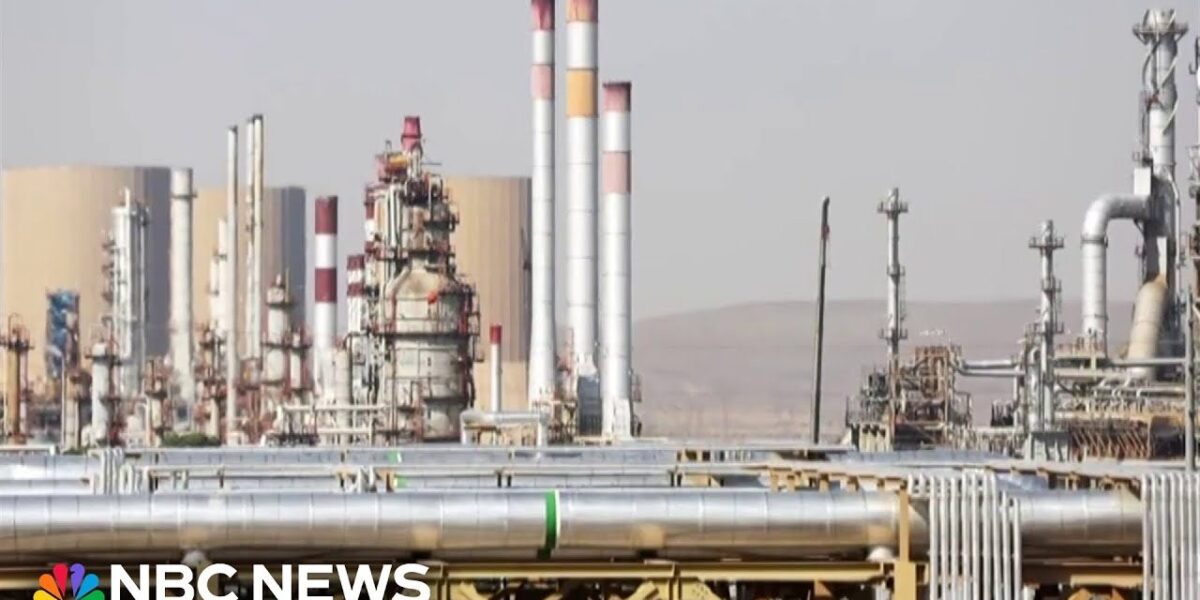
Global Markets Brace for Volatility as Iran Attacks Escalate
NEW YORK – As tensions escalate in the Middle East following attacks involving Iran, global oil prices are poised for a significant increase, with analysts predicting a potential spike of $15 to $20 per barrel when markets reopen. This development raises concerns about a subsequent rise in gasoline prices for consumers, potentially adding to existing seasonal cost increases. The situation is particularly sensitive due to Iran’s strategic location along the Strait of Hormuz, a critical chokepoint for global oil shipments.
Oil Price Forecast: A Potential $20 Spike
Analysts are anticipating a sharp rise in crude oil prices as trading resumes, with estimates suggesting an increase of anywhere from a few dollars to as much as $15 to $20 per barrel. Such an escalation would push oil prices back into the $80 to $90 range, levels not consistently seen in some time. While economists point to a significantly higher global oil production capacity compared to two decades ago, with approximately 90 million barrels currently in floating storage acting as a potential buffer, the immediate impact of the conflict is expected to create market volatility. Historically, such price spikes tend to moderate once shipping routes are re-established, but the timing of this resumption remains a critical uncertainty that markets will closely monitor in the coming days and weeks.
Gasoline Prices: The Trickle-Down Effect
The surge in crude oil prices is expected to translate quickly to the pump. Experts indicate that for every $1 increase in crude oil prices, consumers can anticipate a rise of approximately $0.02 to $0.03 per gallon at the gas station. Consequently, a $15 to $20 per barrel increase in oil could lead to gasoline prices jumping by $0.30 to $0.60 per gallon. This potential increase comes at a time when consumers typically face higher gas prices due to increased travel and refineries switching to more expensive summer fuel blends. The combined effect could place significant financial pressure on households.
The Strait of Hormuz: A Critical Chokepoint
While Iran’s direct contribution to global oil production is relatively modest, accounting for only about 3-4%, the geographical significance of its proximity to the Strait of Hormuz cannot be overstated. This narrow waterway, situated along Iran’s southern coast, is one of the world’s most vital shipping lanes for oil transportation. Any disruption in this region poses a substantial threat to the global oil supply chain. Analysts and experts are focusing intently on this area, recognizing that any interference with shipping through the Strait could lead to sustained increases in oil prices and, subsequently, higher prices at the pump.
Broader Supply Chain Impacts: Shipping Disruptions
Beyond the direct impact on oil prices, the escalating tensions are also disrupting critical cargo routes. Two of the world’s largest shipping companies have already announced the suspension of operations in the affected region, citing safety concerns. This necessitates rerouting vessels, potentially around the Cape of Good Hope off the coast of South Africa. Such detours are expected to add weeks to delivery times, significantly increase production and shipping costs, and contribute to port congestion. These disruptions place considerable pressure on global supply chains, which are still recovering from the shocks experienced during the COVID-19 pandemic. If these pressures persist, they could lead to slower economic growth worldwide.
Looking Ahead: Monitoring Market Reactions
The coming days and weeks will be crucial in determining the long-term impact of the current situation on global energy markets and the broader economy. Market participants will be closely watching for any further escalation of conflict, the duration of shipping route disruptions, and the response of global oil producers. The resilience of the global supply chain and the potential for inflationary pressures will be key indicators to monitor as the geopolitical landscape continues to evolve.
Source: How oil and gas prices could be affected by the attacks on Iran (YouTube)

Related Articles


Trump Threatens “Unseen” Force on Iran After Leader’s Death
Following the assassination of Supreme Leader Ayatollah Ali Khamenei, U.S. President Donald Trump has vowed to unleash unprecedented force on Iran. While outlining ambitious goals including regime change, experts express skepticism about the effectiveness of airstrikes and the potential for popular uprising against a resilient Iranian government.


US Strikes Iran: What’s Next for Trump’s Regime Change Strategy?
The U.S. has launched significant strikes against Iran, targeting its leadership and military capabilities. While President Trump claims progress, experts question the long-term strategy, potential diplomatic engagement, and support for the Iranian people amidst a leadership vacuum.

Putin Condemns US Strikes on Iran as ‘Cynical Violation’
Russian President Vladimir Putin has condemned US air strikes on Iran, calling them a "cynical violation" of international law and morality. While Moscow offers strong words of support, experts suggest Russia's practical aid to Iran may be limited by capacity and logistical constraints. The incident also raises questions about Russia's global standing and its impact on the war in Ukraine.