Oil Prices Peak? Asian Economies Scramble Amid Supply Snarls
Asian economies are scrambling for oil amid supply disruptions, pushing spot prices near $150 a barrel. However, futures markets suggest this spike may be temporary, with government actions and a strong supply-side economy offering potential relief.

Oil Prices Surge Amid Asian Supply Woes, But Relief May Be Near
Global oil markets are experiencing significant turbulence, with spot prices for crude nearing $150 a barrel. This sharp increase is largely driven by logistical nightmares affecting Asian economies. Many nations in Asia relied heavily on oil shipments passing through key waterways, but these supplies are now bottlenecked. This has forced Asian countries to scramble for alternative sources, driving up the immediate price for oil that can be delivered now.
However, experts suggest this price spike might be temporary. The futures market, which reflects expectations for future oil prices, is trading over $30 lower than the current spot market for both West Texas Intermediate (WTI) and Brent crude. This indicates that traders believe the high prices are not sustainable in the long run.
Inflationary Fears Easing?
While the surge in energy prices will likely impact upcoming inflation reports, such as the Consumer Price Index (CPI) due this Friday, the impact may be short-lived. The Cleveland Federal Reserve is forecasting that the energy price hike will be a “one-time thing.” This means it will likely cause a temporary jump in inflation figures, but it won’t lead to sustained, widespread price increases across the economy. Think of it like a sudden detour on your commute; it makes you late that one day, but it doesn’t permanently change your travel time.
This is because rapid spikes in oil prices often lead to a level adjustment that corrects itself relatively quickly. The futures market’s lower pricing supports this view, suggesting that market participants expect supply issues to resolve and prices to fall back down.
Government Actions Aim to Stabilize Prices
In response to the rising costs, governments have taken several measures to ease pressure on oil and gasoline prices. These actions include releasing oil from strategic reserves, coordinating with international allies for similar releases, and increasing ethanol production to supplement fuel supplies. Additionally, temporary waivers of regulations like the Jones Act have allowed refined products to move more freely between U.S. coasts, helping to balance supply and demand.
The potential finalization of peace agreements in conflict zones is also seen as a crucial factor. A resolution to ongoing wars could significantly reduce geopolitical uncertainty, a major driver of oil price volatility. Once these disruptions subside, a return to more normal market conditions is anticipated.
Supply-Side Strength Bolsters Economy
Beyond the immediate oil market concerns, underlying economic data points to a robust supply side. Orders and shipments of capital goods—items used by businesses to produce other goods and services—are at record highs. This surge indicates strong business investment and confidence in future economic activity.
When orders for these capital goods outpace current shipments, it signals that future production will increase significantly. This is a positive sign for economic growth, as measured by Gross Domestic Product (GDP). The construction of new factories is also on the rise, with tens of thousands of people employed in building new industrial capacity. This “supply-side boom” is a key reason the economy has remained strong despite various challenges.
Corporate Investment and Market Outlook
Business leaders and investors are closely watching these developments. Many chief executive officers (CEOs) are investing through the current disruptions because they view them as temporary. They are focused on gaining market share as the economy continues to perform well. This forward-looking investment strategy suggests confidence in the economy’s long-term prospects.
Labor Market Shows Resilience
The labor market also presents a picture of strength and transition. While federal government employment has decreased significantly since 2017, private sector job growth remains strong. In March, the private sector added approximately 186,000 jobs. The overall unemployment rate stands at a healthy 4.3%, indicating a tight labor market where jobs are plentiful.
A notable trend is the successful transition of former government workers into the private sector. Many are finding new roles with better pay and benefits, contributing to private sector growth. This shift suggests that reducing government employment, when coupled with border security, does not necessarily harm the economy. Instead, it can free up talented individuals to boost private industry productivity.
Market Impact: What Investors Should Know
The current oil price surge, while alarming, appears to be driven by temporary supply chain issues and geopolitical factors rather than fundamental demand problems. The significant difference between spot and futures prices suggests that market participants expect a swift resolution.
Investors should monitor upcoming inflation data for signs of whether the energy price shock translates into broader price pressures. However, the strong supply-side indicators and resilient labor market provide a positive backdrop. The economy’s ability to absorb shocks, fueled by business investment and a dynamic labor force, suggests potential for continued growth. The transition of government workers to the private sector highlights the economy’s adaptability and the potential for increased productivity.
Source: OIL CRASH-OUT: Asian economies ‘SCRAMBLING’ to find oil, says Hassett (YouTube)

Related Articles


Markets Surge as Iran Ceasefire Sparks Oil Plunge
Stock markets surged following a ceasefire announcement with Iran, leading to a sharp drop in oil prices. While natural gas remains stable, the U.S. economy shows resilience with job growth and positive economic indicators. Meanwhile, New York City faces a significant budget deficit and proposed tax hikes.

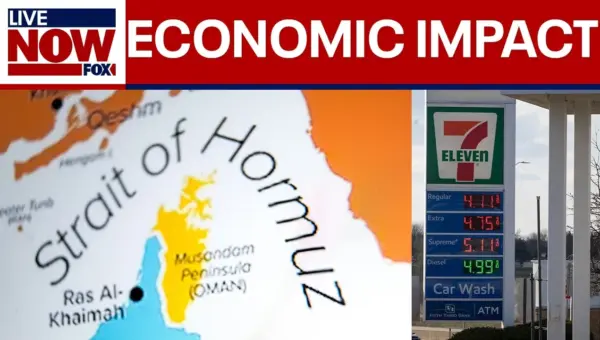
Trump Orders Strait of Hormuz Blockade, Risks Global Oil Shock
President Trump has ordered the U.S. Navy to blockade the Strait of Hormuz, a critical global oil transit point, sparking fears of soaring energy prices and inflation. This strategic move aims to exert pressure on Iran and China, while also addressing domestic economic concerns ahead of midterm elections.


Iran’s Strait of Hormuz Blockade Shifts Global Oil Power
Iran's control over the Strait of Hormuz, a vital global oil route, is shifting economic power dynamics. As former President Trump declared a U.S. naval blockade, experts highlight Iran's effective use of this physical choke point, challenging U.S. financial leverage and potentially forcing negotiations under duress.