Oil Prices Drop as Iran Conflict Nears End
Stock markets are surging as President Trump signals a potential end to the conflict in Iran, leading to a significant drop in oil prices. Consumers may soon see relief at the gas pump as prices trend downward after a volatile March.

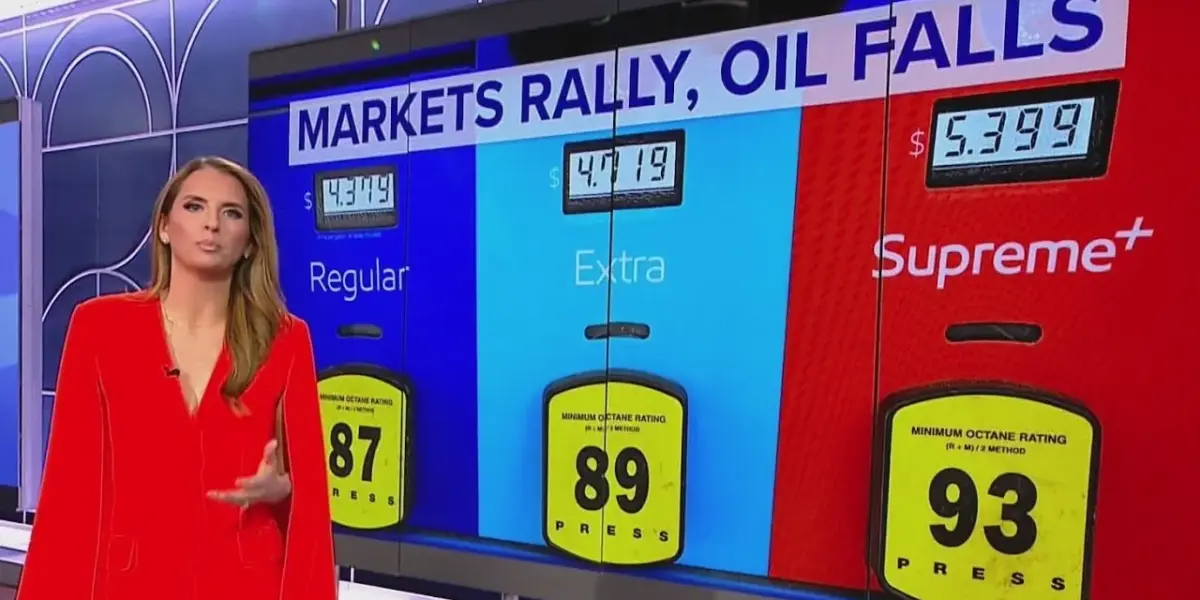
Markets Rally as Hope for Peace in Iran Grows
Stock markets are showing excitement because President Trump has signaled he might be willing to end the conflict in Iran without a formal peace deal. This news is helping to lower oil prices, which have been a big problem for many Americans. Brent crude oil prices jumped a huge 63% in March, the biggest one-month change since 1988, according to Dow Jones.
Oil Prices Trend Downward
Despite that record spike in March, oil prices are actually starting to fall this month. This is good news for oil markets, stock markets, and everyday Americans who have felt the pinch of higher prices at the gas pump. In the last 24 hours, oil futures dropped as much as 4%. West Texas Intermediate (WTI) crude is currently trading about 1.5% lower, just under $100 a barrel for the first time in about a week. Earlier, oil prices had peaked at $119 a barrel for Brent crude. While we still have a way to go to reach prices seen before the conflict, which were around $72 a barrel for WTI and $78 for Brent crude, things are moving in the right direction.
Consumer Relief on the Horizon
More optimism suggests this drop in oil prices could last. President Trump has indicated that the conflict could end within a couple of weeks. This means prices at the pump for the average American could start to fall. Gas prices have gone up about a dollar in the last month, reaching a national average of $4.60. As oil prices drop, we are seeing stock markets rise. The Dow Jones Industrial Average, for example, was up 1,100 points yesterday. This is a rare event, happening only about a dozen times in its entire history. The Nasdaq also rose 3.08%, and the S&P 500 was up nearly 3%. Major stock market averages are expected to continue this positive trend this morning, with the Dow looking to open up at least 300 points higher.
Economic Impact and Future Outlook
The idea that this conflict might end soon is creating excitement in both the oil and stock markets. This is important for retirement accounts like 401(k)s. We should start to see oil prices continue to fall in the coming days and weeks. This means gas prices will likely drop too, offering real relief to many Americans. This is the kind of relief people are hoping for, and we will continue to watch these developments closely.
Global Impact
The potential end of the conflict in Iran is sending positive signals across global financial markets. The direct impact is seen in falling oil prices, which can ease inflationary pressures for consumers worldwide. Lower oil prices also reduce transportation and production costs for businesses, potentially boosting economic activity. Conversely, a sudden end to conflict can sometimes lead to shifts in energy supply dynamics, which markets will monitor closely. The stock market’s strong positive reaction shows how sensitive financial systems are to geopolitical stability. Investors are betting that reduced tensions will lead to a more predictable and stable global economy, which is good for business and consumer confidence.
Historical Context
Tensions surrounding Iran’s role in global energy markets are not new. Historically, instability in the Middle East, particularly concerning Iran, has often led to spikes in oil prices. For example, events like the 1979 Iranian Revolution and the Iran-Iraq War caused significant disruptions and price surges. The current situation echoes these past events, where the threat of conflict or sanctions against a major oil producer like Iran directly impacts global supply and prices. The market’s rapid reaction to the news of a potential de-escalation highlights a long-standing pattern: geopolitical certainty, even without a formal peace treaty, can be as valuable to markets as a signed agreement, especially when it promises to restore or stabilize oil flows.
Economic Leverage and Dependencies
Oil remains a critical global commodity, and its price is a major factor in international economics. Countries heavily reliant on oil imports, like many in Europe and Asia, feel the impact of price fluctuations directly. For oil-exporting nations, price drops can mean reduced government revenue. The United States, while a major oil producer, also benefits from lower prices as a consumer nation, with consumers seeing relief at the gas pump. The mention of Brent crude and WTI prices shows the global nature of oil trading and how different benchmarks reflect supply and demand dynamics influenced by geopolitical events. Sanctions on oil-producing countries, like those previously imposed on Iran, can significantly disrupt global supply and drive up prices, making any indication of their removal or de-escalation a major market event.
Future Scenarios
One likely scenario is a continued gradual decrease in oil and gas prices as the conflict de-escalates. This would benefit consumers and stabilize economies. Another possibility is that market optimism could be premature. If negotiations falter or new tensions arise, oil prices could quickly rebound. A third scenario involves longer-term adjustments in energy markets as countries reassess their reliance on specific regions for oil supply, potentially accelerating the transition to alternative energy sources. However, in the immediate term, the market appears to be pricing in a positive resolution.
Source: Oil prices fall, markets rally ahead of Trump's Iran speech | Morning in America (YouTube)

Related Articles


US Pilot Feared Lost in Iran; Search Underway
The U.S. military is conducting a search operation inside Iran for an American pilot whose fighter jet may have been downed. Details are limited, with uncertainty over whether the plane was shot down or suffered mechanical failure. The operation highlights the complexities of rescue missions in hostile territory and occurs amid heightened regional tensions.


US Policy Shift Stuns Allies, Weakens Global Security
US policy shifts regarding Ukraine, the Strait of Hormuz, and NATO are raising concerns among allies and creating global instability. Critics point to a lack of strategic planning and diplomatic consultation, potentially emboldening adversaries and undermining international security.


Strait of Hormuz Tensions Risk Wider Middle East War
Efforts to secure the vital Strait of Hormuz risk triggering a wider Middle East war, according to UN warnings and security analysts. The narrow waterway is crucial for global trade, and forcing it open against Iran's objections could escalate regional tensions dramatically. Experts highlight the complex geography, Iran's remaining military capabilities, and the involvement of regional players as key factors in the volatile situation.