Oil Prices Dip Amid Geopolitical Tensions, AI Race Heats Up
Global oil prices are easing as allies are urged to secure the Strait of Hormuz, a vital energy chokepoint. Meanwhile, the U.S. and China are engaged in a heated race for AI dominance, with potential implications for future energy security and battlefield technology. Discussions also covered Iran's internal struggles and the Federal Reserve's decision to hold interest rates steady.

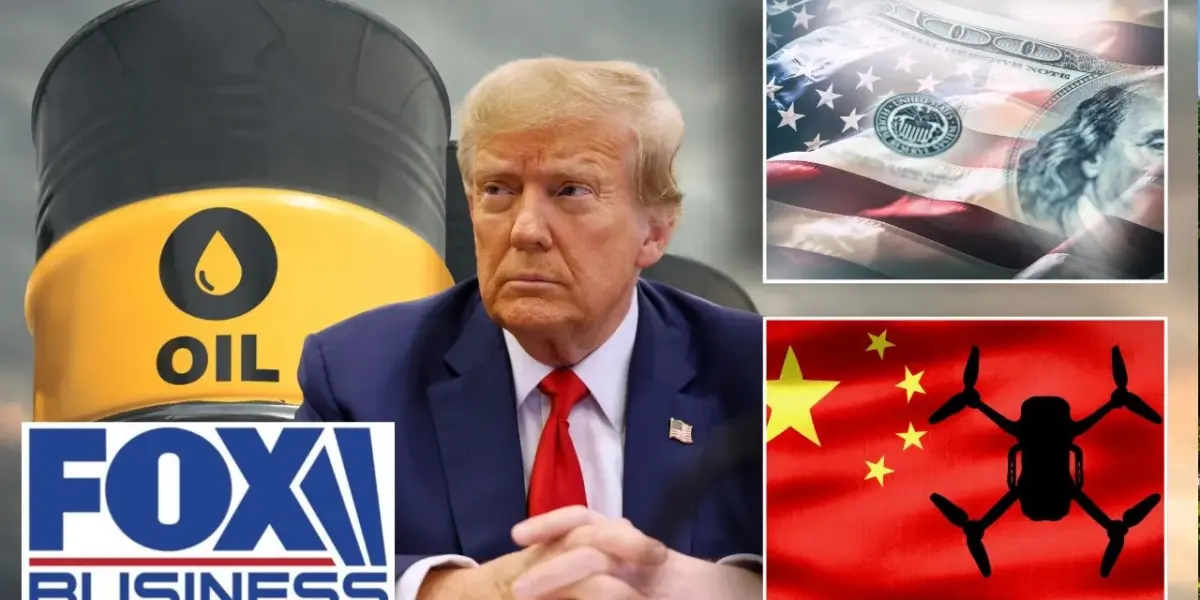
Oil Prices Ease as Allies Urged to Secure Strait of Hormuz
Global markets are closely watching developments in the Middle East, with oil prices showing volatility as geopolitical tensions rise. President Trump has called on international allies, including China, Japan, South Korea, and the UK, to send warships to the Strait of Hormuz. This crucial waterway handles about 20% of the world’s oil flow. The president’s appeal comes amid concerns over Iran’s influence and potential disruptions to global energy supplies. While Japan has stated no decision has been made regarding sending warships, the issue is expected to be a key topic during upcoming high-level meetings.
In response to the situation, oil prices saw a slight decrease. Brent crude oil was down two-thirds of a percent, trading at $102.48, and WTI crude fell 3%, settling at $95.68. This dip reflects a cautious optimism among investors as efforts are made to de-escalate tensions and ensure the free flow of oil.
Strategic Reserves and Alternative Pipelines Bolster Oil Supply
The American Petroleum Institute (API) highlighted efforts to stabilize the oil market. President and CEO Mike Summers noted that the U.S. has released 400 million barrels of oil from strategic petroleum reserves globally. Additionally, pipelines like the East-West pipeline in Saudi Arabia, capable of transporting about 7 million barrels per day, and another through the UAE, offer alternative routes. However, Summers emphasized that reopening the Strait of Hormuz remains critical to meeting global oil demand.
The concept of energy security being national security was reinforced, with calls for increased domestic energy production to insulate nations from such global shocks. The U.S. has become a major oil and natural gas producer, providing a crucial buffer against geopolitical instability.
China’s Role in Strait of Hormuz and AI Competition
President Trump has indicated a potential delay of his trip to Beijing, aiming to pressure China into assisting with reopening the Strait of Hormuz. China relies heavily on this route, receiving about 90% of its oil from the region. Treasury Secretary Scott Bessant is currently in Paris, discussing trade disagreements with Chinese counterparts ahead of the planned visit.
Analyst Gordon Chang expressed skepticism about China’s cooperation, suggesting that China has been complicit in supporting Iran, potentially providing military intelligence and components. Chang proposed seizing Chinese tankers as a means to incentivize Beijing’s cooperation in keeping the strait open. He also noted China’s continued military pressure on Taiwan, involving increased aircraft and naval activity, though he believes an invasion is unlikely due to internal disarray within China’s military.
The discussion also touched upon the growing competition between the U.S. and China in the field of Artificial Intelligence (AI). The AI race is seen as crucial for future energy security, as AI development requires significant energy resources. The U.S. aims to maintain its lead in AI technology, while China is accelerating its production and increasing surveillance capabilities.
AI and Battlefield Technology: Ethical Considerations
The rapid advancement of AI technology raises important ethical questions, particularly concerning its use in warfare. The potential for autonomous weapons and robotic agents on the battlefield necessitates careful consideration of guardrails and oversight. Experts emphasize the need for systems with kill switches and human override capabilities to ensure safety and prevent unintended consequences.
While acknowledging privacy concerns, the focus remains on leveraging advanced AI technologies to minimize casualties in conflicts. The development and deployment of AI in defense are seen as critical for maintaining a strategic advantage.
Permitting Reform and Energy Independence
Bipartisan talks have resumed on federal permitting reforms aimed at boosting domestic energy projects and reducing regulations. The API advocates for these reforms, projecting a 50% increase in energy demand over the next decade. The organization stresses the need for increased domestic oil and natural gas production to meet this demand and achieve energy independence and security.
Iran’s Internal Strife and Military Operations
General Jack Keane discussed significant developments in Iran, including the elimination of high-value targets like Larijani, who was reportedly being groomed as the Ayatollah’s successor and was responsible for repressing the population. Keane stated that these actions are weakening the regime and creating conditions for potential internal protests, although security forces are working to prevent public gatherings.
The conversation also distinguished between Iran’s Revolutionary Guards and the regular Islamic Republic of Iran Army (Artesh). General Keane indicated that the U.S. and Israel are engaging with leaders within the Artesh army, which is seen as potentially more open to undermining the current regime and helping to stabilize the country post-collapse, as they are not ideologically driven like the Revolutionary Guards.
Federal Reserve Holds Rates Amid Inflation and Uncertainty
The Federal Reserve maintained its benchmark interest rate for a second consecutive time, citing elevated inflation and uncertainty surrounding the Iran conflict. Chairman Jerome Powell signaled expectations for only one interest rate cut this year. Powell also stated his intention to remain on the Fed’s board until his successor is confirmed and an investigation into him is concluded.
The Treasury Department is navigating the intersection of economic policy and geopolitical events, working to stabilize oil prices while maintaining pressure on Iran. Efforts include unsanctioning Russian and potentially Iranian oil on the water to create supply buffers and mitigate the impact of any temporary choke points in crucial shipping lanes.
Source: GLOBAL SHAKEUP: JAW-DROPPING oil power shift, China’s drone threat and new economic reality | Recap (YouTube)

Related Articles
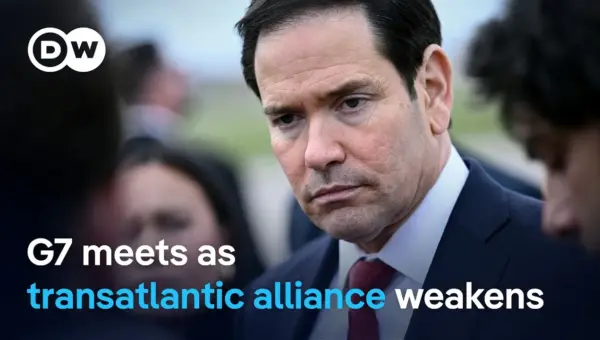
G7 Allies Clash Over Iran War Strategy, Urge Focus on Russia
G7 foreign ministers met in Paris, revealing deep divisions over the U.S. war with Iran. European allies urged the U.S. to pressure Russia, linking its actions to the conflict and fearing support for Ukraine will wane.
Iran Blocks China Ships, Exposing Beijing’s Weak Grip
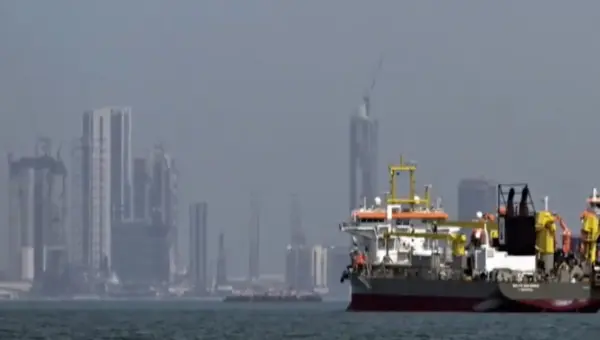
Iran's recent decision to block Chinese ships at the Strait of Hormuz is exposing the limits of Beijing's influence in the Middle East. This action is causing delays and cancellations for Chinese manufacturers, turning a perceived geopolitical win into an economic strain.
Rubio: US Can Achieve Iran War Goals Without Troops
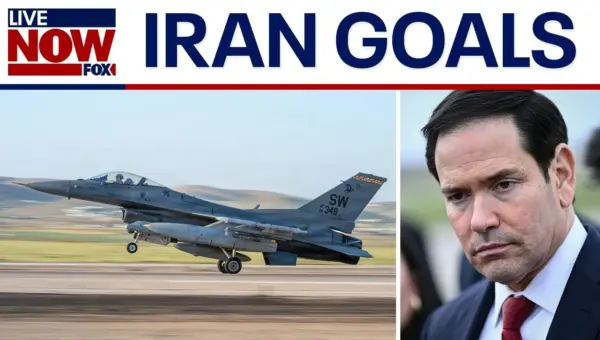
Senator Marco Rubio outlined a strategy to counter Iran without deploying U.S. ground troops, focusing on weakening the regime and enhancing maritime security. He also criticized Cuba's economic system and expressed concerns about West Bank violence.