Ohio’s Blue Shift: Trump’s Unpopularity Fuels Political Realignment
Ohio, a traditional Republican stronghold, is showing signs of a significant political shift. Mounting economic anxieties and corruption concerns are contributing to Donald Trump's declining popularity, potentially realigning the state's electoral landscape and offering a blueprint for Democratic engagement.


Ohio’s Blue Shift: Trump’s Unpopularity Fuels Political Realignment
Once a reliable bellwether and a cornerstone of the Republican electoral map, Ohio is showing signs of a significant political shift, with recent data suggesting a growing unpopularity for Donald Trump within the state. This potential realignment, if it solidifies, could have profound implications for future elections and the broader political landscape. The narrative emerging from Ohio paints a picture of a state grappling with economic anxieties and political disillusionment, creating an environment where traditional party loyalties are being tested.
Economic Headwinds and Public Discontent
The analysis points to several key factors contributing to Trump’s current net negative approval rating of 12.7 in Ohio, according to The Economist’s polling. These include concerns over rising prices, a perceived jobs and manufacturing recession, and the impact of policies that have led to the removal of healthcare access for many. Specifically, the surge in gas prices, with Ohio experiencing one of the quickest and largest increases in the nation, is cited as a direct point of economic pain for residents. This, coupled with rising utility costs attributed in part to the development of data centers, paints a picture of everyday financial strain.
Corruption Allegations and Trust Deficit
Adding to the discontent is the shadow of corruption scandals, particularly the FirstEnergy trial, which has implicated several MAGA-aligned Republicans in Ohio. The involvement of former Lieutenant Governor and now U.S. Senator John E. Hostettler, who testified virtually in the criminal trial, and the conviction of local MAGA politicians, including allegations of hundreds of millions of dollars in bribes, has created a significant trust deficit. These events have intertwined the Republican party in Ohio with a perception of corruption, further eroding public confidence.
Shifting Electoral Tides: Gubernatorial and Senate Races
The electoral landscape in Ohio appears to be reflecting these concerns. In the gubernatorial race, Democratic candidate Amy Acton is reportedly leading MAGA Republican candidate Vivek Ramaswamy by a significant margin, with an EMC Research poll showing her ahead 53% to 43%. This 10-point lead for a Democratic candidate in a state often considered red is a striking indicator of a potential shift. Similarly, in the U.S. Senate race, incumbent Democrat Sherrod Brown is polling ahead of John E. Hostettler, who is linked to the FirstEnergy scandal. Hostettler’s past comments, suggesting that people in poverty are inexperienced in navigating the real world and need to be taught budgeting, have also drawn sharp criticism and highlighted a perceived disconnect with the struggles of everyday Ohioans.
Trump’s Visit and Contrasting Realities
Donald Trump’s recent visit to Ohio, intended to address economic issues and promote his pharmaceutical plan, was met with skepticism. His remarks at a Thermo Fisher Scientific facility, where he downplayed the impact of a recent military action as a mere “excursion” and claimed the market was holding up well, stood in stark contrast to the lived experiences of many Ohioans facing economic hardship. His assertion that the current year is the “best year ever in the history for any president” and that he has “stopped eight wars, I’m about to stop nine” was presented as out of touch with the reality of constituents struggling with affordability and economic insecurity.
The Democratic Strategy: Connecting on a Human Level
Democratic Congresswoman Emilia Sykes, representing Ohio’s 13th congressional district, offers insight into how Democrats are attempting to navigate this shifting terrain. Her district is a highly competitive swing district, and Sykes has a track record of winning in a traditionally Republican-leaning area. She emphasizes a strategy of connecting with voters on a deeply personal, human-to-human level, moving beyond partisan labels. Her approach involves being visible and accessible within the community – attending local events, visiting grocery stores, and engaging in conversations about shared concerns like the cost of living, healthcare, and job security.
Sykes highlights the importance of sports as a unifying element in Northeast Ohio, using it as an “equalizer” to break down barriers and initiate conversations about more serious issues. Her emphasis on being a “servant leader” who “rolls up her sleeves” aims to build credibility and trust. This strategy acknowledges that in a district with a very narrow partisan divide, the “mushy middle” can be swayed by genuine connection and by addressing core concerns such as protecting Social Security, Medicare, and Medicaid, lowering costs, and fighting corruption.
The Stakes for 2024 and Beyond
The upcoming elections, particularly the midterms, are framed as critical for regaining control of the House of Representatives. Sykes argues that the current House is not functioning as a check on the administration, largely due to the influence of Donald Trump. The strategy for Democrats, therefore, involves not only holding onto existing seats like Sykes’s own in Ohio’s 13th but also flipping additional seats to restore a balance of power. The immense amount of money spent on previous campaigns in her district, often through negative advertising, underscores the high stakes and the intensity of the political battles being waged.
The economic impact of healthcare policy is a particularly salient issue in Sykes’s district, where healthcare is the largest employer. The potential collapse of the healthcare industry due to policy changes could lead to widespread job losses, exacerbating the economic struggles of the community. This underscores the direct link between national policy decisions and the daily lives of constituents, a connection Democrats are keen to emphasize.
Why This Matters
Ohio’s political trajectory is a microcosm of broader national trends. The potential erosion of Republican strength in a state that has reliably voted red signifies a critical juncture. It suggests that economic anxieties, coupled with concerns about corruption and a perceived disconnect from the everyday struggles of citizens, can override traditional party affiliations. For Donald Trump and the MAGA movement, this represents a significant challenge, indicating that their core messaging may not be resonating as strongly as before, particularly when faced with tangible economic pain and ethical questions. For Democrats, it presents an opportunity to reclaim ground by focusing on kitchen-table issues and demonstrating a more grounded, empathetic approach to governance. The outcome in Ohio could serve as a crucial indicator of the national mood and the direction of American politics heading into future election cycles.
Implications, Trends, and Future Outlook
The unfolding situation in Ohio highlights a potential trend of voters re-evaluating their political allegiances based on economic performance and perceived integrity of candidates. The focus on issues like healthcare accessibility, affordability, and corruption suggests a shift in voter priorities away from purely ideological battles towards more pragmatic concerns. The success of candidates like Emilia Sykes, who prioritize direct community engagement and human connection, may offer a blueprint for Democrats seeking to win over voters in swing districts. Conversely, the challenges faced by Trump in Ohio underscore the need for the Republican party to address economic anxieties more effectively and to confront allegations of corruption head-on. The future outlook suggests a more volatile and unpredictable electoral map, where states like Ohio could become genuine battlegrounds rather than foregone conclusions.
Historical Context and Background
Ohio has long been considered a crucial swing state, often mirroring the national mood and playing a pivotal role in presidential elections. Its industrial past and evolving economy have made it sensitive to shifts in manufacturing, trade, and labor policies. Donald Trump’s appeal to working-class voters in states like Ohio was instrumental in his 2016 victory. However, the current data suggests that the economic promises made may not have fully materialized for a significant portion of the electorate, leading to a reassessment of his leadership. The state’s history of closely contested races, from presidential contests to local elections, makes any significant shift in its political leanings a matter of national importance.
Source: Trump gets RUDE AWAKENING as Ohio WANTS HIM OUT!! (YouTube)

Related Articles

Trump’s Name Everywhere: A ‘Stain’ on GOP Legacy?
Former President Donald Trump's efforts to brand national symbols, including a proposed signature on dollar bills, spark debate. Critics view this as an authoritarian attempt to embed his legacy, potentially staining the Republican Party's history and contrasting with democratic ideals of public ownership.


Trump’s War Talk Stuns Financial Crowd
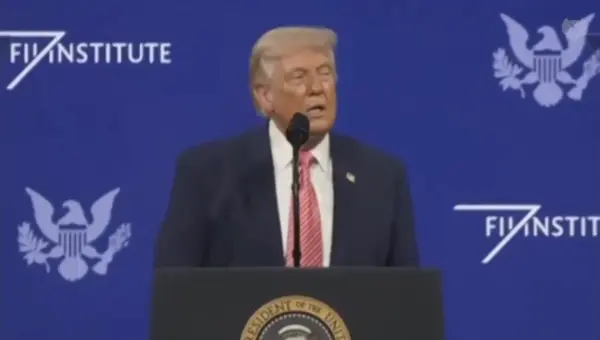
Donald Trump's recent speech in Miami focused on his foreign policy, particularly his critical views on NATO and his vision for international relations. He declared the U.S. would no longer defend NATO allies, questioned the value of existing alliances, and suggested renaming the Strait of Hormuz. The speech also touched on his personal views of success, his allies, and his perceived role as a global peacemaker.
Trump’s Warpath: New Threats Signal Imperial Ambitions
Recent statements from Donald Trump reveal a potential embrace of increased military action and interventionist foreign policy. This approach, characterized by critics as "imperialism 2.0," contrasts with his past promises of peace and has even drawn criticism from parts of his own base. The implications for U.S. global engagement and domestic priorities are significant.