Obama’s Fiery Rebuke: Democracy Under Siege, Hope Endures
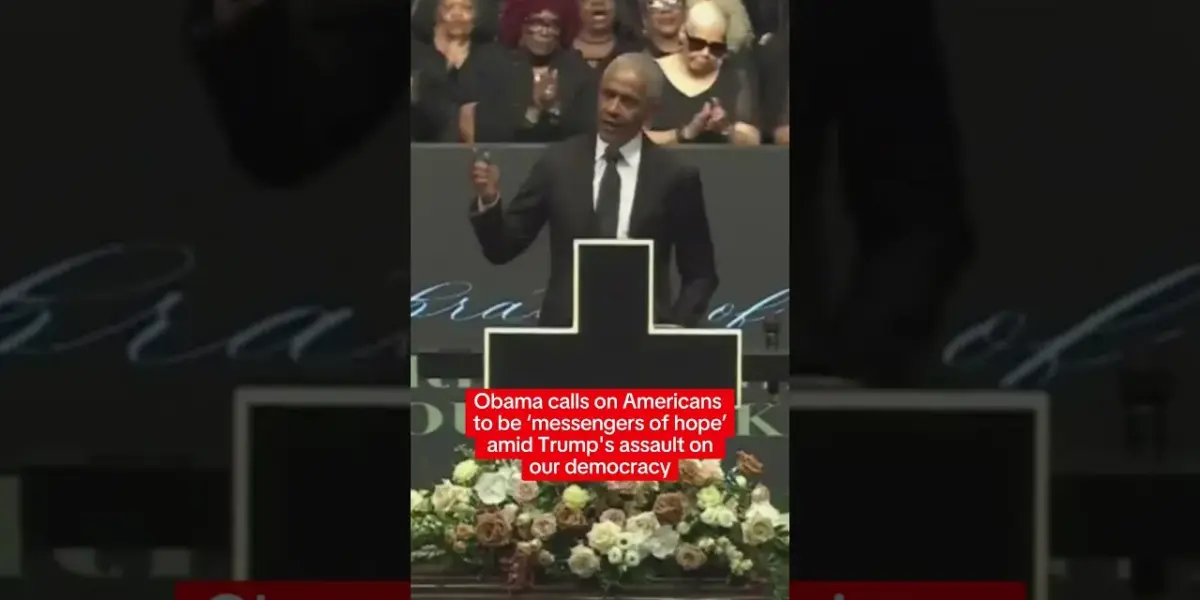
Barack Obama delivered a powerful tribute to Jesse Jackson, sharply criticizing the current political climate. He decried daily assaults on democracy and decency, contrasting them with Jackson's legacy of hope and action.

Obama’s Fiery Rebuke: Democracy Under Siege, Hope Endures
In a powerful tribute to the enduring legacy of Reverend Jesse Jackson, former President Barack Obama delivered a searing indictment of the current political climate, implicitly targeting the Trump administration without naming names. His words, spoken at an event honoring Jackson’s life and work, painted a grim picture of daily assaults on democratic institutions, the rule of law, and common decency. The speech served not only as a eulogy but as a stark warning and a call to action for citizens facing what he described as unprecedented challenges to the nation’s foundational values.
A Daily Assault on Democratic Ideals
Obama’s address began with a stark depiction of the contemporary political landscape. “Each day we wake up to some new assault on our democratic institutions, another setback to the idea of the rule of law, an offense to common decency,” he stated, immediately setting a somber and urgent tone. He elaborated on this sentiment, describing a daily reality where citizens are confronted with events they might have once considered unthinkable. This constant barrage, he suggested, has led to a pervasive sense of unease and a chipping away at the very fabric of American governance.
A central theme of Obama’s critique was the rhetoric emanating from those in positions of power. He lamented that, on a daily basis, “we’re told by those in high office to fear each other and to turn on each other.” This divisive strategy, he argued, is accompanied by the dangerous notion that “some Americans count more than others, and that SOME DON’T EVEN COUNT AT ALL.” This characterization points to a perceived erosion of equality and inclusivity, fundamental tenets of American democracy, which are being undermined by a politics of division and othering.
Greed, Bigotry, and the Celebration of Vice
The former president continued his indictment by highlighting the apparent celebration of negative traits and behaviors. “Everywhere we see greed and bigotry being celebrated and bullying and mockery masquerading as strength,” he observed. This observation suggests a disturbing inversion of values, where traditionally condemned behaviors are seemingly amplified and even rewarded. Furthermore, Obama noted with dismay the denigration of expertise and scientific understanding, stating, “We see science and expertise denigrated while ignorance and dishonesty and cruelty and corruption are REAPING UNTOLD rewards every single day.” This stark contrast between the treatment of virtue and vice, knowledge and ignorance, underscores a deep concern about the moral and intellectual direction of the nation.
The Temptation of Cynicism and the Call to Hope
Faced with such a challenging environment, Obama acknowledged the natural human inclination towards discouragement and cynicism. “We see that and it’s hard to hope in those moments,” he admitted. He recognized that the temptation to disengage, to “compromise with power and grab what you can,” or even for well-intentioned individuals to “just put your head down and wait for the storm to pass,” is strong. This empathetic acknowledgment of the difficulty in maintaining hope resonates with anyone who has felt overwhelmed by the daily news cycle and political turmoil.
Reverend Jesse Jackson: A Beacon of Hope and Action
It was in this context of despair and resignation that Obama pivoted to the life and example of Reverend Jesse Jackson. “But this man, Reverend Jesse Lewis Jackson, inspires us to take a harder path,” he declared, presenting Jackson as the antidote to cynicism. Jackson’s lifelong commitment to justice and equality, Obama argued, calls on everyone to “be heralds of change, to be messengers of hope.” He urged listeners to “step forward and say, ‘Send me,’ wherever there is an opportunity to make an impact.” This call to service is not about personal gain but about finding purpose and aligning one’s actions with deeply held moral or spiritual convictions.
Obama emphasized that the work of change is not confined to grand national stages but can and must happen in “our school or our workplaces or our neighborhoods or our cities.” The motivation, he stressed, should not be fame or glory, nor a guarantee of success, but rather the inherent value of contributing to something larger than oneself, a purpose that aligns with “what our faith tells us God demands.” Crucially, he added, “if we don’t step up, no one else will,” underscoring the individual responsibility inherent in maintaining a healthy democracy and society.
A Legacy of Answering the Call
Concluding his remarks, Obama reflected on Jackson’s profound impact. “How fortunate we were. But Jesse Jackson answered that call. What a great debt we owe to him,” he stated, expressing profound gratitude for Jackson’s decades of activism and moral leadership. The final blessings, “May God bless Reverend Jackson. May he rest in eternal peace. God bless you,” served as a poignant farewell and a recognition of a life dedicated to service and the pursuit of a more just and equitable world.
Why This Matters
Obama’s speech is significant because it articulates, with rare directness, the anxieties many Americans feel about the state of their democracy and civic discourse. By contrasting the current climate with the ideals embodied by Reverend Jesse Jackson, he provides a framework for understanding the stakes involved. The speech highlights a critical juncture where the nation’s commitment to its core values—rule of law, decency, equality, and truth—is being tested. It serves as a potent reminder that these values are not self-sustaining; they require active participation and a refusal to succumb to apathy or cynicism. Obama’s words implicitly urge a recommitment to civic engagement and a defense of democratic norms against corrosive forces.
Implications, Trends, and Future Outlook
The implications of Obama’s remarks extend beyond a single tribute. They signal a growing concern among prominent figures about the long-term health of democratic institutions in an era of intense polarization and misinformation. The trend of political discourse becoming increasingly coarse and divisive, coupled with the erosion of trust in institutions and expertise, is a significant challenge. Obama’s call to action suggests a need for a renewed emphasis on civic education, critical thinking, and the cultivation of empathy across political divides. The future outlook depends on whether citizens heed such calls, choosing engagement over apathy, and prioritizing collective well-being over partisan gain. The legacy of figures like Jesse Jackson offers a blueprint for sustained, purpose-driven activism that can weather storms and inspire lasting change.
Historical Context and Background
Reverend Jesse Jackson’s career spans decades of pivotal moments in the American civil rights movement and beyond. From his early involvement with Martin Luther King Jr. and the Southern Christian Leadership Conference (SCLC) to his leadership in the Rainbow Coalition and his presidential campaigns, Jackson has been a consistent voice for the marginalized and a powerful advocate for social and economic justice. His work has consistently challenged systemic inequalities and pushed the nation to live up to its promises of liberty and justice for all. Obama’s invocation of Jackson is a direct link to this historical struggle, framing the current challenges as part of a continuum of efforts to perfect American democracy. The contrast drawn between Jackson’s tireless advocacy and the perceived contemporary “assaults” highlights the ongoing nature of this struggle and the enduring relevance of his message of hope and action.
Source: Obama Slams Trump During Jesse Jackson Tribute (YouTube)

Related Articles
Biden Honors Rev. Jesse Jackson’s Legacy of Unity
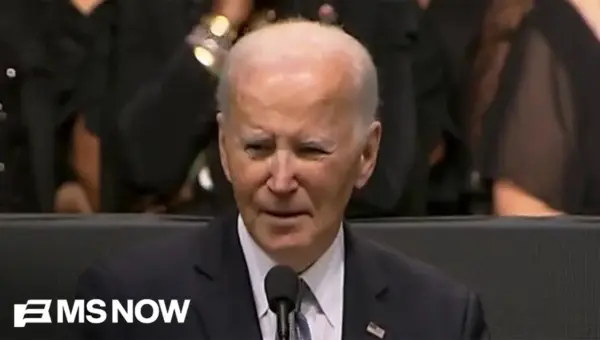
President Joe Biden delivered a moving tribute to Reverend Jesse Jackson, celebrating the civil rights icon's legacy of unity and his dedication to "redeeming the soul of America." Biden shared personal reflections, emphasizing Jackson's ability to find common ground and inspire hope through decades of advocacy.

Clinton Recalls ‘Deep Love’ for Jesse Jackson, Cites ‘Brilliant’ Line
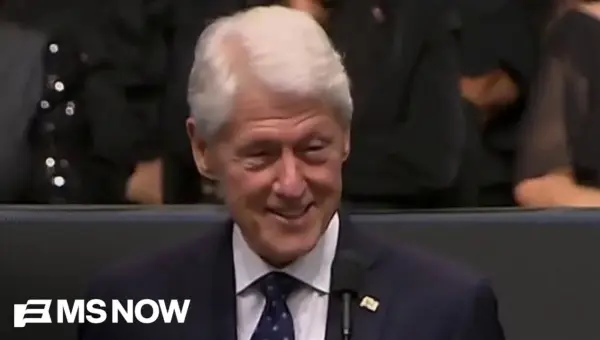
Former President Bill Clinton shared a deeply personal tribute to civil rights leader Jesse Jackson, recalling their shared background and a "brilliant" quote that profoundly impacted him. Clinton stated that Jackson made him a better president.
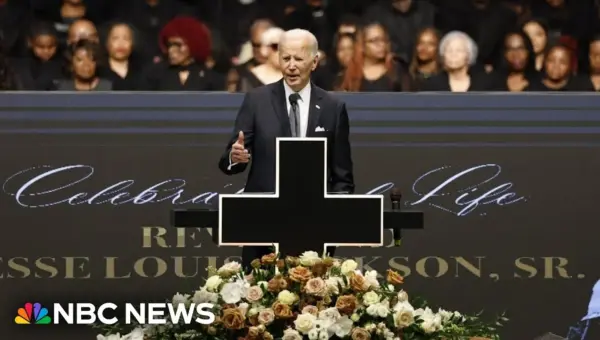
Biden Honors Rev. Jesse Jackson’s Legacy of Hope and Unity
President Joe Biden paid tribute to civil rights leader Rev. Jesse Jackson, highlighting his legacy of hope, unity, and relentless pursuit of justice. Biden reflected on Jackson's profound impact on American society and politics, drawing parallels to his own experiences with prejudice and public service. The speech underscored Jackson's enduring message of seeking common ground and challenging the nation to live up to its ideals.